
World Cup Build-Up: England's Planning and Manchester United's Ambitions
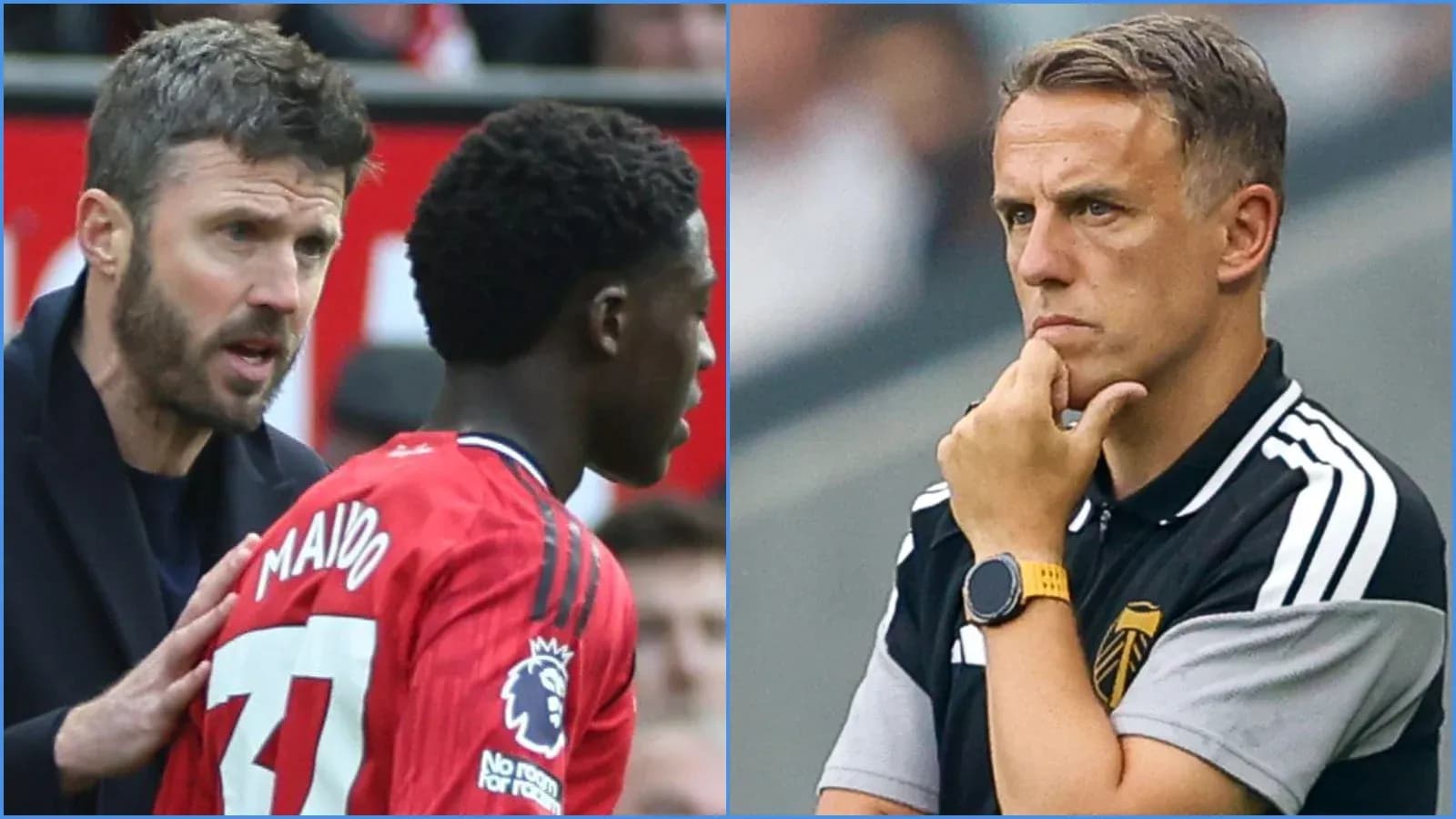
World Cup countdowns usually bring tactical debates, squad arguments and a nation trying to talk itself into belief. This time, England’s build‑up has also produced a “shock role” for Phil Neville, a supercomputer warning of doom, and a Manchester United “masterplan” that amounts to wanting what Paris Saint‑Germain already have.
Somewhere between the noise, there is a very modern picture of how the game is covered – and how easily common sense gets dressed up as drama.
Neville’s “shock role” that isn’t
Phil Neville’s supposed bombshell involvement with England at the World Cup sounds, at first glance, like something clandestine. Freshly sacked by an MLS club, the former Manchester United and England defender is suddenly back in the international conversation. That’s the hook.
Strip it back and the story is almost disarmingly ordinary.
Thomas Tuchel and the FA sought advice from Neville and fellow coach John Herdman about the realities of working in the United States: climate, time zones, travel, traffic, logistics. The sort of nuts‑and‑bolts detail that shapes a tournament before a ball is kicked.
Neville is hardly an outsider parachuted in from nowhere. He has worked within the England set‑up before. He managed a women’s national team that played two tournaments in the US. He has spent the last five years coaching in the country. If you were drawing up a list of people to call for a 90‑minute Zoom on acclimatisation, he would be near the top.
The best part? Neville had already laid out the entire process himself. In a column for The Times last week he wrote:
“Last year I took a call from John McDermott, the technical director at the FA. I was managing Portland Timbers at the time and John said he wanted to pick my brain about the challenges England may face during a World Cup in the United States.”
No cloak and dagger. No late‑breaking twist. Just a technical director doing his job and a coach sharing experience. The “shock role” turns out to be neither shocking nor remotely recent. But it makes a better headline than: “FA asks logical person a sensible question.”
A supercomputer, a warning and a dose of reality
England’s prospects have also been fed into a “mysterious supercomputer”, which apparently decided Gareth Southgate’s side have an 11.3% chance of winning the World Cup. That ranks them third favourites behind Spain and France.
Those numbers sound perfectly respectable. They broadly echo what bookmakers already think. They paint England as contenders, not long shots.
Yet the output is framed as a warning: the “nation’s wait for an international trophy may not end this summer.” As if supporters genuinely need alerting to the possibility that a 48‑team tournament does not guarantee a trophy parade.
The model’s conclusion is, in fact, the most rational thing in the entire discourse: England are good, but not alone. The rest is theatre.
New York, no fever – yet
While algorithms crunch probabilities, Martin Lipton walks the streets of Manhattan and returns with another verdict: “New York has NO appetite for World Cup fever.”
His evidence? A Monday scan of three New York newspapers revealed no mention of Harry Kane, Lionel Messi or Ronaldo. Instead, there was wall‑to‑wall coverage of the NBA playoffs and the New York Yankees and New York Mets deep into their MLB seasons.
In other words, American sports pages are currently dominated by sports actually being played.
The World Cup will arrive. The noise will follow. For now, the city is busy with what’s in front of it, not what’s circled on the calendar.
England’s base and a different kind of scouting
Back in England’s camp, another strand of the build‑up has focused on the team’s training base and its unlikely neighbour: a notorious dogging and cruising hotspot in Swope Park.
This is where tabloid curiosity takes over. We learn that the park “features on adult websites and social media apps,” that one Facebook user asked, “Anyone know what goes on at Swope Park at night?” and that “frisky adults” meet near the Thomas H. Swope Memorial, a short walk from the pitches England will use.
It is not tactical insight. It is not even especially relevant. But it is the kind of lurid colour piece that fills space in the days before a ball is kicked, researched by someone with an incognito browser and plenty of time.
United’s PSG “blueprint” – or just three midfielders?
Away from England, Manchester United’s summer thinking has been framed in similarly breathless terms. One headline trumpets that the club is “set to create PSG-style midfield with £35m transfer and new role for Kobbie Mainoo.”
Underneath the hype lies a simple idea: move Bruno Fernandes slightly deeper, push Mainoo a bit higher with licence to roam, and sign Ederson for around £35m. Three midfielders, one of them new, all with clear roles.
Samuel Luckhurst’s piece casts this as an attempt to mirror the balance of PSG’s engine room – Vitinha, Fabian Ruiz and Joao Neves – a trio that has powered back‑to‑back Champions League triumphs and established Luis Enrique’s side as the best team in Europe.
There is admiration here from Michael Carrick, who reportedly sees the Iberian trio as the benchmark for United’s overhaul. It is hardly a radical stance to think the best team in the world are worth emulating.
The leap comes in the suggestion that United can simply “kobble it together” and recreate that level by nudging one star back, another forward and adding a midfielder who did not make Brazil’s World Cup squad, behind a 32‑year‑old Fabinho and the 34‑year‑old he is now replacing at club level.
Systems matter. So do roles. But so, crucially, does quality. PSG’s midfield isn’t just a shape; it’s three outstanding players in peak form. Copying the outline on a tactics board is the easy bit.
A headline twist in Liverpool and Madrid
The taste for a clever headline is not limited to United. “Trent Alexander-Arnold Liverpool reunion to be announced as four-year deal is signed,” screams one line from the Liverpool Echo.
The reality? Ibrahima Konaté is joining Real Madrid.
Alexander-Arnold’s name is there only as a hook, a tease that leads to a very different destination. A neat bit of wordplay, but another example of how far the packaging can drift from the substance.
Arteta’s review, not a shock to the system
At Arsenal, Mikel Arteta has supposedly been “rocked” by the departure of a key staff member “just weeks after stunning Premier League title win.”
Again, the framing is dramatic. The facts are not.
Arsenal have parted company with their head doctor after a review into this season’s injury problems. Arteta led that review. One of its consequences was the doctor’s exit.
To describe the manager as “rocked” by a decision that came out of a process he commissioned stretches credibility. This is not a destabilising bolt from the blue; it is an internal adjustment born of hard questions about why too many players were missing for too long.
From Neville’s sensible consultation to United’s grand designs, from supercomputers to Swope Park, the themes are the same. Football’s decisions are often rational. The coverage around them rarely wants to be.
The World Cup will strip away a lot of this noise soon enough. Then we’ll find out whether England’s quiet planning and United’s bold sketches stand up when the real pressure starts – and whether anyone really can redraw a midfield to match the best in the world with a couple of positional tweaks and a £35m gamble.
Related News
UFC 332 Preview: Natalia Silva vs. Wang Cong Fight Card, Odds, Start Time, and Details
Andy Roddick Responds to Andre Agassi’s Comments on Alexander Zverev at the Laver Cup

Knicks Prepare for Flexible Roles in Title Defense
Rui Hachimura Swaps Lakers Fans to Clippers in Surprising Jersey Exchange

Who Will Be the NBA's Next First-Time All-Stars? Top Picks and Long Shots for 2027

How Strong Is Your Team at Home? Check Out the 2026 Brasileirão Home Standings