
World Cup Faces Extreme Heat Concerns as Players' Union Raises Alarm
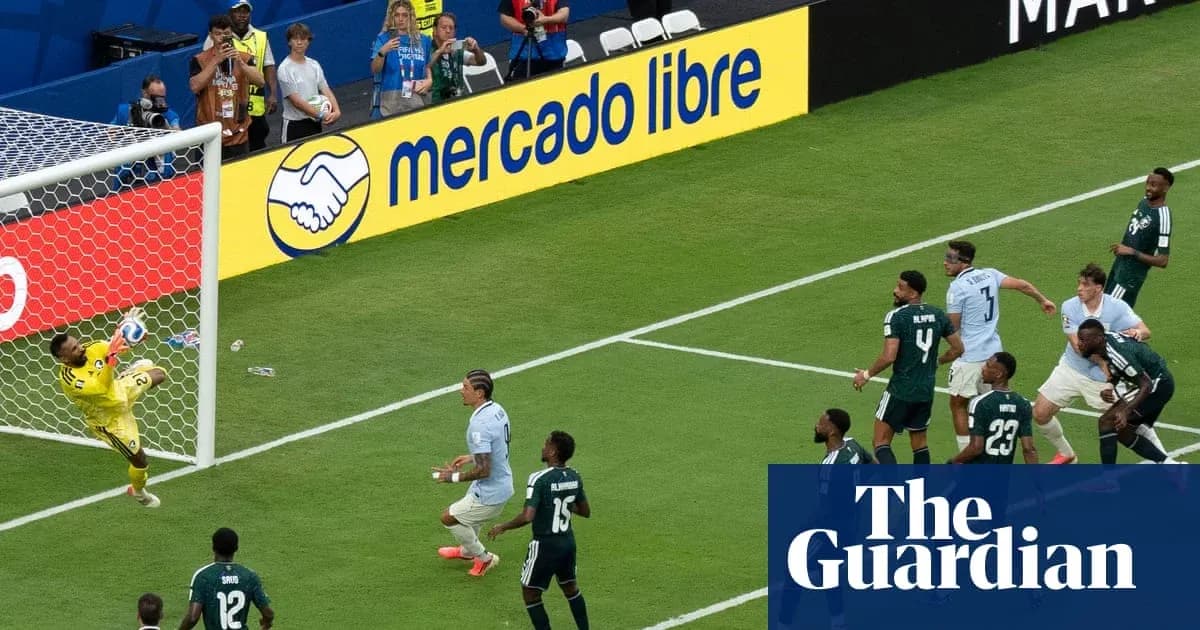
The World Cup wanted a summer spectacle. It has got one – only the main story so far is the heat.
An analysis of the first round of group games – the opening 24 matches across the US, Mexico and Canada – shows that two fixtures were played in conditions so extreme that the global players’ union Fifpro has previously said games should be delayed or postponed at that level.
Four more were staged in cities where the heat passed the same threshold, with only stadium air conditioning stopping conditions from becoming dangerous on the pitch.
Miami and Monterrey at the edge
Saudi Arabia’s meeting with Uruguay in Miami stands out as the hottest of the lot among stadiums without air conditioning. Sweden v Tunisia in Monterrey ran it close.
Both were evening kick-offs. Both were played in wet‑bulb temperatures of 28C (82F) or higher – a level Fifpro has long argued should trigger a rethink of whether a match goes ahead.
Asked about the findings, the union declined to comment on the specific conditions at this World Cup, which is forecast to be the hottest since the competition began in 1930.
Wet‑bulb temperature is not a number plucked from a standard weather app. It blends air temperature, humidity and cloud cover to gauge how well a human body can cool itself through sweating. Once heat and humidity rise beyond a certain point, sweat simply stops evaporating efficiently. The body overheats quickly. Illness and, in the worst cases, death can follow.
The analysis used government weather data from the US and UK, with wet‑bulb figures derived from a formula employed by authorities in several countries, including Australia and Canada.
Six games over the red line
In total, six of the first 24 matches were played in locations where the wet‑bulb temperature hit 28C or above:
- Germany v Curacao in Houston
- Saudi Arabia v Uruguay in Miami
- Portugal v DR Congo in Houston
- Netherlands v Japan in Dallas
- England v Croatia in Dallas
- and another fixture in Houston
The stadiums in Houston and Dallas are equipped with air conditioning, which has softened the blow for players, if not always for those outside the bowl of cooled air.
On Wednesday in Dallas, England’s game against Croatia unfolded in the fiercest wet‑bulb temperature recorded so far – close to 35C (95F) outside. Inside, the AC dragged it down to around 22C (71F), a figure that belongs more to a mild spring afternoon than a furnace-like Texan summer.
Not everyone has that luxury. Record highs in several host cities have left supporters sweltering in shadeless concourses and open approaches to stadiums. Stadium workers, many of whom haul heavy equipment for hours before kick-off, face conditions that public health experts describe as potentially hazardous.
Warnings from scientists, pressure on Fifa
Current Fifa guidelines call for cooling breaks when matches are played in temperatures of 32C (89F) or above, with the option to delay or suspend games left to competition organisers. At this World Cup, referees have already been ordering drinks breaks at lower readings.
On the eve of the tournament, a group of heat and public health specialists published an open letter urging Fifa to go further, echoing Fifpro’s position that matches should be considered for postponement once wet‑bulb temperatures reach 28C.
“Temperatures are often taken from shaded areas and if players are in direct sun, it can be double figures more than the temperature readings,” said Robbie Parks, an environmental epidemiologist at Columbia University and a signatory of the letter. “Standing in the sun can be dangerous even at lower temperatures, even above 23C (73F) or 25C (77F) would make me concerned for older adults out there for more than few minutes.”
Parks acknowledged that air conditioning, later kick-off times and water breaks will ease the strain on players, but he pointed straight at the stands and the workforce as the next fault line.
“Shade is super important and hydration is super important,” he said. “You need to allow people to bring in their own water and think about having misters for evaporative cooling. The final is going to be held in New Jersey, and that stadium isn’t covered which makes me worry. But I’d hope Fifa will learn the best way to deal with that by then.”
Football in a warming world
Extreme heat is already the deadliest climate‑driven hazard on the planet, killing more people each year than hurricanes, floods and wildfires combined. This World Cup will add to the problem it is being forced to confront.
More than 100 matches, hundreds of flights, vast temporary infrastructure: estimates by the carbon accounting platform Greenly suggest the tournament will generate around 7.8m tonnes of greenhouse gases. That is roughly double the emissions attributed to the previous World Cup in Qatar.
Against that backdrop, Fifa insists it has built a detailed heat‑management plan into this edition. The governing body says it is “committed to protecting the health and safety of all players, referees, fans, volunteers and staff”.
Meteorologists have been stationed at match venues to help prepare for extreme conditions, working with host city organisers, stadium authorities and national agencies. A “tiered mitigation model” is in place, with extra interventions triggered as temperatures rise.
For players, that means mandatory hydration breaks, ready access to water and electrolyte drinks, and a range of cooling tools – ice, cold towels, fans, mist and shade. For spectators, higher temperatures are supposed to prompt “additional cooling capacity”, including shaded zones, misting systems, cooling buses and more extensive water distribution.
There is also a specific medical protocol for treating heat exertion, with cooling bags being used at a World Cup for the first time. Fifa says it will “continue to monitor conditions in real time, integrating wet bulb globe temperature and heat index surveillance, and stands ready to apply established contingency protocols should extreme weather events occur”.
For now, the tournament rolls on, chasing the drama and jeopardy that define a World Cup. But as players bend over, hands on knees, and fans huddle in what little shade they can find, a harsher question hangs over this edition: how long can the global game keep scheduling its biggest showpiece in the teeth of a rapidly warming world?
Related News

Anthony Joshua Names Murat Gassiev as Next Opponent if He Defeats Tyson Fury

UFC 332: Start Time and Fight Highlights for Natalia Silva vs. Wang Cong

WBC Orders Lightweight Title Unification: William Zepeda vs Jadier Herrera

BCCI Pension List: Monthly Payments to Retired Indian Cricketers in 2025

Why Fury vs Joshua Is Set for Cardiff, and Dua Lipa’s Unexpected Role
Kei Nishikori Reflects on His Japan Open Debut Nearly Two Decades Before Retirement