
World Cup Highlights: Messi's Hat-Trick, Ronaldo's Return, England's Challenge
Lionel Messi walked off to the kind of ovation that tells its own story. A hat-trick, another record tied, another night bent to his will. North America wanted a World Cup moment; Messi handed it three in one go against Algeria.
Kylian Mbappé and Erling Haaland did their part, two goals each, but this was Messi’s stage again. At this point, he breaks records so routinely that even he can barely keep count. He has now drawn level with Miroslav Klose for most goals in World Cup history and matched Brazilian great Rivellino with five World Cup strikes from outside the box. The numbers are absurd. The ease with which he reaches them, even more so.
And yet, as the lights dimmed on one legend, another started to lace up.
Portugal’s Heavy Hearts and Ronaldo’s Return
Houston’s NRG Stadium will host more than a football match when Portugal faces DR Congo at 1 p.m. ET. It will host a tribute, a wound, and a question: how do you chase a World Cup while carrying grief on your back?
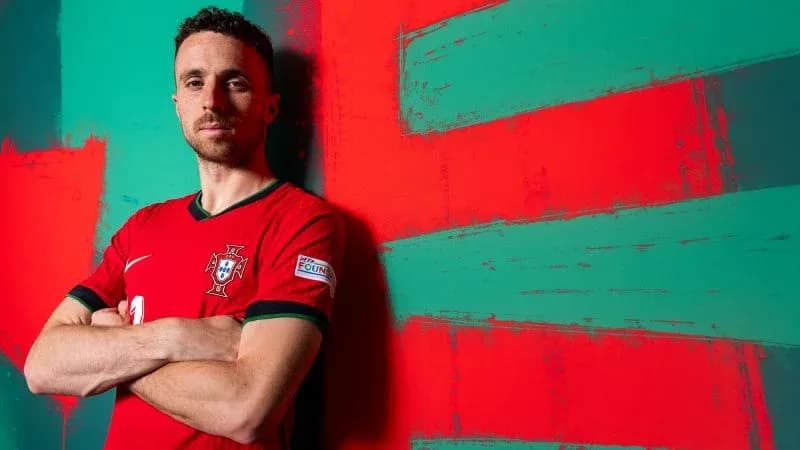
The death of Diogo Jota in a car crash last year, alongside his brother André Silva, ripped through Portuguese football. Jota had married his long-term partner, Rute Cardoso, less than two weeks before the accident. They had three children. The timing, the cruelty, the sheer disbelief of it all still lingers.
His teammates at Liverpool have admitted that this season has felt like playing through fog, trying to grieve properly while being asked to perform. For Portugal’s squad, the World Cup is now more than a tournament. It’s a promise.
Manager Roberto Martínez named Jota an honorary member of the squad. Prime Minister Luís Montenegro went further, gifting each player a bracelet with their name beside Jota’s. Those bracelets will be on show against DR Congo.
“They made sure that it was a wristband that we could wear on the pitch,” midfielder Vitinha explained. “He let us choose if we wanted to use it or not, during the day or during the match. We received it with a lot of affection and we chose to use it.”
The symbolism is clear. The emotional weight is even clearer.
“We feel this and we want to win it, not just because it’s a World Cup and it’s everybody’s dream, but for him as well,” Vitinha told CNN Sports earlier this year.
Then comes the football. And with it, Cristiano Ronaldo.
At 39, Ronaldo is no longer the force of nature who tore through defenses a decade ago. But he remains the lightning rod. Dropped in Qatar 2022 after a poor tournament, he returns now to a side that might quietly be one of the most balanced in the competition.
Bruno Fernandes, Vitinha, Bernardo Silva, João Neves: a midfield to make any coach envious. The question hangs over everything—does Ronaldo elevate that structure or distort it?
You would need courage, or recklessness, to leave a five-time Ballon d’Or winner out of a World Cup opener. Especially after watching Messi remind the planet that class does not retire. Ronaldo still knows the geography of the penalty area better than almost anyone alive.
On the other side, DR Congo will not simply turn up to play the role of respectful guest. Yoane Wissa is their danger man, a sharp, restless striker capable of punishing any lapse. Around him, a disciplined, compact unit will try to frustrate Portugal, absorb pressure, and wait for the one moment that can flip a script.
All of this unfolds against a darker backdrop. DR Congo is wrestling with a serious Ebola outbreak, one that health officials warn could become the country’s worst if not contained. More than 800 cases have already been confirmed. It is a reminder that some of these players are not just carrying national expectations, but the anxieties of a nation in crisis.
England vs. Croatia: Old Wounds, New Manager, Same Obsession
By late afternoon, the World Cup spotlight shifts to Arlington, Texas, where England meets an old nemesis at AT&T Stadium. Kickoff: 4 p.m. ET. Stakes: emotional, as ever.
England arrives with the usual luggage—hope, hype, and history. Sixty years since 1966, and the country that sings “It’s coming home” still waits for it to actually do so.
Thomas Tuchel, now in charge, has made one thing clear: this will be his team, not a collection of marquee names. Cole Palmer and Phil Foden, two of the Premier League’s brightest talents, have been left out. It’s a ruthless call, the kind that defines a manager’s tenure before a ball is even kicked.
Instead, Tuchel leans on Declan Rice’s authority in midfield, Jude Bellingham’s swagger and drive, and Harry Kane’s relentless finishing. Between them, England has a spine that looks built to go deep into the tournament.
But then there is Croatia.
The Vatreni have spent nearly two decades delighting in ruining English summers. The 2018 World Cup semifinal still stings in England, a night when Croatia’s patience and nous trumped English adrenaline. Now, at 40, Luka Modrić remains their metronome. His legs may not carry him quite as far, but his brain still sees the game seconds before everyone else.
Croatia will not be intimidated by noise, narrative, or English nostalgia. They have seen all of that before and walked through it.
Back in England, the relationship between nation and national team remains a tangle of romance and trauma. From Diego Maradona’s “Hand of God” in 1986 to penalty shootout heartbreaks, to David Beckham’s red card in 1998 and Frank Lampard’s ghost goal in 2010, the scars run deep.
Gareth Southgate, the previous manager, helped heal some of those wounds with a World Cup semifinal in 2018, a European Championship final in 2021, and a quarterfinal in Qatar. But the job of finally ending “years of hurt,” as Gary Lineker put it to CNN Sports, now passes to Tuchel.
The question hangs in the Dallas air: is this the start of something, or just another chapter in the same old story?
Iran’s Visa Drama Eases
Away from the marquee fixtures, Iran has been dealing with a very different kind of pressure. No team has faced more logistical hurdles this summer.
With political tensions high, Iran has been forced to base itself in Mexico and travel into the United States for matches. After the first game, winger Mehdi Torabi discovered his visa had expired, throwing his tournament into doubt.
That crisis has now been defused. The US State Department confirmed that Torabi has been granted a new multi-entry visa, allowing him to play in every remaining match.
“This issue has been resolved,” a State Department official told CNN’s Jennifer Hansler. “As soon as we became aware of the issue, we worked to ensure that the player can participate in every game.”
For Iran, already juggling complex travel and preparation, it’s one less fire to put out.
Ghana, Panama, and a Battle for Belief
Toronto takes the evening slot. At 7 p.m. ET, Ghana faces Panama at BMO Field in a game that might not grab global headlines but could define both teams’ tournaments.
Panama, in just its second men’s World Cup, still bears the scars of 2018. Three games, three defeats, and a 6-1 hammering by England left the debutants bruised. This time, the goal is more modest and more realistic: a first World Cup point. Ghana, in their opener, might be their best shot.
Once, Ghana looked like Africa’s most likely World Cup winner. The 2010 quarterfinal in South Africa, the infamous Luis Suárez handball, the missed penalty, the sense of destiny snatched away—that team felt on the brink of something historic.
Since then, the Black Stars have stalled. They have not escaped the group stage at a World Cup since 2010. The current side lacks some of the star power of that golden generation, but it does have Manchester City forward Antoine Semenyo, who arrives in form and full of confidence. If Ghana are to take control of this group, they will expect him to fire tonight.
They must do it without Thomas Partey. The 33-year-old midfielder has seen his visa application to Canada rejected, a decision upheld by a federal judge earlier this week, according to the Associated Press. Partey is awaiting trial on rape charges in the United Kingdom. He will miss the Toronto opener but is expected to be available for Ghana’s remaining two group matches in the United States.
For Ghana, it is a significant absence. For Panama, a sliver of opportunity.
Debutants Under the Lights: Uzbekistan vs. Colombia
The late game belongs to Mexico City and one of the tournament’s most intriguing unknowns. At 10 p.m. ET, Uzbekistan finally steps onto the World Cup stage at Estadio Azteca, the last of this year’s debutants to appear.
Fabio Cannavaro, who lifted the World Cup as Italy’s captain in 2006, now leads the White Wolves from the dugout. His side has already watched three other newcomers fail to win their opening matches. Uzbekistan has a chance to be the outlier.
The name to know is Abdukodir Khusanov. At 22, the defender has become a regular for Manchester City, impressing in both the Premier League and Champions League. Calm on the ball, aggressive in the duel, he gives this team a genuine anchor at the back.
Waiting for them is a Colombia side that feels like a bridge between eras. James Rodríguez, the breakout star of the 2014 World Cup, still pulls the creative strings. His left foot remains a threat from anywhere within sight of goal. On the flank, Luis Díaz arrives as one of the most in-form players on the planet, capable of turning a tight game with a single run or strike.
Uzbekistan will bring energy and surprise. Colombia will bring memory and experience. Under the Azteca lights, that’s a potent mix.
Ebola Shadows DR Congo’s World Cup Moment
As DR Congo steps into the global spotlight against Portugal, a far graver story unfolds back home.
Health officials are warning that the current Ebola outbreak in the Democratic Republic of Congo could become the country’s “worst ever” if not contained. More than 800 cases have been confirmed. The affected region is remote, densely populated, and already grappling with insecurity and humanitarian crises.
This outbreak is driven by the Bundibugyo strain of the virus, for which there are no specific treatments or vaccines. That makes containment harder, not easier.
US authorities have responded with entry restrictions and screening for passengers arriving from DRC, Uganda, and South Sudan. So far, no cases have been detected in the United States. The World Health Organization rates the risk as very high within DRC but low globally.
During the World Cup, US health officials are tracking multiple viral threats. Ebola is not at the top of that list. Early in infection, it does not spread easily. Once a patient is severely ill and highly infectious, they are usually too unwell to travel or attend a match.
For DR Congo’s players, though, the knowledge is inescapable: while they chase a result in Houston, their country is fighting something far more lethal than a group-stage exit.
And that, perhaps, is the true frame of this World Cup day. Messi rewriting history. Ronaldo chasing one last roar. England wrestling with its own reflection. Newcomers dreaming big. All of it played out against a world that does not stop for football—no matter how much the game means, or how badly a nation needs a reason to believe.
Related News
Anthony Joshua Names Murat Gassiev as Next Opponent if He Defeats Tyson Fury
UFC 332: Start Time and Fight Highlights for Natalia Silva vs. Wang Cong
Court McGee Opens Up About Choosing UFC 332 as His Final MMA Fight
WBC Orders Lightweight Title Unification: William Zepeda vs Jadier Herrera
BCCI Pension List: Monthly Payments to Retired Indian Cricketers in 2025
Why Fury vs Joshua Is Set for Cardiff, and Dua Lipa’s Unexpected Role