
World Cup Round of 16: Key Matches Preview
The World Cup finally tightens its grip. No more safety net, no more gentle calculations about goal difference and permutations. From Saturday, every mistake can send a giant home and every moment of courage can redraw the bracket.
Over four days, the Round of 16 offers a run of ties that feel like mini-finals in their own right. History hangs over some of them. Altitude shapes another. One or two are built on old grudges that never really went away.
Here’s where the tournament starts to bite.
Canada vs Morocco
July 4, Saturday, Houston Stadium – 17:00 GMT
Canada’s World Cup story used to be about plucky appearances and early flights home. Not this time. Two wins in the group stage have changed the mood entirely. They arrive in Houston with belief and, crucially, with their star fit again.
Alphonso Davies is back. The Bayern Munich flyer, eased in during the group game against South Africa after a hamstring problem, has been pushed higher up the pitch. From left back to left winger, from engine room to cutting edge. On the other flank, Tajon Buchanan will stretch Morocco on the right, giving Canada twin threats in wide areas.
Jesse Marsch has already shown he is not afraid to rip up a plan. The US-born coach has reworked his midfield, bringing in Nathan-Dylan Saliba after Ismael Kone’s World Cup ended with a broken leg against Qatar. It’s a significant reshuffle in the middle of the park at precisely the stage where nerves usually tell coaches to play safe.
And then there is the ghost in goal.
Canada once tried to make Yassine Bounou their own. Benito Floro attempted to recruit the goalkeeper who spent his first three years in Montreal. Bounou said no. Since then, he has become the beating heart of Morocco’s resistance and the man who slammed the door on Canada at the last World Cup, when a 2-1 defeat against his Atlas Lions side sent the Canadians out at the group stage.
Morocco have refreshed but not quite reignited. Their attack has not caught fire. Their safety valve, though, remains world class. With Bounou behind them, they know that if they can drag this tie to penalties, the odds tilt in their favour. It is a simple brief for the Atlas Lions: stay organised, stay alive, get to the shootout.
Waiting in the distance, most likely, is France. That alone raises the stakes.
France vs Paraguay
July 4, Saturday, Philadelphia Stadium – 21:00 GMT
Paraguay have already ripped up a few scripts in this tournament. They will not be sneaking up on France.
History between these two is rich and raw. In 1958, Paraguay led in the second half before France roared back and ran away 7-3. In 1998, in a suffocating, nervous knockout tie, it took Laurent Blanc’s golden goal to finally break La Albirroja and push the eventual champions through.
Those were tight, tense occasions. This version of France looks anything but tense.
Didier Deschamps’s side are not just winning; they are accelerating away from opponents. Kylian Mbappe is the obvious headline, the man Gustavo Gomez and his back line will spend the night tracking, blocking and chasing. Yet France’s threat runs straight through the centre of the pitch.
Michael Olise and Adrien Rabiot are the ones who will probe and pierce. Olise knits attacks together, Rabiot glides into spaces that defenders hate. They will look to punch holes through the middle, then let the wingers stretch Paraguay horizontally. When the gaps do not appear, they will simply shoot. Olise, Rabiot and perhaps Theo Hernandez from deep will not hesitate from distance.
Paraguay showed against Germany that they can spoil and frustrate. They throttled one of the tournament’s most vaunted attacks and walked away with belief. This is another level of speed and variety, though. France are not just looking to advance. They are playing like a team intent on steamrolling their way back to a final.
Brazil vs Norway
July 5, Sunday, New York/New Jersey Stadium – 20:00 GMT
Some records feel like trivia. This one stings in Brazil.
Only three nations have a winning head-to-head record against the Seleção: Netherlands, Hungary and Norway. Of those, Norway’s claim is the most remarkable. They have never lost to Brazil. Two wins, two draws. A small sample, but a big psychological marker.
The last meeting on this stage still lives in Brazilian memory. World Cup 1998, group stage, late drama. US referee Esse Baharmast spotted a foul that many in the stadium missed, awarded Norway a penalty, and Kjetil Rekdal buried it for a 2-1 win. Brazil still topped the group. Norway’s victory pushed them ahead of Morocco and into the knockouts, where Italy ended their run. But that night became a reference point, a grievance, and a challenge.
Norway have not been back at a World Cup finals since. This is only their second time in the knockout rounds. Yet they arrive with something Brazil cannot shake: that unbeaten record.
Brazil, for their part, have been searching for a spark. They found one in a teenager.
Endrick came off the bench against Japan and changed the temperature of the game. His movement, his fearlessness, his willingness to take on defenders gave Brazil a different rhythm. He will be dwarfed by the towering Norwegian back line, but his low centre of gravity and sharp bursts could be exactly what this tie needs.
Brazilian teams are not used to carrying historical baggage against anyone. Norway are the awkward exception. That alone gives this last-16 clash a strange, compelling edge.
Mexico vs England
July 5, Sunday, Mexico City Stadium – 00:00 GMT on Monday
Altitude versus attitude. Juan Carlos Osorio once framed it that way, and the phrase still fits.
Mexico City sits 2,240 metres above sea level. The air is thin, the lungs burn, and El Tri have turned those conditions into a weapon. Playing in Guadalajara and Mexico City, they have racked up four wins from four in this tournament, with an 8-0 goal difference. Teams do not just lose here; they fade.
Mexico’s plan is no secret. They keep the ball, set the rhythm, and then hit with pace. The partnership of Raul Jimenez and Julian Quinones – the Colombia-born forward who has slotted seamlessly into the frontline – has clicked. Their movement, combined with Mexico’s comfort in possession, forces opponents to chase in an environment designed to punish chasers.
England know the history. Across all meetings, they hold a 6W-2L-1D record against Mexico, including that iconic 2-0 win at Wembley in the 1966 World Cup. Yet in Mexico City itself, they have never won: two defeats, one draw. One of those losses is etched into football folklore, thanks to Diego Maradona’s Hand of God at the 1986 World Cup.
This time, England arrive with Harry Kane leading the line. That alone changes the equation. Kane’s ability to drop deep, link play and still arrive in the box gives England a focal point they have never had in this city.
Thomas Tuchel has tried to outthink the mountain. His plan to minimise the impact of altitude is to arrive as close to kickoff as logistics allow, limiting the time players spend adapting – or failing to adapt – to the conditions. FIFA, aware of summer storms, have weighed up shifting the kickoff time to dodge severe weather. The environment will be part of the story no matter what.
On the bracket, the prize is stark. Win here, and it’s Brazil or Norway in the quarterfinals. England must tame the altitude. Mexico must ride it one more time.
USA vs Belgium
July 6, Monday, Seattle Stadium – 00:00 GMT on Tuesday
USA have spent years trying to convince the world they belong in this company. The last week has pushed that argument forward.
Their 2-0 victory over Bosnia-Herzegovina was more than a scoreline. It was their first World Cup win over a UEFA side since 2002. It came at a cost, though. Folarin Balogun picked up a suspension that rules him out of this last-16 tie and exposes a thin position.
Mauricio Pochettino has only two recognised strikers left to lead the line: Ricardo Pepi and Haji Wright. It is a blunt reality for a coach who likes options. He will need to be creative with his structure, with how he uses wide players and midfield runners to support whoever starts up front.
Belgium know all about improvisation. Their group-stage comeback against Senegal was one of the tournament’s wildest tactical gambles. Trailing by two, Rudi Garcia made a call few managers would dare: he removed Kevin De Bruyne and Jeremy Doku, his most gifted creators, and sent on Dodi Lukebakio and holding midfielder Nicolas Raskin.
The move looked conservative on paper. On the pitch, it flipped the game. Belgium found balance, then momentum, and finally the goals they needed – the revival only really catching fire in the 86th minute.
There is another layer to this matchup. Since their first World Cup meeting in 1930, Belgium have beaten USA six times in a row. For a country the size of the US state of Massachusetts, that is an extraordinary streak over a sporting giant.
USA are desperate to snap it. The winner will run into either Portugal or Spain. It is the kind of path that can define a generation.
Portugal vs Spain
July 6, Monday, Dallas Stadium – 19:00 GMT
Some World Cup ties feel like tactical puzzles. Portugal vs Spain is a collision of identities and a test of nerve.
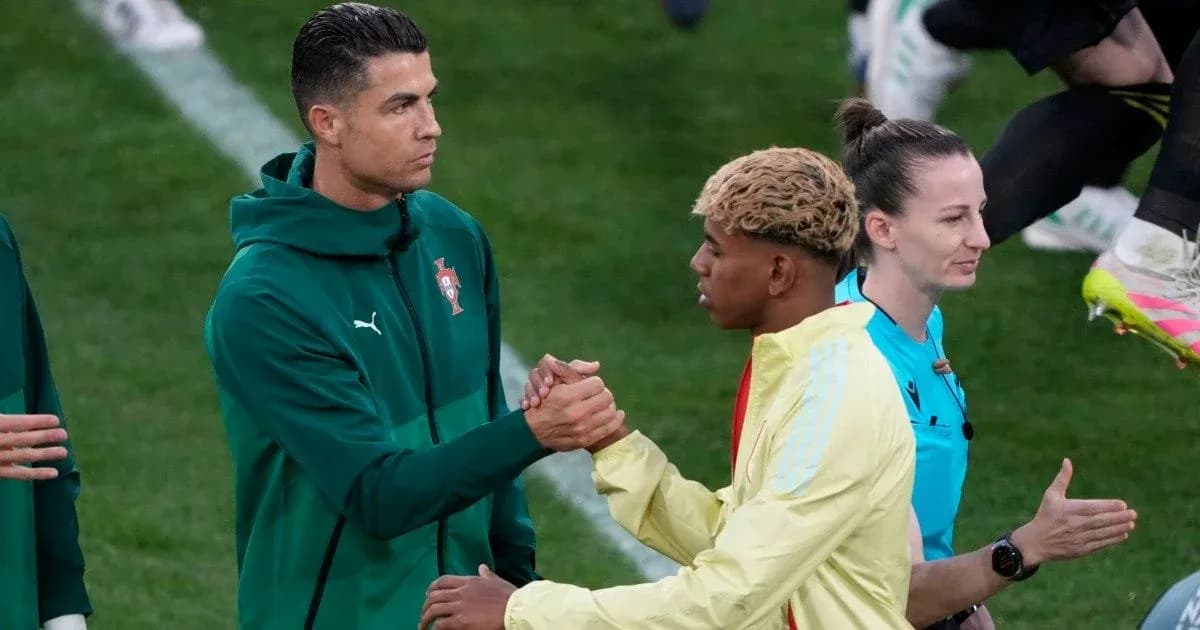
Portugal turned to Roberto Martinez with nights like this in mind. His mandate was clear: shape a team around Cristiano Ronaldo that could still evolve, still be ruthless, and still make hard calls when the moment demanded.
Against Croatia, he did exactly that. With the game in the balance, Martinez pulled Ronaldo. The captain followed Bruno Fernandes and Vitinha off the pitch as Portugal chased a winner. They found it late, proof that this side is no longer built on the idea that Ronaldo must play every minute, every game.
Spain arrive with their attack humming. Dani Olmo has seized control of the midfield, dictating tempo and threading passes through lines. Lamine Yamal, still so young, is growing into the tournament, finding his range and his courage on the flank. Mikel Oyarzabal, cool in the box, has given La Roja the finishing touch they have sometimes lacked at major finals.
There is recent World Cup history here too. In 2010, on their way to lifting the trophy, Spain shut down Ronaldo and Portugal in a tight 1-0 win. Eight years later in Russia, Ronaldo hit back with a hat trick in a wild 3-3 draw, a group-stage classic that still resonates.
Now they meet again with a quarterfinal place on the line, two neighbours with shared borders and clashing philosophies. One side built on patient incision, the other on direct power and moments of individual brilliance.
The World Cup’s business end has arrived. By the time this round is done, a few dreams will have been shattered, and a few dark horses may have turned into genuine contenders.
Related News
Anthony Joshua Names Murat Gassiev as Next Opponent if He Defeats Tyson Fury

UFC 332: Start Time and Fight Highlights for Natalia Silva vs. Wang Cong
Court McGee Opens Up About Choosing UFC 332 as His Final MMA Fight
WBC Orders Lightweight Title Unification: William Zepeda vs Jadier Herrera
BCCI Pension List: Monthly Payments to Retired Indian Cricketers in 2025
Why Fury vs Joshua Is Set for Cardiff, and Dua Lipa’s Unexpected Role