
Al-Juwair Crisis Impacts Saudi Arabia’s Gulf Cup Aspirations
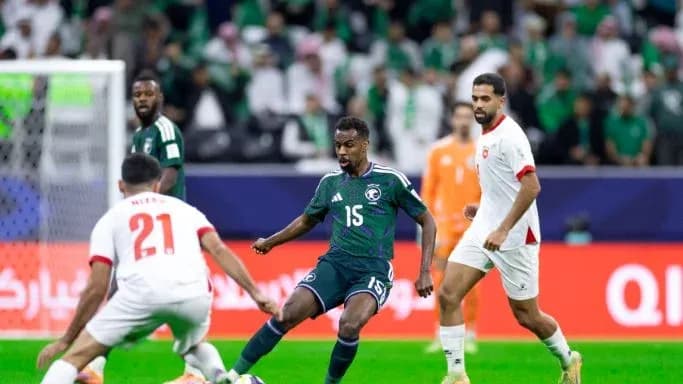
The numbers say Mukhtar Ali replaces Al-Juwair. The tactics say something very different.
For Georgios Donis, losing Al-Juwair is not just a missing name on the squad list. It strips the midfield of one of its few natural metronomes – a player who can slow the game down, speed it up, stitch lines together and still arrive in the build-up with purpose.
Ali’s call-up fills the vacancy on paper. It does not replicate the role. Their profiles are not alike, and that forces Donis back to the drawing board, redistributing responsibilities across his system and asking others to carry parts of the load Al-Juwair handled almost by instinct.
Crisis off the pitch, questions on it
The real danger for Saudi Arabia is not what Ali can or cannot offer with the ball. It is everything circling around the decision.
Players read, listen and scroll. They see the constant debate about their excluded team-mate, the management’s statements, the reactions that follow. That noise can creep into a dressing room, especially when it erupts on the eve of a short tournament that offers no time to reset once the first whistle blows.
Donis and the administrative staff now have a second job. Managing the crisis becomes as important as managing the press. A successful camp is never built on fitness and tactics alone. It needs calm. It needs clarity. Every player must know his task begins and ends with training and the match, not with chasing the latest comment on television or the newest post on social media.
Saudi Arabia go into Gulf Cup 27 needing more than a trophy chase. They need a reset. Recent performances have dented the image of the national team, and this tournament offers a chance to rebuild confidence and correct the path, not just collect a title photo.
That mission becomes harder when the conversation before a ball is kicked shifts from “How do we improve?” to “Who is to blame for the Al-Juwair crisis?” and “Who leaked what, and why?”
Voices of warning
Every new statement risks widening the crack.
Hazazi has already criticised how the situation was handled, calling what is happening “a distraction” for the national team. Al-Mefreg, on the other hand, has underlined that regulations must apply to everyone, warning that stepping back from them could invite chaos inside the camp.
Between those two positions, the team stands in the middle of a storm that feels bigger than its sporting size. The national side has found itself dragged into a debate about discipline and authority before it has even lined up for the first group game.
What turns a limited disciplinary issue into a genuine problem is not the original decision. It is what comes after. If the matter is closed internally, the decision respected and the focus dragged back to the pitch, the story can shrink into a footnote: an incident that happened before the tournament and stayed there.
If not, it grows by the hour.
No time for side battles
The schedule leaves no room for sulking or side calculations.
Saudi Arabia open against Kuwait on 23 September, face Oman on 26 September and finish the group against Iraq on 29 September. Three games in six days. Little time to train, even less to dwell.
Those matches will not just test the game plan. They will test the squad’s ability to carry pressure without cracking. A strong start could smother much of the noise and pull the narrative back onto the grass. A stumble in the opener, though, would drag every buried argument back into the light and risk turning the Al-Juwair affair into a symbol of something bigger: doubts about the team’s character and its resilience when the heat rises.
The answer will not come at a press conference. It will come in duels, in second balls, in how this group reacts when it concedes first or struggles to break down a deep block.
A crisis or just a moment?
No one can seriously claim Saudi Arabia have already “lost” Gulf Cup 27 because of this saga. The tournament has not started. The path out of the group remains wide open.
What is clear is that they cannot allow the issue to snowball day after day while talking openly about fighting for the title. That contradiction would eat away at belief from the inside.
If the players manage to park what happened and narrow their world to 90 minutes at a time, the crisis will likely fade into the background. If it keeps echoing in the camp and beyond, Saudi Arabia may find themselves stepping onto the pitch in Kuwait carrying not just the weight of expectation, but the fatigue of a mental battle they never needed to fight.
Related News
Marli Salmon Withdraws from England Under-18 Squad
Al-Nassr's Rakan Al-Ghamdi Faces Setback with Knee Injury
Andros Townsend’s Terrifying Moment with Pitch Roller in Thailand
Leeds United 0–0 Crystal Palace: Defences Shine as Attacks Falter

Max Dowman call-up: Tuchel considers Arsenal prodigy for England

Declan Rice Withdraws from England Duty Ahead of UEFA Nations League