
Arsenal vs Burnley: Premier League Clash of Champions and Relegation
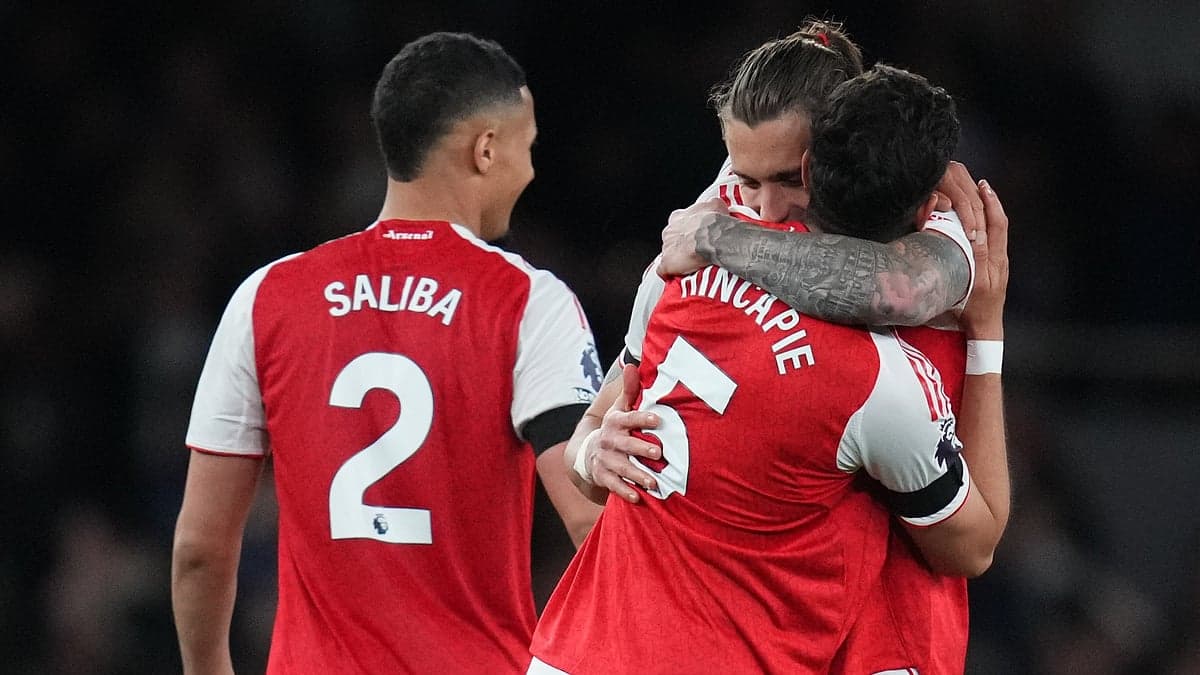
Under the lights at the Emirates Stadium, this was a meeting of opposites in the Premier League’s penultimate act: champions-elect precision against relegation-bound desperation. Arsenal arrived as league leaders, rank 1 with 82 points and a formidable overall goal difference of 43 (69 goals for, 26 against). Burnley, by contrast, came in 19th on 21 points, their overall goal difference a bruising -37 (37 for, 74 against). Following this result, the 1-0 scoreline felt almost modest, but it was entirely in keeping with the seasonal DNA of both sides.
At home, Arsenal’s numbers framed the story even before a ball was kicked. Across 19 home matches they had scored 41 goals (an average of 2.2 at home) and conceded just 11 (0.6 at home), with 11 home clean sheets. This is a team built on territorial dominance and defensive control. Burnley, on their travels, had a far more fragile profile: 20 away goals from 19 games (1.1 away) but 46 conceded away (2.4 away), with zero away clean sheets. The clash was less about whether Arsenal would create, and more about how long Burnley could resist.
Mikel Arteta doubled down on his most trusted structure, rolling out a 4-3-3 that has been his primary formation this season (24 league games in that shape). David Raya anchored the back, shielded by a back four of C. Mosquera, W. Saliba, Gabriel and R. Calafiori. In front, Declan Rice sat as the stabilising pivot, with Martin Ødegaard and Eberechi Eze as dual interiors, threading lines between Burnley’s compact banks. The front three of Bukayo Saka, Kai Havertz and Leandro Trossard offered a blend of width, aerial presence and half-space craft.
Opposite him, Mike Jackson chose a 4-2-3-1, a structure Burnley have leaned on 12 times this season. M. Weiss started in goal behind a defence of K. Walker, A. Tuanzebe, M. Esteve and Lucas Pires. Florentino and L. Ugochukwu formed the double pivot, tasked with screening the central corridors against Ødegaard and Eze. Ahead of them, L. Tchaouna, H. Mejbri and J. Anthony supported Z. Flemming, Burnley’s standout attacking figure this season with 10 league goals and 37 shots, 20 on target.
The tactical voids were clear before kick-off. Arsenal were without M. Merino (foot injury), J. Timber (ankle) and B. White (knee), all listed as Missing Fixture. It forced Arteta into a pure centre-back pairing of Saliba and Gabriel, with Mosquera and Calafiori as orthodox full-backs rather than the hybrid roles White or Timber might have offered. The absence of Merino reduced Arsenal’s midfield rotation options, putting more creative and tempo responsibility on Rice, Ødegaard and Eze.
Burnley’s own absences were arguably more destabilising. J. Beyer (hamstring) and J. Cullen (knee) both missed out, removing a central defensive option and a key midfield organiser. Without Cullen’s control, the onus fell heavily on Florentino and Ugochukwu to manage Arsenal’s rotations between the lines. In a side already conceding an overall average of 2.0 goals per game, structural cohesion in midfield was always going to be fragile.
Disciplinary profiles shaped the emotional undercurrent. Arsenal’s yellow cards this season have a clear late-game tilt: 26.00% of their bookings arrive between 76-90 minutes, with another 20.00% between 61-75. Burnley’s pattern is more chaotic. Their yellows spike between 16-30 minutes (20.31%) and then again late: 18.75% between 76-90 and another 18.75% between 91-105. Their red cards have been scattered in the 31-45, 76-90 and 91-105 windows. This is a team that can lose control emotionally as the pressure builds.
Within that landscape, the key duels were sharply defined.
In the “Hunter vs Shield” battle, Arsenal’s primary goal threat came from the collective rather than a single scorer, but Viktor Gyökeres loomed large from the bench as the league’s sixth-ranked attacker by rating, with 14 goals and 3 penalties scored this season. Even when not starting, his presence reframes how opponents defend the box late on. Burnley’s shield, such as it is, has been porous: 74 goals conceded overall, with those 46 on their travels exposing a back line that struggles to track runners and defend the second phase. W. Saliba and Gabriel, by contrast, operate in a system that has allowed just 26 goals overall, and only 11 at home. Any isolated transition against them was always going to be a low-percentage route for Burnley.
For Burnley, Z. Flemming was the designated hunter. Ten league goals from midfield, 37 shots with 20 on target, and a duel profile of 268 total duels with 109 won mark him as their most aggressive vertical presence. His matchup against Rice and the Arsenal centre-backs was pivotal: if he could pin Rice deeper and drag Saliba or Gabriel out, Burnley might have found pockets for Mejbri or Tchaouna. In practice, Arsenal’s compact 4-3-3 funnelled him into crowded central zones, limiting his capacity to drive at the back line.
The “Engine Room” duel was even more stark. Ødegaard and Trossard both sit among the league’s top assist providers, each with 6 assists. Ødegaard’s 40 key passes and 84% pass accuracy, alongside Trossard’s 36 key passes at 77% accuracy, make Arsenal’s right and left half-spaces the creative heart of their game. Add Saka’s 63 key passes and 5 assists, and you have a trio that thrives on overloads and third-man runs.
Their opposite numbers in claret were more about disruption than construction. Florentino and Ugochukwu needed to close lanes into Ødegaard and deny Saka the inside channel, while K. Walker’s profile as a high-volume defender (55 tackles, 10 blocked shots, 44 interceptions and 9 yellow cards) underlined his role as Burnley’s primary fire-fighter on the flank. His duels with Trossard and Calafiori were a constant balancing act between aggression and the risk of another booking.
From a statistical prognosis standpoint, the outcome aligned almost perfectly with expectation. Arsenal, heading into this game, were averaging 1.9 goals overall and conceding just 0.7, with only 3 matches all season where they failed to score. Burnley, on their travels, were conceding 2.4 per game and had failed to score away 5 times. The 1-0 scoreline actually flatters Burnley’s defensive record more than it dents Arsenal’s attacking metrics; the home side simply leaned into control rather than chaos.
Arsenal’s penalty profile (4 taken, 4 scored, 100.00% conversion, 0 missed) removed the usual lottery from any potential spot-kick scenario, while Burnley’s own perfect record from 2 penalties this season never came into play in a match where their attacks were too sporadic to generate sustained box pressure.
In the end, this was a match where structure, season-long trends and individual quality converged neatly. Arsenal’s 4-3-3, honed across 24 league outings, smothered a Burnley side that has spent the campaign shape-shifting through 7 different formations without finding a stable defensive identity. The league table, the home and away splits, and the profiles of the key actors all pointed in the same direction—and over 90 minutes at the Emirates, the football simply followed the script.
Related News

Premier League Managers Facing Potential Sackings During International Break

Arsenal's Myles Lewis-Skelly Names Unexpected Tottenham Rival as Toughest Premier League Opponent

Three Premier League Players Shining Early This Season

Premier League Early Season Reactions: Man City’s Strength, Arsenal’s Flaws, United’s Struggles

Premier League Returns October 10 After Extended September-October International Break

Fulham and Manchester United Share Points in 1-1 Draw