
Crystal Palace vs Arsenal: Premier League Season Conclusion
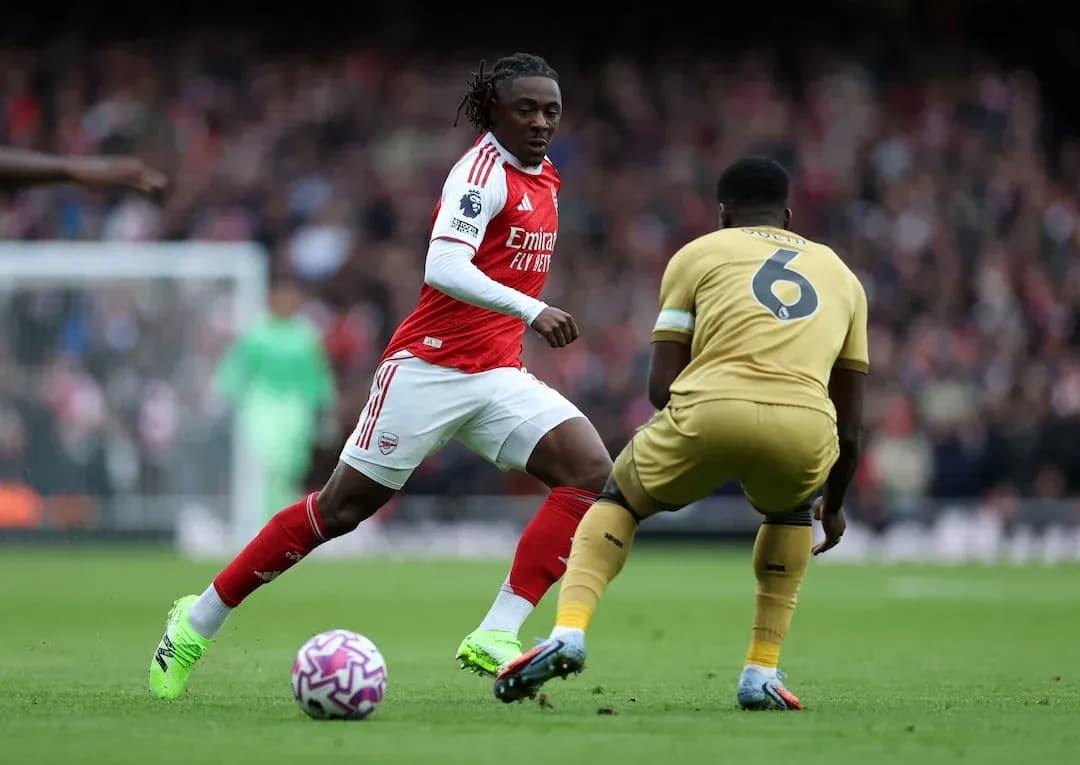
Selhurst Park exhaled at the final whistle, the Premier League season closing on a knife-edge contest that laid bare the contrasting identities of Crystal Palace and Arsenal. Following this result, the league table crystallised the story: Palace anchored in 15th with 45 points, Arsenal crowned champions on 85. The 2-1 away win for Arsenal felt less like a dead rubber on the final day and more like a manifesto of what each side has become over 38 matches.
I. The Big Picture – Structure and Season DNA
Palace went with what has become their default armour: a 3-4-2-1 under Oliver Glasner, a shape they used in 33 league games. D. Henderson stood behind a back three of N. Clyne, J. Lerma and C. Riad, with D. Munoz and R. Cardines stretching the pitch as wing-backs. Inside, W. Hughes and D. Kamada tried to knit the game, leaving J. Devenny and I. Sarr to buzz around lone striker J. S. Larsen.
The shape reflected their season: compact, often conservative at Selhurst Park. At home they played 19, winning 4, drawing 9 and losing 6. They scored 19 and conceded 23, an average of 1.0 goals for and 1.2 against at home, underpinning an overall goal difference of -10 (41 scored, 51 conceded). Palace’s campaign has been about grinding, not flowing – 12 draws overall, 12 clean sheets, but also 12 games where they failed to score.
Arsenal, by contrast, arrived as champions with the swagger of a side that has learned to dominate both home and away. Mikel Arteta opted for a 4-2-3-1, one of two main blueprints this season alongside the 4-3-3. K. Arrizabalaga was protected by a back four of M. Zubimendi, C. Mosquera, P. Hincapie and R. Calafiori. In front, C. Norgaard and M. Lewis-Skelly formed the double pivot, with N. Madueke, M. Dowman and G. Martinelli supporting Gabriel Jesus.
Arsenal’s numbers tell the story of a machine: 26 wins from 38, only 5 defeats, 71 goals scored and 27 conceded overall, for a goal difference of +44. At home they averaged 2.2 goals for and 0.6 against; on their travels, 1.6 for and 0.8 against. Eleven away wins, 8 away clean sheets – the champions travelled like a side that expected to control the narrative in hostile environments.
II. Tactical Voids – Absences and Discipline
Both squads came into this fixture with key absentees that subtly reshaped their plans. For Palace, C. Doucoure’s knee injury removed a natural destroyer from midfield, forcing Lerma into the back line and leaving Hughes and Kamada to juggle ball progression with defensive responsibility. C. Richards (ankle) and B. Sosa (injury) further narrowed Glasner’s defensive options, while the listing of E. Nketiah as a Crystal Palace absentee – a quirk of the data – symbolised the lack of a second, proven penalty-box finisher beyond J. Mateta on the bench.
Arsenal’s back line missed the familiarity of J. Timber and B. White, both sidelined with ankle and knee injuries respectively. That absence nudged Arteta towards a more hybrid back four, with players like Zubimendi and Calafiori comfortable stepping into midfield lanes, but it also demanded concentration from a relatively new unit under pressure in a tight ground.
Disciplinary trends framed the risk profiles. Palace’s yellow cards are spread across the game, but there is a notable cluster between 31-45 minutes and 46-60 minutes, each at 18.42%. Their red cards – just 2 in the league – came between 46-60 and 61-75 minutes, 50.00% each, a warning about emotional spikes just after the interval. Arsenal, meanwhile, have a late-game edge of aggression: 25.49% of their yellows arrive between 76-90 minutes, and 21.57% between 61-75. It is a team that pushes the line as the stakes rise but has stayed away from reds entirely.
III. Key Matchups – Hunter vs Shield, Engine Room
The “Hunter vs Shield” duel was written in the squads, even if not all protagonists started. For Arsenal, V. Gyökeres – on the bench here – has been their cutting edge this season: 14 league goals and 1 assist, with 41 shots and 22 on target. His presence as an option behind Gabriel Jesus underlined Arsenal’s offensive depth. On Palace’s side, J. Mateta, also among the substitutes, carried 12 league goals into the day. His 56 shots, 32 on target, and 4 penalties scored from 4 attempts made him the purest reference point in the box.
Set against Arsenal’s defensive record – just 27 conceded overall, 16 away, with an away average of 0.8 goals against – this was always going to be a test of whether Palace could turn territory into clear chances. Arsenal’s back line has allowed only 3 league games without scoring themselves, and their 19 clean sheets overall speak to a structure that rarely breaks in transition.
In midfield, the “Engine Room” duel pitted Palace’s technical double act of Hughes and Kamada against the more physically balanced axis of Norgaard and Lewis-Skelly. Hughes’ role as the metronome was to give Palace some rhythm against a side that can suffocate possession. Kamada, operating higher, needed to find pockets behind Arsenal’s double pivot and feed Sarr and Devenny between the lines.
For Arsenal, the creative threat lurking on the bench was as telling as the starting XI. M. Ødegaard, with 6 assists and 1 goal in 24 appearances, has completed 828 passes at an 84% accuracy, with 40 key passes. Alongside him, L. Trossard’s 6 goals and 6 assists, plus 36 key passes and 56 dribble attempts, gave Arteta the option to tilt the game from the flanks or the half-spaces if the initial structure stalled. That depth of playmaking contrasted sharply with Palace, who rely more on system and vertical transitions than on a single, high-volume creator.
At the back, Palace’s most imposing defensive figure this season, M. Lacroix, watched from the bench. His campaign numbers – 60 tackles, 18 blocked shots, 45 interceptions, and 204 duels won from 333 – paint the picture of a defender who attacks danger. His single red card and 4 yellows underline that he plays on the edge, but his absence from the starting XI left Palace without their most dominant one-v-one stopper against a technically rich Arsenal frontline.
IV. Statistical Prognosis and Tactical Verdict
Following this result, the numbers feel almost inevitable. Arsenal, with an overall scoring average of 1.9 goals per game and a defensive record of 0.7 conceded, came into Selhurst Park as a side statistically built to win tight matches. Palace, averaging 1.1 goals for and 1.3 against overall, have spent the season living in the margins – capable of frustrating, but rarely overwhelming.
Arsenal’s penalty record – 4 scored from 4, 100.00% conversion – added another layer of threat in a match where Palace’s tendency to collect cards in the middle phases could easily have tipped into decisive set-piece moments. Palace, too, have been flawless from the spot this season, scoring 8 from 8, but their struggle has been getting into those high-value zones often enough, especially at home where they failed to score in 7 of 19 games.
The 2-1 scoreline at full time felt like a compressed version of the season’s story. Palace’s 3-4-2-1 gave them structure, spirit and moments of incision, but not quite enough sustained pressure to overwhelm one of Europe’s most balanced sides. Arsenal’s 4-2-3-1, backed by elite defensive metrics and a bench stacked with end-product in Gyökeres, Ødegaard and Trossard, allowed them to absorb, adjust and strike with the calm of champions.
In tactical terms, the prognosis this campaign has been clear: Palace are a side still learning how to turn solidity into consistent threat, while Arsenal have already solved that equation. Following this result, Selhurst Park knows exactly where the gap lies – not in effort, but in the ruthless efficiency that separates survival from supremacy.
Related News

Premier League Managers Facing Potential Sackings During International Break

Arsenal's Myles Lewis-Skelly Names Unexpected Tottenham Rival as Toughest Premier League Opponent

Three Premier League Players Shining Early This Season

Premier League Early Season Reactions: Man City’s Strength, Arsenal’s Flaws, United’s Struggles

Premier League Returns October 10 After Extended September-October International Break

Fulham and Manchester United Share Points in 1-1 Draw