
Burnley vs Wolves: A Relegated Clash at Turf Moor
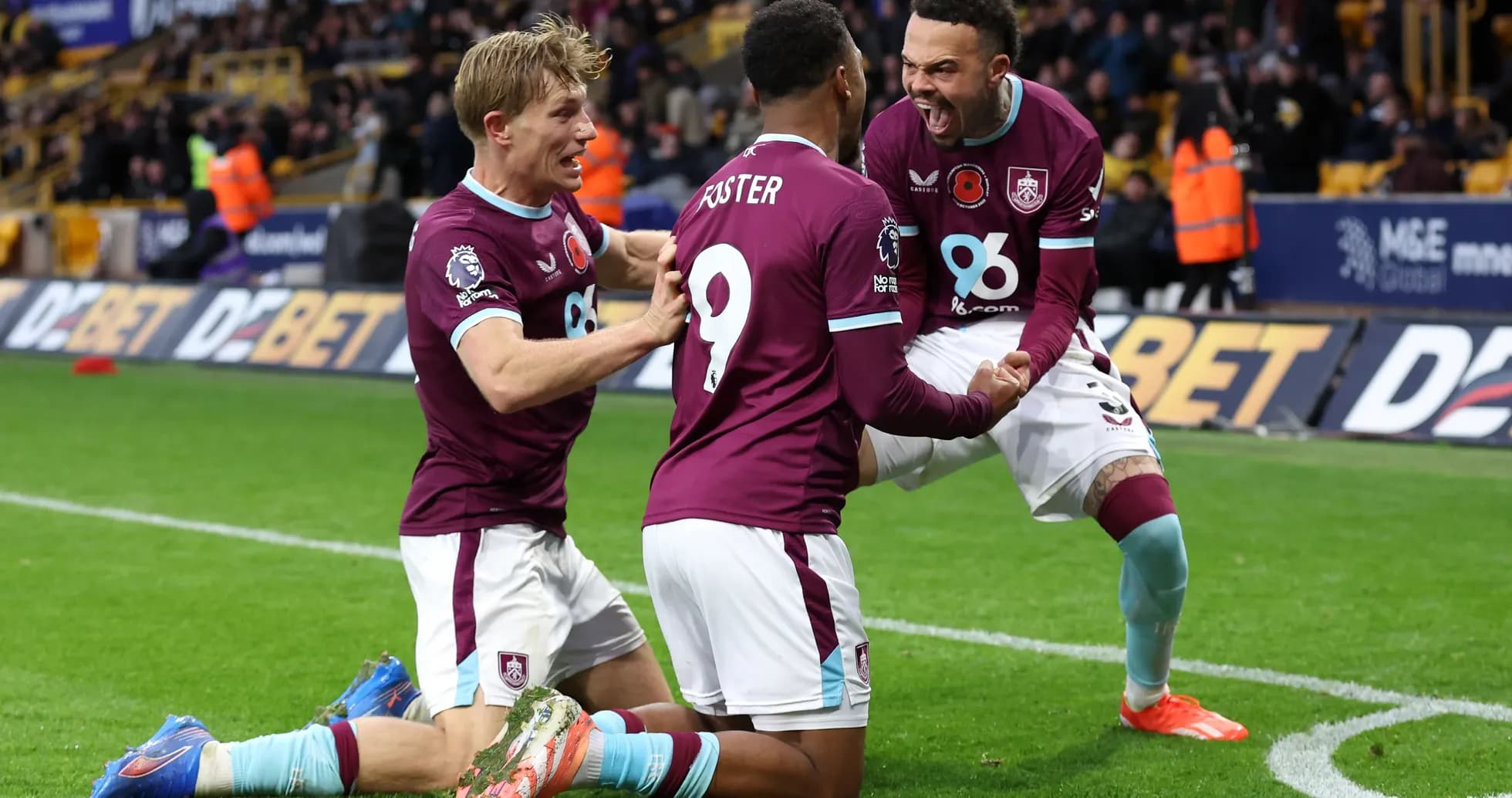
On the final afternoon at Turf Moor, two relegated sides met with little left to salvage but pride and small truths about who they had become. Burnley and Wolves, 19th and 20th in the Premier League table, shared a 1-1 draw that felt less like a climax and more like an epilogue – a season’s worth of flaws and flickers of quality condensed into 90 minutes.
I. The Big Picture – contrasting structures, similar fate
Following this result, Burnley close the campaign 19th with 22 points and a goal difference of -37, built on 38 goals scored and 75 conceded overall. At home, their season reads as a fragile balance: only 2 wins from 19, 7 draws, 10 defeats, 18 goals for and 29 against. Wolves finish bottom with 20 points and a goal difference of -41, their 27 goals for and 68 against overall underlining a chronic lack of cutting edge and defensive resilience. On their travels, Wolves never won: 0 away victories, 6 draws, 13 defeats, just 8 away goals and 34 conceded.
The tactical shapes on the day captured each side’s seasonal DNA. Burnley, under Mike Jackson, reverted to their most-used structure, a 4-2-3-1 that has been deployed 13 times this campaign. Wolves, coached by Rob Edwards, leaned again on a 3-4-2-1, the framework they have used in 12 league matches. The formations set up a clear structural duel: Burnley’s double pivot and three advanced midfielders trying to overload Wolves between the lines; Wolves’ back three and wing-heavy midfield seeking to spring transitions.
II. Tactical voids and absences – thin margins, thinner depth
Both squads arrived diminished. Burnley were again without J. Beyer (hamstring) and J. Cullen (knee), two absences that strip depth from the spine. Beyer’s absence forced reliance on the central pairing of A. Tuanzebe and B. Humphreys, while Cullen’s injury meant the double pivot rested on Florentino and L. Ugochukwu, a duo heavy on physicality and screening but lighter on progressive passing.
Wolves’ list was longer and equally structural: L. Chiwome (knee), M. Doherty (muscle injury), E. Gonzalez (knee) and S. Johnstone (knock) were all missing. Without Doherty’s experience and flexibility down the flank, the responsibility for width and balance in the 3-4-2-1 fell squarely on R. Gomes and D. M. Wolfe, with L. Krejci and Y. Mosquera asked to defend big spaces behind them.
Across the season, discipline has shaped both squads’ tactical edges. Burnley’s yellow cards have clustered in the 16-30 minute window (19.70%) and again late from 76-90 (18.18%) and into added time (91-105 at 19.70%), a pattern of early and late stress that mirrors a side often chasing games. Red cards have arrived at 31-45, 76-90 and 91-105 minutes (each 33.33%), underlining how emotional spikes around half-time and full-time have cost them. Wolves, by contrast, have absorbed most cautions in the 46-60 minute band (27.50%), then 61-75 (20.00%) and 76-90 (18.75%), suggesting a side that starts reasonably controlled but frays as intensity and fatigue climb after the break. Their red cards are spread between 31-45, 46-60 and 61-75, again pointing to mid-game volatility.
III. Key matchups – Hunter vs Shield, and the engine room war
Hunter vs Shield: Z. Flemming vs Wolves’ back three
Burnley’s primary offensive reference was Z. Flemming, officially listed as a forward in this match but a season-long attacking midfielder and their standout scorer. Overall he has produced 11 league goals from 29 appearances, with 38 shots and 21 on target, and has twice converted from the spot without a miss. His game is built on intelligent occupation of the half-spaces and a willingness to duel – 274 overall duels, with 114 won – and he carries a physical presence at 185cm and 84kg.
He was set against a Wolves defensive unit that has been brittle over the season. Overall they have conceded 68 goals, 34 at home and 34 on their travels, with an average of 1.8 goals against per game both home and away. Away from home, that 1.8 average combined with just 0.4 goals scored on their travels paints the picture of a team that rarely controls territory or scoreboard.
Within that back line, Y. Mosquera stands out statistically: 62 tackles, 17 blocked shots and 29 interceptions across the season, plus 280 duels with 160 won. He is an aggressive, front-foot defender, and his 12 yellow cards reflect that edge. The duel between Flemming drifting into the right and central channels and Mosquera stepping out from the back three was a clear “hunter vs shield” narrative. Burnley’s structure aimed to isolate Mosquera and S. Bueno with Flemming, J. Anthony and L. Tchaouna rotating around the number 10 space, while Wolves tried to compress that zone with their midfield box.
Engine Room: Florentino & L. Ugochukwu vs Andre & A. Gomes
The heart of the contest lay in midfield. Burnley’s double pivot of Florentino and L. Ugochukwu was tasked with protecting a back four that, overall, has conceded 75 league goals – 29 at home and 46 away – and with launching transitions for the trio of Tchaouna, Mejbri and Anthony behind Flemming. Their remit was conservative: screen Hwang Hee-Chan and A. Armstrong between the lines, then find H. Mejbri early.
Wolves’ response was a combative central pair: Andre and A. Gomes. Andre has been one of the league’s more industrious midfielders: 1306 passes with 91% accuracy, 82 tackles, 13 blocked shots, 30 interceptions and 290 duels with 148 won. He also carries 12 yellow cards, evidence of how often he operates on the edge of the law to break up play. A. Gomes complements him with even higher defensive volume: 108 tackles, 6 blocks, 36 interceptions and 449 duels with 227 won, plus 10 yellow cards.
This “engine room” battle was as much about control of tempo as territory. Burnley, who at home average 0.9 goals for and 1.5 against, needed Florentino and Ugochukwu to keep the game in front of them and feed Mejbri, whose season numbers (1 goal, 4 assists, 21 key passes and 34 dribble attempts with 20 successful) mark him as Burnley’s most creative central presence. Wolves, knowing their away attack averages just 0.4 goals per match, relied on Andre and A. Gomes to win the ball high and quickly connect into the front three of M. Mane, Hwang Hee-Chan and A. Armstrong.
IV. Statistical prognosis – a draw that fits the numbers
Following this result, the 1-1 scoreline sits neatly within both teams’ statistical profiles. Burnley’s overall scoring average of 1.0 goals per game and concession rate of 2.0 suggest they typically lose by margins, but at Turf Moor their 0.9 scored and 1.5 conceded per home match point to low-scoring, tight affairs. Wolves’ overall 0.7 goals for and 1.8 against, and particularly their away record of 0.4 scored and 1.8 conceded, reinforce the expectation of a match where the visitors struggle to create volume but are always vulnerable.
In xG terms – even without explicit figures – the patterns are clear. Burnley, a side that has failed to score in 14 league matches overall, lean heavily on individual moments from Flemming and the delivery of players like Mejbri and K. Walker, whose 13 key passes and 56 tackles show a full-back constantly trying to progress play while defending large spaces. Wolves, with 19 failed-to-score games overall (12 away), have been heavily dependent on flashes from their forwards and the high regains of Andre and A. Gomes.
Defensively, neither side carries the solidity to protect narrow leads. Burnley’s 4 clean sheets overall – all at home – underline how rare complete control has been. Wolves mirror that fragility, with 4 clean sheets overall and only 1 on their travels. A 1-1 draw, then, reads as the logical midpoint between two teams who concede too often to hold what they have and create too little to pull clear.
In narrative terms, this was a match between two relegated teams whose structures made sense on paper but were undermined across the season by thin depth, disciplinary strain and defensive leakage. At Turf Moor, the 4-2-3-1 and 3-4-2-1 cancelled each other out just enough to share the final points – a closing chapter that confirms, rather than changes, who Burnley and Wolves have been all year.
Related News
Premier League Managers Facing Potential Sackings During International Break
Arsenal's Myles Lewis-Skelly Names Unexpected Tottenham Rival as Toughest Premier League Opponent

Three Premier League Players Shining Early This Season

Premier League Early Season Reactions: Man City’s Strength, Arsenal’s Flaws, United’s Struggles

Premier League Returns October 10 After Extended September-October International Break

Fulham and Manchester United Share Points in 1-1 Draw