
Manchester City Falls to Aston Villa: A Tactical Analysis
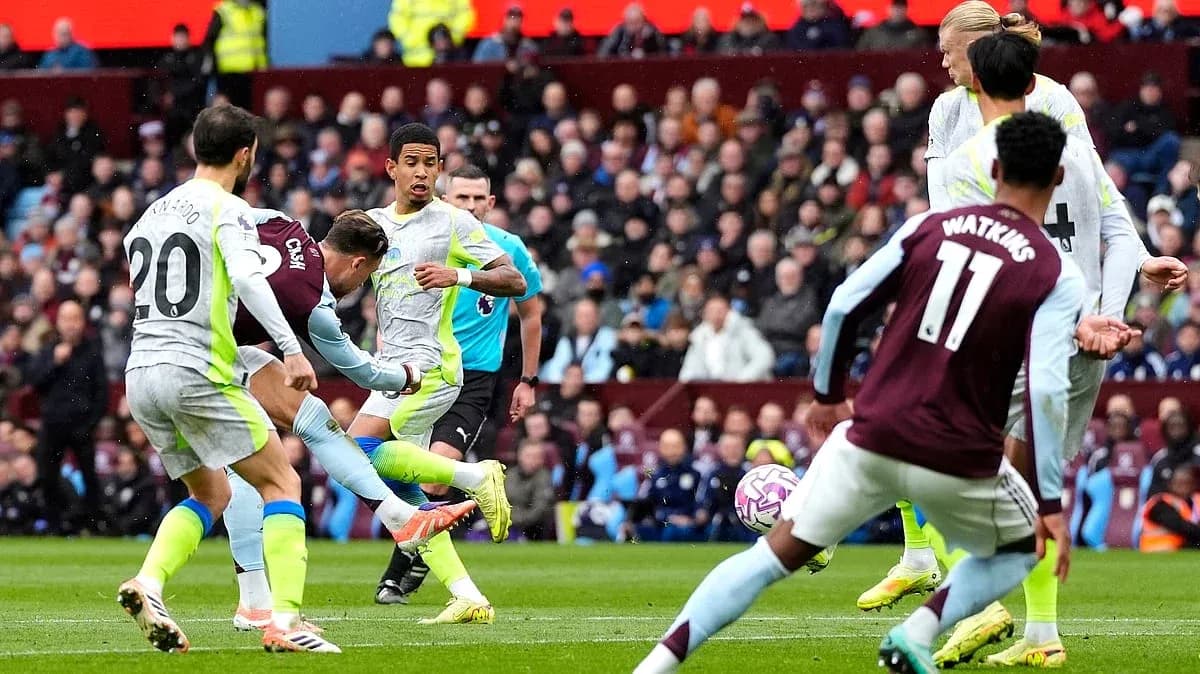
Under a grey Manchester sky at the Etihad Stadium, a season’s worth of fine margins tilted in an unexpected direction. Manchester City, the league’s slickest machine at home, fell 2-1 to Aston Villa despite leading 1-0 at half-time. Following this result, the numbers frame a jarring story: City close the Premier League campaign in 2nd on 78 points with a goal difference of 42 (77 scored, 35 conceded in total), while Villa lock in 4th with 65 points and a goal difference of 7 (56 scored, 49 conceded in total).
Heading into this game, City’s home record was a fortress: 14 wins from 19, with 45 goals for and just 14 against at the Etihad, an average of 2.4 goals scored and 0.7 conceded at home. Aston Villa arrived as dangerous travellers but not dominant ones, with 7 away wins from 19, scoring 24 and conceding 27 on their travels, an average of 1.3 scored and 1.4 conceded away.
Pep Guardiola rolled out a rare 4-2-2-2, a bolder, more vertical shape than City’s most-used 4-1-4-1 and 4-3-3 structures this season. Unai Emery, in contrast, doubled down on Aston Villa’s identity: the 4-2-3-1 that has underpinned 34 league matches, compact without the ball and ruthless in transition.
Tactical Voids and Selection Gambles
The absences told their own tactical story, particularly for Villa. Unai Emery was without E. Martinez (finger injury), B. Kamara (knee injury) and Alysson (muscle injury), all listed as Missing Fixture. In Martinez’s place, M. Bizot started in goal, altering Villa’s build-up profile and penalty-box command. Without Kamara, the double pivot of Douglas Luiz and L. Bogarde carried both the screening and progression load.
Despite those gaps, Villa’s spine remained imposing: V. Lindelof and T. Mings at centre-back, Douglas Luiz as the metronome, and O. Watkins as the reference point up front. On the flanks, I. Maatsen and A. Garcia had to manage City’s wide overloads while still providing enough width to release L. Bailey and E. Buendia in transition.
City’s own “void” was more structural than personnel-based. The season’s top scorer E. Haaland – 27 league goals in total, plus 3 penalties scored and 1 missed – was not in the starting XI, with T. Reijnders and P. Foden listed as the nominal forwards. That decision shifted City’s attacking reference from a penalty-box finisher to more fluid, rotating forwards. The bench, however, was stacked with creative artillery: R. Cherki (12 league assists in total), J. Doku, M. Nunes, M. Kovacic and O. Marmoush.
Disciplinary patterns also framed the risk zones. Heading into this game, City’s yellow-card curve spiked late: 20.90% of their league yellows came between 76-90 minutes, a clear sign of late-game emotional and tactical strain. Aston Villa, by contrast, were most combustible just after the interval: 29.31% of their yellows arrived between 46-60 minutes, with their only league red card this season shown in the 61-75 minute window. This match was always likely to crackle around the hour mark and in the closing stretch.
Key Matchups
Even without starting, the spectre of E. Haaland hung over Villa’s defensive line. Overall, City averaged 2.0 goals per game in total this campaign, with their best home wins stretching to 5-1. Villa, conceding 1.3 goals per game in total and 1.4 on their travels, were always going to be stretched by City’s vertical surges and rotations between the lines.
Instead of the classic Haaland vs defence narrative, the “hunter” mantle in the XI fell to Foden and Reijnders. Foden, with 7 league goals and 5 assists in total and 56 key passes, drifted between lines, looking to exploit the half-spaces between Maatsen and Mings. Reijnders operated more as a connector, dropping off the front to link with Savinho and A. Semenyo.
For Villa, the clear hunter was O. Watkins – 16 league goals and 3 assists in total, with 60 shots and 38 on target. Up against R. Dias and J. Stones in City’s back four, Watkins’ duel numbers (283 total duels, 116 won) underlined his role as a constant physical and tactical nuisance. His channel runs between Dias and N. Ake, especially on City’s left, were the primary outlet whenever Villa broke City’s press.
Engine Room
In midfield, the duel that defined the game’s rhythm was City’s double pivot of Nico and Bernardo Silva against Douglas Luiz and Bogarde. Bernardo arrived as one of the league’s most industrious all-rounders: 2 goals, 4 assists, 53 tackles, and 6 blocked shots in total, plus 10 yellow cards that spoke to how often he operates on the edge of risk.
Douglas Luiz, by contrast, anchored Villa’s structure, recycling possession and shielding the back four. With Villa’s season-long identity built on the 4-2-3-1, his understanding with the No. 10 line of Buendia and Barkley allowed Villa to break pressure and find Watkins early.
From the bench, R. Cherki loomed as City’s pure playmaker: 12 assists and 61 key passes in total, plus 105 dribble attempts with 50 successful. His presence offered Guardiola a late-game solution against a tiring Villa block, particularly in those final 15 minutes when City both create and suffer more chaos, as reflected by their high late yellow-card share.
Statistical Prognosis and Tactical Verdict
Heading into this game, the Expected Goals models would have tilted heavily towards City. Their home averages – 2.4 goals scored and 0.7 conceded – combined with Villa’s away profile of 1.3 scored and 1.4 conceded suggested a baseline scenario of City generating the higher xG, with Villa relying on efficiency and transition moments.
Yet the 1-2 full-time scoreline confirms the other side of the numbers: Villa’s capacity to ride out pressure and strike in narrow windows. Their season’s biggest away win was 0-2, and this performance at the Etihad fits that template – controlled suffering, then sharp execution.
Following this result, the tactical verdict is stark. City’s 4-2-2-2 offered volume and territory but blunted their penalty-box edge without Haaland from the start. Villa’s 4-2-3-1, even shorn of Martinez and Kamara, held its shape, trusted its defensive line, and leaned on Watkins’ movement and the intelligence of Buendia and Barkley between the lines.
On the balance of season-long metrics, City remain the more complete side, but this match underlines a crucial truth of high-level football: structure and clarity can outweigh sheer firepower on the day. Villa arrived as underdogs on their travels and left the Etihad with a statement win, their Champions League-bound season sealed not by dominance, but by tactical discipline and ruthless timing.
Related News

Premier League Managers Facing Potential Sackings During International Break

Arsenal's Myles Lewis-Skelly Names Unexpected Tottenham Rival as Toughest Premier League Opponent

Three Premier League Players Shining Early This Season

Premier League Early Season Reactions: Man City’s Strength, Arsenal’s Flaws, United’s Struggles

Premier League Returns October 10 After Extended September-October International Break

Fulham and Manchester United Share Points in 1-1 Draw