
Australia vs Egypt: World Cup Knockout Clash in Texas
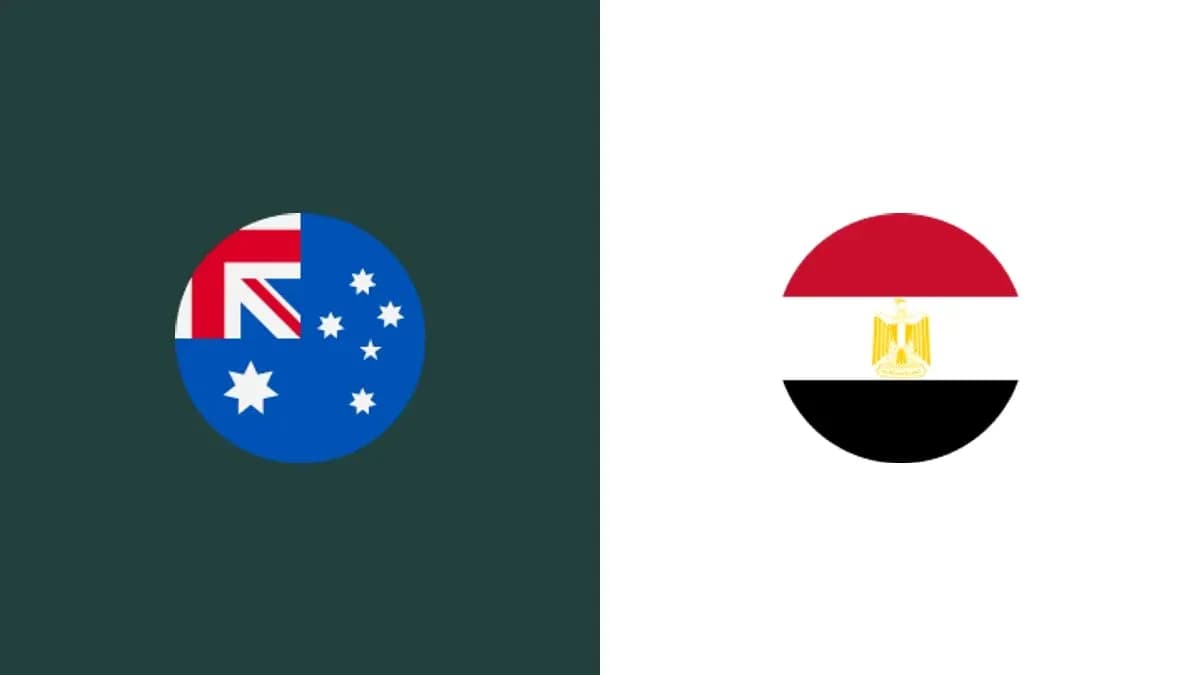
On a hot July evening in Arlington, two nations who have spent a lifetime on the fringes of World Cup history walk into Dallas Stadium knowing this: someone leaves with a milestone, someone leaves with a scar.
Australia are chasing something they have never managed – a win in a World Cup knockout tie. Egypt are trying to stretch a breakthrough tournament into a genuine era-defining run. One game, 90 minutes, maybe more, to redraw what each country believes is possible.
Kick-off is set for 3 July 2026 at 18:00 GMT, 14:00 EST. The stakes are far bigger than the Round of 32 label suggests.
Socceroos’ steel meets Pharaohs’ flair
Tony Popovic has built an Australia side that does not apologise for what it is. Grit first. Structure first. Then, if the game opens up, a flash of pace or a set-piece punch.
Their route out of Group D was not pretty, but it was controlled. They opened with a 2-0 win over Turkey, lost 2-0 to hosts United States, then ground out the 0-0 draw with Paraguay that dragged them over the line as runners-up. Across three group matches: two goals scored, two conceded, and a defensive identity that feels non-negotiable.
Egypt’s path could hardly look more different on paper, yet they also finished second – this time in Group G – without losing a game. They went stride for stride with Belgium in a 1-1 draw, tore through New Zealand 3-1 to claim their first-ever World Cup win in the modern era, and then held their nerve in a 1-1 scrap with Iran.
They averaged more than four shots on target per match in the group. This is not a side content to wait. Hossam Hassan has given the Pharaohs a front-foot edge, a willingness to commit numbers and test every seam of a defensive block.
So it comes to this: Australia’s refusal to break shape against Egypt’s refusal to stop attacking.
Salah’s shadow and Australia’s missing firepower
The biggest question in Texas is a hamstring.
Mohamed Salah, Egypt’s captain and talisman, is nursing the strain he picked up in that draw with Iran. His status hangs over the tie. If he starts, how long can he go? If he comes from the bench, what state will the game be in when he appears?
Without a fully fit Salah, the creative load shifts sharply onto Omar Marmoush. The Manchester City forward has already looked comfortable as the focal point of this side, drifting into pockets, linking play, and finishing with the composure expected at his club level. If Salah’s minutes are restricted, Marmoush becomes not just a threat, but the reference point for everything Egypt do in the final third.
Australia have their own issues. Veteran forward Mathew Leckie and Jacob Italiano are out of the tournament, stripping Popovic of experience and depth in the attacking lanes. It sharpens the spotlight on the players who remain, and on a team that has only found the net twice in three World Cup matches.
Popovic’s answer lies in the spine. Harry Souttar’s aerial dominance, Alessandro Circati’s timing in the tackle, and the organisation in front of goalkeeper Patrick Beach form the backbone of a side that wants to drag the contest into their kind of game – slow, controlled, attritional.
Where the game will tilt: flanks vs fast breaks
This match may well be decided in the wide channels.
Egypt love the left. They overload that flank, dragging centre-backs out of their comfort zone, then threading quick combinations into the box. Marmoush pulls wide, full-backs like Karim Hafez or Ahmed Fotouh (if selected) push high, and midfielders slide across to create passing triangles that can rip open even disciplined shapes.
Australia know what’s coming. Their response will be to hold, hold, and hold some more – then strike in a straight line the moment Egypt over-commit.
The Socceroos’ blueprint is blunt but dangerous: absorb pressure, then launch vertical counters into space. Teenage winger Nestory Irankunda is central to that plan. His pace is raw, his running direct, and in a game where Egypt’s back line often sets up high, one well-timed ball in behind could change everything.
For Egypt, the risk is obvious. Push too hard to break down Australia’s low block and they leave themselves open to those structural counter-punches. Play too cautiously and they risk allowing the match to drift into the kind of stalemate the Socceroos relish.
The balance of their midfield will be crucial. Marwan Attia and Mahmoud Saber, or whoever Hassan trusts as his anchors, must not only circulate the ball and feed the flanks, but also kill transitions before Irankunda and Cristian Volpato can run at a retreating defence.
Concentration vs composure
Australia’s task is brutally clear: they cannot switch off. Not once.
Give Marmoush a yard in the box, or lose track of a late Salah arrival from the right, and the punishment is likely to be immediate. The Socceroos’ defensive record in this tournament has been built on concentration – the 0-0 with Paraguay was defined by it – but this is a higher level of attacking variety than they have faced so far.
Egypt, though, face a different kind of examination. This is not about flair. It is about patience and composure against a low block designed to frustrate.
They will have more of the ball. They will spend longer in Australia’s half. The test is whether they can keep their structure when the first few intricate moves are smothered, when crosses are headed away by Souttar, when shots are blocked and the game threatens to turn scrappy.
Lose discipline, and the spaces Irankunda thrives on will appear. Stay calm, and the overloads and cut-backs that defined their group-stage performances will eventually find a crack.
Probable lineups and key figures
Popovic has kept his cards close, but a likely Australia XI looks settled in shape:
Beach; Circati, Souttar, Herrington; Bos, O'Neill, Irvine, Behich; Volpato, Irankunda, Metcalfe.
It is a side built on a three-man defensive core, with Jordan Bos and Aziz Behich offering width and Jackson Irvine providing legs and leadership in midfield. Volpato’s guile between the lines and Irankunda’s speed give them just enough threat to punish any Egyptian complacency.
Egypt’s expected lineup, fitness permitting, brings their stars into focus:
Shobeir; Hany, Ibrahim, Rabia, Hafez; Ateya, Saber; Ziko, Salah, Ashour; Marmoush.
Mostafa Shobeir has grown into the tournament in goal, Mohamed Hany and Yasser Ibrahim add experience at the back, while Ahmed Sayed "Zizo" and Emam Ashour provide the craft and energy between midfield and attack. If Salah starts on that right side, the angles of Egypt’s attacks change instantly.
Form and history offer few clues
Recent form does not separate them.
Australia’s last five matches: one win, two draws, two defeats. They have scored four and conceded four in that run, including the pre-tournament friendlies against Switzerland (1-1) and Mexico (0-1). This is a team that rarely gets blown away but just as rarely runs away from anyone.
Egypt’s last five tell a similar story in numbers, if not in narrative: one win, two draws, two losses, with five goals scored and four conceded. The difference lies in the significance of that win – the 3-1 over New Zealand that finally put a World Cup victory on the board – and in the confidence gained from standing up to Belgium and Iran.
Head-to-head history offers only a faint echo. The two nations have met just once in the available data, a 3-0 Egypt win in a 2010 friendly. Sixteen years on, different players, different stakes, different world.
Both arrived here as group runners-up. Both have already made a kind of history – Australia with back-to-back knockout appearances, Egypt with their first progression from a modern World Cup group. Neither is satisfied.
So the question hangs over Dallas Stadium: whose story grows from here, and whose ends with a lesson in what might have been?
Related News

Anthony Joshua Names Murat Gassiev as Next Opponent if He Defeats Tyson Fury

UFC 332: Start Time and Fight Highlights for Natalia Silva vs. Wang Cong

Court McGee Opens Up About Choosing UFC 332 as His Final MMA Fight
WBC Orders Lightweight Title Unification: William Zepeda vs Jadier Herrera
BCCI Pension List: Monthly Payments to Retired Indian Cricketers in 2025
Why Fury vs Joshua Is Set for Cardiff, and Dua Lipa’s Unexpected Role