
Bayern München vs Paris Saint Germain: Champions League Semi-Final Review
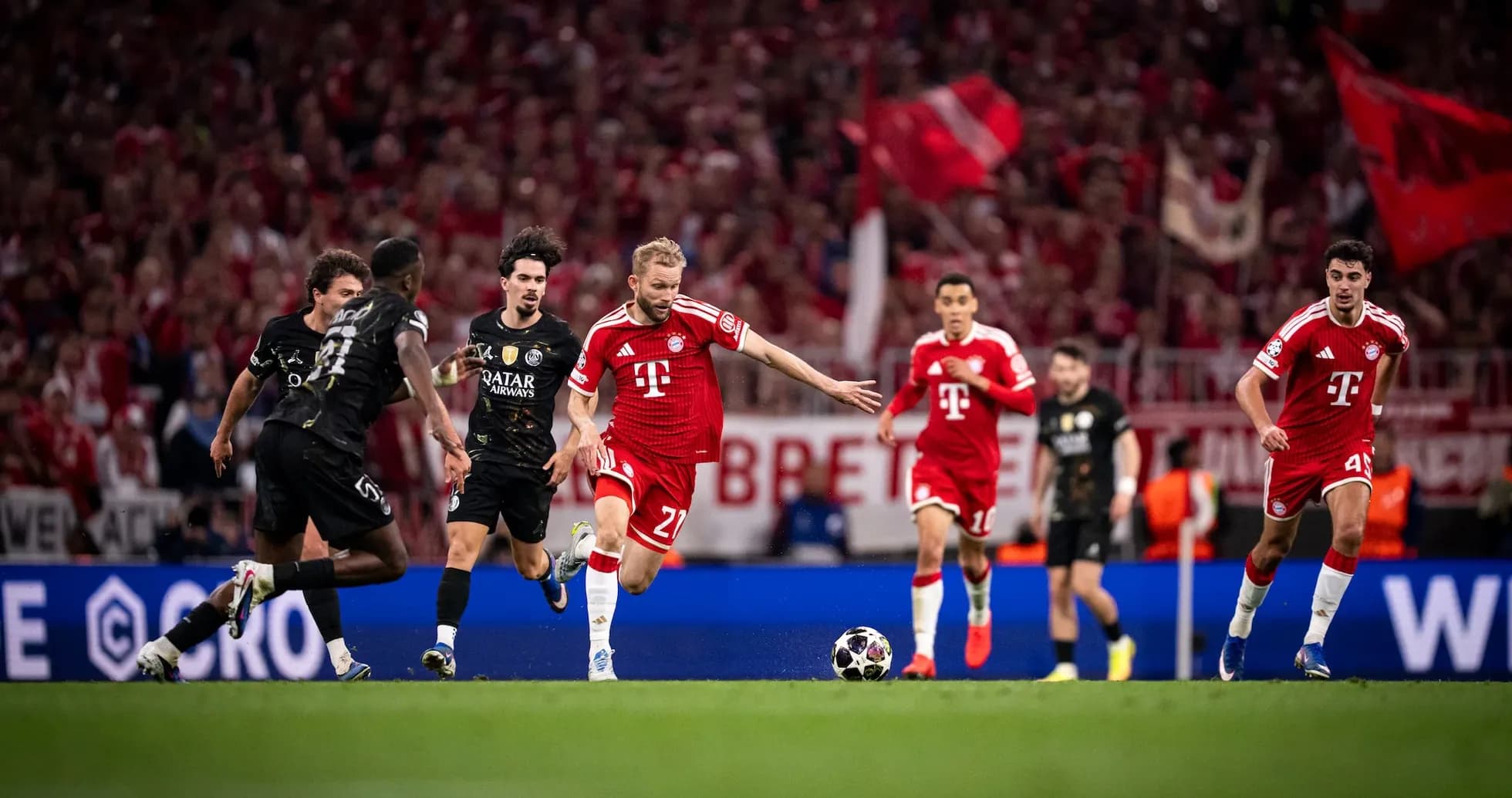
Bayern München and Paris Saint Germain produced a tense 1–1 draw at Allianz Arena in this UEFA Champions League semi-final first leg, a match defined by structural contrast rather than chaos. PSG struck first through O. Dembele inside three minutes, then retreated into a compact 4-3-3/4-5-1 hybrid that tried to compress central space. Bayern, in Vincent Kompany’s 4-2-3-1, responded with territorial dominance and finally broke through in the 90th minute via H. Kane, assisted by A. Davies. Across 90 minutes, Bayern’s 66% possession and 18 shots met PSG’s sharper transitions and 1.03 xG, leaving the tie finely balanced but tactically well-mapped for the return leg.
The scoring opened at 3' when PSG exploited Bayern’s early rest-defence. From the left, K. Kvaratskhelia found space to receive and drive, drawing the back line narrow before feeding O. Dembele, who finished a normal goal with precision. That early strike immediately tilted the game-state: PSG could sit deeper, Bayern had to chase.
Discipline then began to shape the tempo. At 8', Nuno Mendes received a yellow card for a foul, signalling PSG’s willingness to break rhythm with aggressive interventions on Bayern’s wide players. Bayern’s frustration surfaced at 33', when Jonathan Tah was booked for argument rather than a challenge, an early indicator of emotional load on a back line now forced to defend transitions while also sustaining high possession.
On the cusp of half-time, at 45+3', Khvicha Kvaratskhelia was cautioned for time wasting, underlining PSG’s game management with a 1–0 lead and confirming their priority: protect the advantage, even at the cost of rhythm. The half-time score was 0–1 to PSG.
Second Half
The second half’s disciplinary pattern continued to mirror pressure zones. At 78', Luis Díaz was shown a yellow card for argument after a contentious phase, reflecting Bayern’s irritation at PSG’s disruptive defending. At 86', Marquinhos was booked for a foul, emblematic of PSG’s last-ditch defending as Bayern pushed numbers forward. Finally, at 90+7', Joshua Kimmich received a yellow card for argument, a late flashpoint after Bayern had equalised, capturing the emotional intensity of a semi-final where every marginal decision felt decisive.
The final key event was Bayern’s equaliser at 90': H. Kane converted from close range after A. Davies broke the left side and supplied the assist, a normal goal that validated Bayern’s persistent territorial control and flank overloads. The match finished 1–1 in regular time.
Team Structures
Structurally, Bayern’s 4-2-3-1 was built to monopolise the ball and pin PSG back. M. Neuer acted as a high starting point in possession, with J. Tah and D. Upamecano splitting and full-backs J. Stanisic (right) and K. Laimer (nominally a defender but functionally an aggressive right-back) pushing high. The double pivot of Joshua Kimmich and A. Pavlovic orchestrated circulation: Kimmich as the deep distributor, Pavlovic offering vertical support and second-ball security.
Ahead of them, M. Olise and Luis Díaz held wide positions to stretch PSG’s back four, while J. Musiala operated between lines as a classic No. 10, tasked with receiving in pockets behind Vitinha and J. Neves. H. Kane dropped short to link play, often creating a 4-2-4-0 shape in possession, with wingers and Musiala running beyond him.
The substitution vector altered Bayern’s dynamics. A. Davies (IN) came on for J. Stanisic (OUT) at 67', adding direct ball-carrying and overlapping threat on the left, which later produced the 90' assist. Kim Min-Jae (IN) replaced J. Tah (OUT) at 68', maintaining a high defensive line but with slightly more front-foot aggression. N. Jackson (IN) came on for J. Musiala (OUT) at 79', turning Bayern’s shape into something closer to a 4-2-4, with Jackson running channels and Kane dropping even deeper. L. Karl (IN) for D. Upamecano (OUT) at 85' was a late structural tweak, likely to maintain fresh legs in the back line while Bayern committed numbers forward.
PSG’s 4-3-3 under Enrique Luis was transition-oriented. M. Safonov, with 5 goalkeeper saves, anchored a low-to-mid block that accepted territorial inferiority. Full-backs W. Zaire-Emery and Nuno Mendes initially pushed high in the first phase, but after the early goal they recalibrated into a flatter line of four, prioritising compactness over overlap.
In midfield, F. Ruiz, Vitinha, and J. Neves formed a narrow triangle. Vitinha and Neves focused on screening passing lanes into Musiala and Kane, while Ruiz offered an outlet on the right half-space and helped PSG escape pressure. The front three of D. Doue, O. Dembele, and K. Kvaratskhelia were tasked with rapid transitions: Kvaratskhelia as the primary ball-carrier on the left, Dembele attacking the right half-space and central channels, and Doue providing depth and pressing triggers.
Substitutions reconfigured PSG’s block. B. Barcola (IN) came on for O. Dembele (OUT) at 65', preserving vertical threat on the right but with slightly more defensive work-rate. At 76', L. Hernandez (IN) replaced D. Doue (OUT), shifting PSG towards a more conservative posture: Hernandez could tuck in as a third centre-back out of possession, turning the shape into a 5-4-1 at times. Simultaneously, L. Beraldo (IN) came on for F. Ruiz (OUT), reinforcing defensive solidity in central zones. At 85', S. Mayulu (IN) replaced N. Mendes (OUT), giving fresh legs at left-back to cope with Bayern’s late wide overloads, though Mayulu ultimately could not prevent Davies’ decisive 90' contribution.
Statistical Overview
Statistically, the match validated the tactical story. Bayern’s 66% ball possession and 570 total passes (87% accuracy) versus PSG’s 34% and 301 passes (71% accuracy) underline a clear control-versus-transition dynamic. Bayern generated 18 total shots (6 on goal, 7 off, 5 blocked) and 1.4 xG, reflecting sustained pressure but also PSG’s ability to contest shooting lanes inside the box (13 shots inside, 5 outside). PSG, with 15 shots (7 on goal, 3 off, 5 blocked) and 1.03 xG, were more selective, their chances largely born from early and occasional counters rather than settled possession.
Defensively, M. Neuer’s 6 saves versus M. Safonov’s 5 saves highlight that, despite Bayern’s territorial control, PSG still produced a comparable volume of on-target attempts, reinforcing the danger of their transition model. Both sides finished with 3 yellow cards each, but the distribution of reasons is telling: PSG’s bookings (two for fouls, one for time wasting) aligned with game management and physical defending, while Bayern’s (three for argument) reflected psychological strain under scoreboard pressure.
Overall, Bayern’s overall form in this match was that of a high-possession, structure-driven side that eventually converted volume into a late goal, while PSG’s defensive index was strong: they limited Bayern’s xG to 1.4 despite long spells without the ball, and their compactness plus Safonov’s shot-stopping kept the tie level. The 1–1 scoreline, supported by xG and event data, accurately captures a contest where Bayern’s control and PSG’s transitions cancelled each other out, setting up a second leg where marginal adjustments in pressing height and wide protection could decide the finalist.
Related News
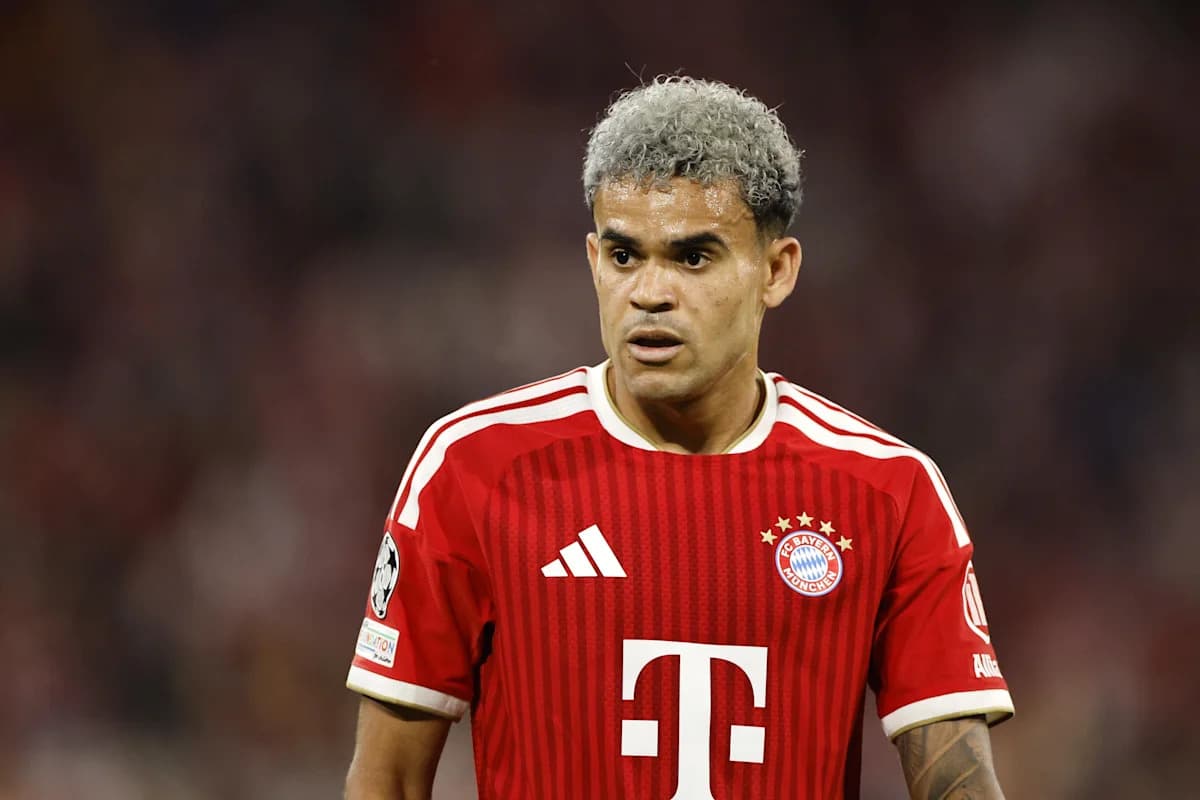
Luis Díaz Confident Bayern Munich Can Win Champions League
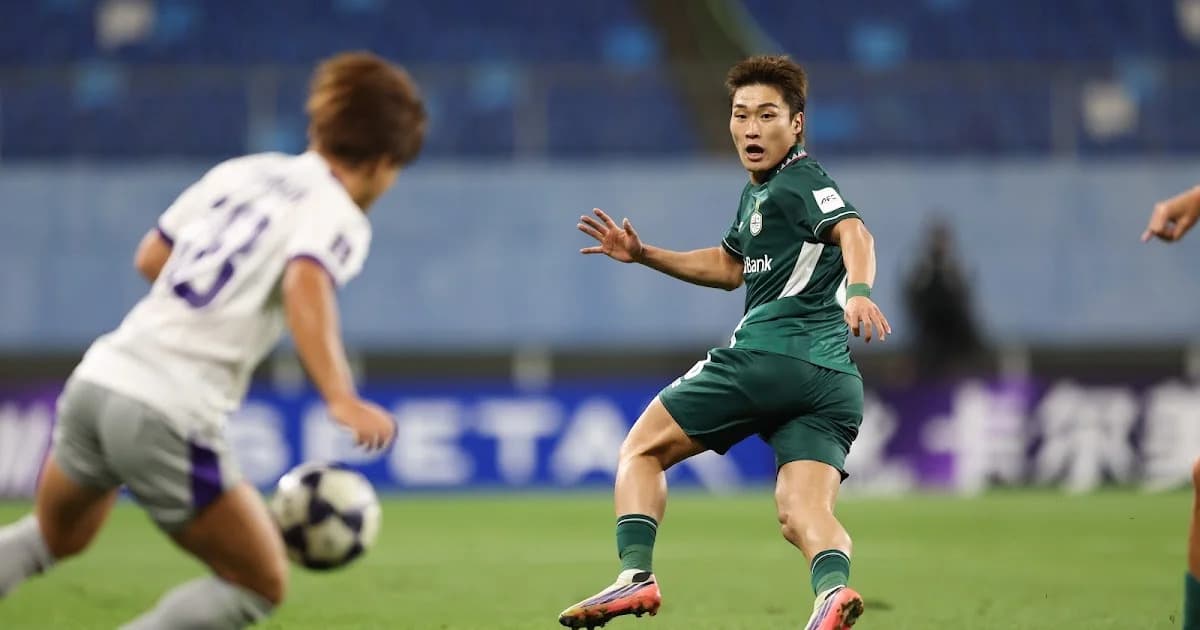
AFC Champions League Matchday One: Insights and Team Strategies
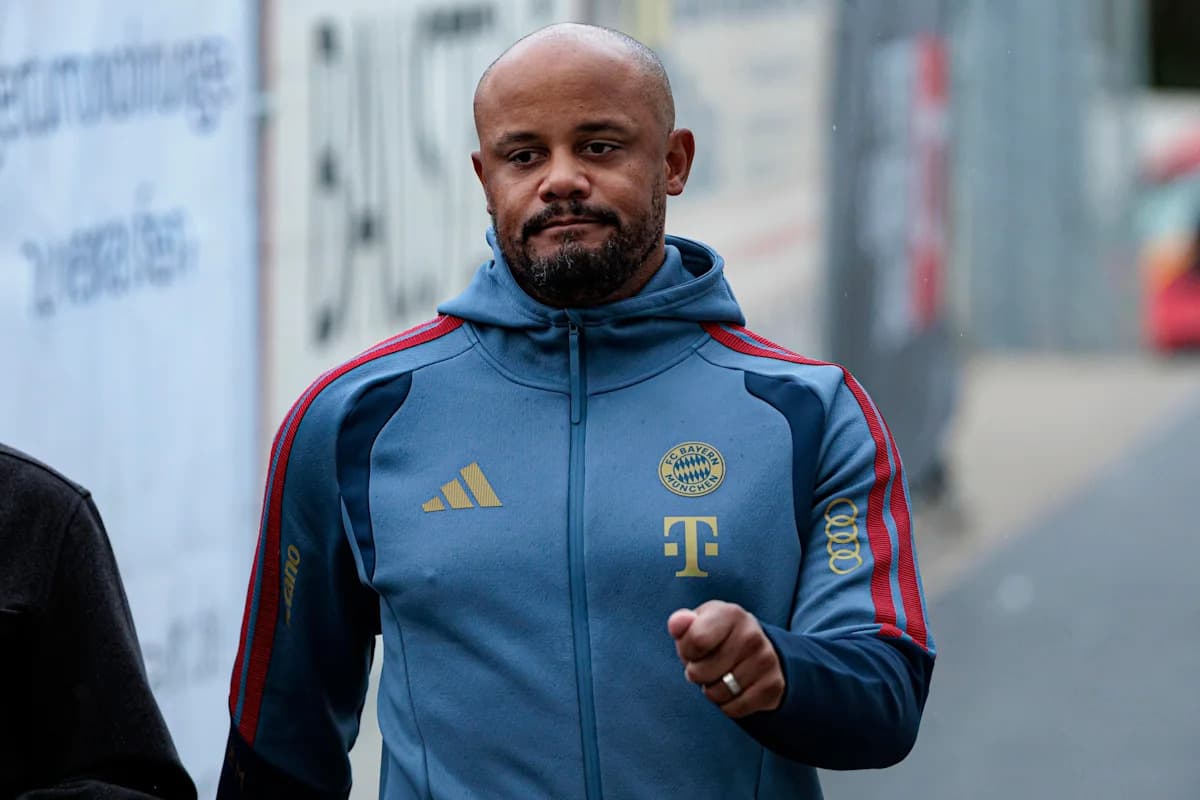
Vincent Kompany’s Bayern Munich Future Not Tied Solely to Champions League Success
Barcelona’s Camp Nou to Host 2029 Champions League Final, Munich Confirmed for 2028
Bayern Munich's Allianz Arena Set to Host 2028 Champions League Final
Allianz Arena to Host 2028 Champions League Final for Third Time