
Brazil’s VAR Controversy: From Pitch to FIFA
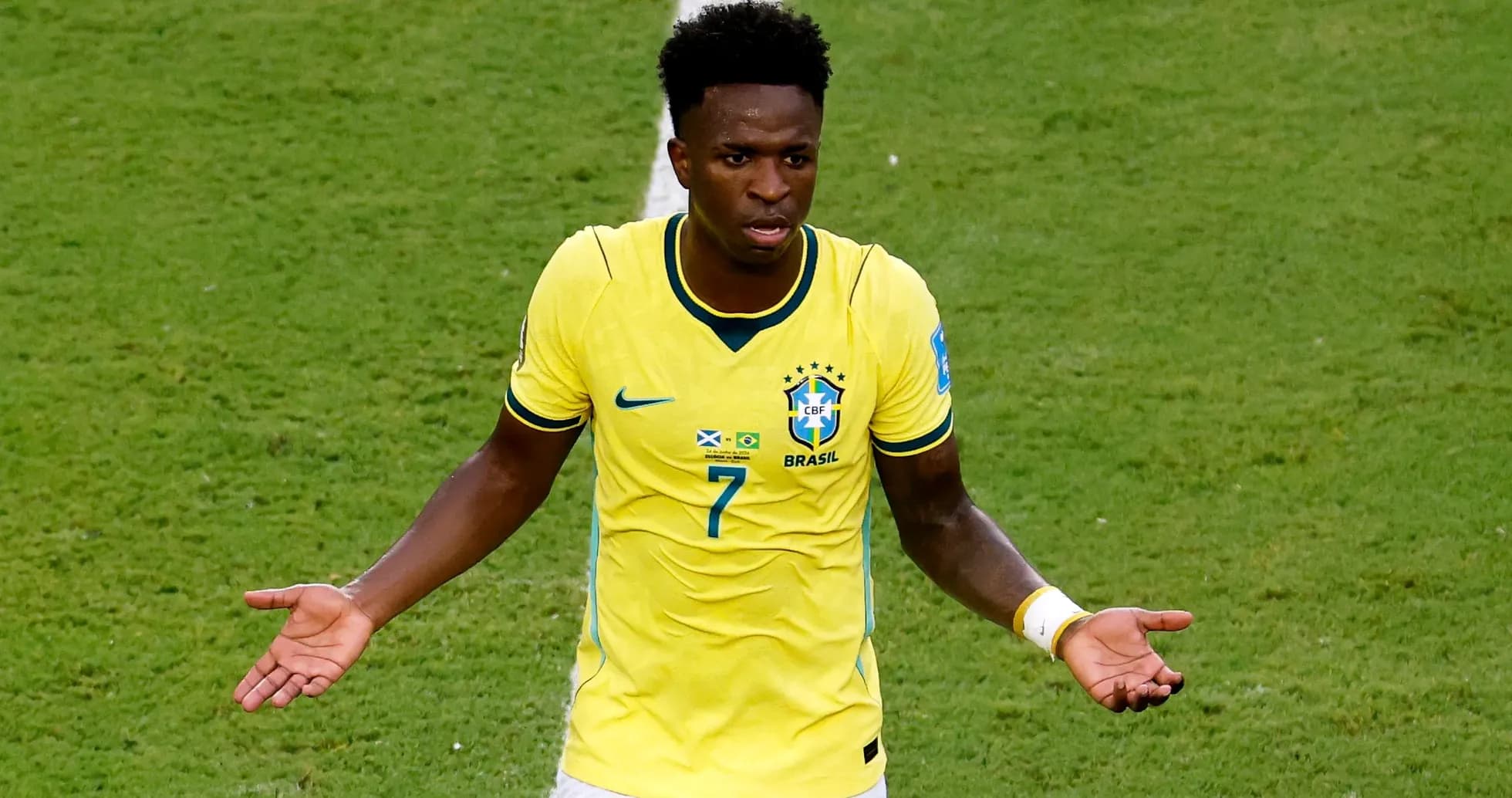
For a few seconds in the 21st minute, it felt like vintage Brazil. Jack Hendry hesitated, Vinicius Jr pounced, and Angus Gunn was left stranded as the ball slid into the corner. Two goals up, cruising, statement made.
Then came the familiar modern twist: the raised finger to the ear, the slow delay, the cold interruption of VAR.
Referee Cesar Ramos had already pointed to the centre circle. The goal stood. Until it didn’t. A review flagged a foul by Vinicius in the challenge on Hendry, and the strike was wiped from the scoreboard. The Brazilian bench erupted, arms thrown wide, Carlo Ancelotti incredulous on the touchline. What they saw as routine contact had just rewritten the script.
The controversy did not stay on the grass for long.
Brazil Take the Fight to FIFA
Inside hours, the debate shifted from the technical area to the corridors of power. CBF president Samir Xaud moved straight to the top, sending a formal letter to FIFA president Gianni Infantino that laid bare Brazil’s frustration with what they see as erratic officiating across the tournament.
At the heart of the complaint sits Ramos, the Mexican referee whose name is now etched into a growing Brazilian grievance file. The CBF have gone as far as to request that he be removed from any future Brazil matches in North America, arguing that his appointment was flawed from the outset.
In a document reported by Brazilian outlet Estadao, the federation referenced a “negative history” with Ramos, dating back to the 2018 World Cup group stage clash against Switzerland. On that night, Brazil felt they were denied a clear penalty and a foul in the build-up to the Swiss equaliser. Those decisions have lingered. For the CBF, the Scotland incident was not an isolated mistake, but part of a pattern.
The letter argues that Ramos should never have been put in charge of another Brazil game given that background. This is not a quiet murmur of discontent; it is a direct challenge to FIFA’s appointments and to the consistency of VAR intervention.
Messi Used as Exhibit A
In a striking move, Brazil even turned to their oldest footballing rival to make their point.
The CBF’s letter highlighted a goal scored by Lionel Messi for Argentina against Austria earlier in the tournament, pointing to similar levels of physical contact in the build-up that were allowed to stand. The implication was clear: what is deemed acceptable for one giant of world football is being punished when it comes to another.
For Brazil’s hierarchy, that contrast cuts deep. They are not merely arguing over a single disallowed goal, but over what they perceive as shifting lines of tolerance, applied differently depending on the shirt.
The document also noted the reaction on the field in the Scotland game. The decision, it said, “seemed unexpected not only for the Brazilian team, but also for the Scottish players,” whose immediate body language suggested they neither anticipated a review nor the dramatic overturning of the goal. When even the supposed victims of the foul look surprised, Brazil believe something is off.
Ancelotti Keeps Eyes on Japan
While the CBF wages its battle in boardrooms and inboxes, Ancelotti has little time for politics. His task is simpler and far more ruthless: win football matches.
Despite the VAR flashpoint, Brazil still took care of business. Vinicius Jr eventually did get his goal, this time one that survived every check and replay. Matheus Cunha added a third, and Brazil eased clear to finish top of Group C without real jeopardy on the scoreboard, even if the sense of injustice simmered underneath.
The reward is a round of 32 tie against Japan in Houston, a fixture that carries its own tactical questions but also a clear opportunity to reinforce their status as genuine contenders.
Ancelotti, as ever, cut through the noise when he spoke after the final whistle. “Now we are playing as a team, that is the goal. We are not perfect, we have things to improve. We can be a little quicker when we have control,” he said, before drilling into what matters most in knockout football. Solidity. Fewer errors. Sharper edge in the final third.
“I’m happy because the team has improved a lot, now we are solid. In the knockout stage, solidity is very important. We have a solid team. Compared to the first game, we are making fewer mistakes, we have more rhythm, and we are more effective up front.”
The message was measured but unmistakable: let others argue over the whistle; Brazil will try to let the ball do the talking.
Yet as they head to Houston, one question lingers over this campaign. In a tournament increasingly shaped by slow-motion replays and opaque thresholds of “clear and obvious,” will Brazil’s fate be decided by their football, or by the next call from a video booth thousands of miles away?
Related News
Anthony Joshua Names Murat Gassiev as Next Opponent if He Defeats Tyson Fury
UFC 332: Start Time and Fight Highlights for Natalia Silva vs. Wang Cong
Court McGee Opens Up About Choosing UFC 332 as His Final MMA Fight
WBC Orders Lightweight Title Unification: William Zepeda vs Jadier Herrera
BCCI Pension List: Monthly Payments to Retired Indian Cricketers in 2025

Why Fury vs Joshua Is Set for Cardiff, and Dua Lipa’s Unexpected Role