
Chelsea’s Bompastor Navigates Transition Amidst Rising Competition
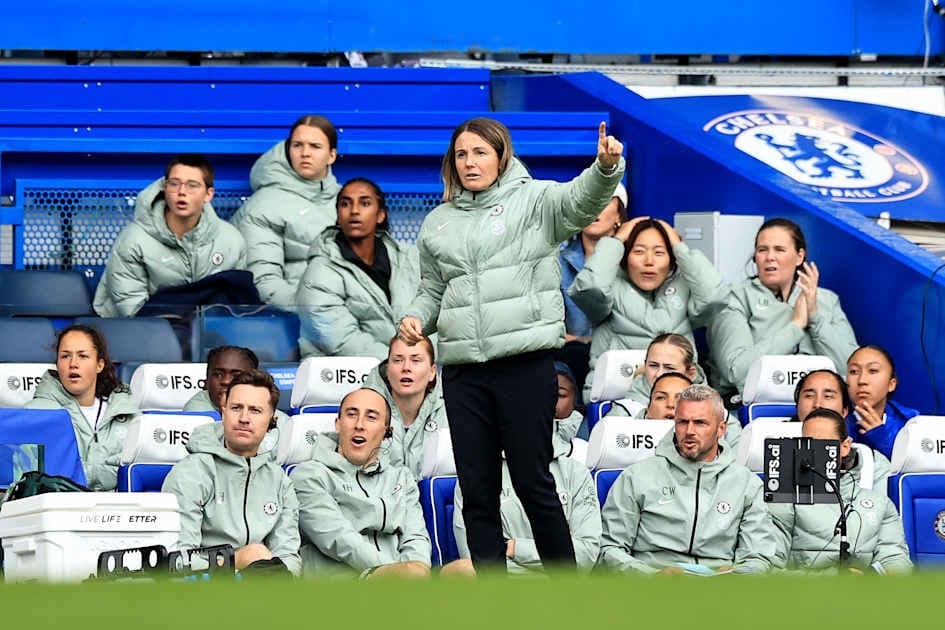
Sonia Bompastor walked into Chelsea in the summer of 2024 and hit the ground at a sprint. A domestic Treble in her first season in charge, a statement of authority from a club that had grown used to dictating the pace of the women’s game in England.
This year has felt different. Not a collapse, not even close – but a shift.
Chelsea have still retained the Women’s League Cup, secured a third-place finish in the WSL to book their spot in next season’s Women’s Champions League, and pushed their way into the Women’s FA Cup semi-finals. For most clubs, that would be a banner year. At Chelsea, it sparked introspection.
“We have been so used to winning so many games, trophies, and titles,” Bompastor admitted. “But this season we couldn't achieve as much as we did previously.”
That is the crux of Chelsea’s current moment. Success remains, but the margin for error has shrunk.
A Giant in Transition
Bompastor has been clear from the start: Chelsea are in transition, even while they are still winning.
“The first season was really successful for us,” she said. “This season, in terms of success, it was more difficult, but both seasons have been transitional seasons for the club.”
The context around them has changed. The WSL is heavier now, more loaded with investment, ambition, and depth. The European landscape has shifted too. The days when Chelsea could simply outmuscle the division with superior resources and squad depth are fading.
“The competition is becoming bigger and bigger,” Bompastor noted. “In terms of the gap between Chelsea and the other teams in England, but also in Europe. More teams are now able to invest in the women's game, to invest in their team, to invest in players to be able to compete against Chelsea.”
Chelsea once set the standard. Now, the rest are closing the distance.
“Chelsea have been a club who have been showing the pathway. Right now, most of the clubs are catching up and making sure they can compete against us. So, it’s for us as a club to have a vision around, ‘okay, how can we maintain the success in the long term at a club like Chelsea?’ That's the question we need to ask ourselves.”
That question now shapes everything.
No League Cup, No Let-Up
New rules mean that Chelsea’s qualification for the Champions League next season comes with a twist: they will not play in the League Cup in 2026/27.
On paper, that’s one competition fewer. In reality, it’s a recalibration of how they build and manage a squad designed to go deep on multiple fronts.
“We have been competing in four competitions, and going into next season, there will be three competitions,” Bompastor said. “You build a squad to have the depth to compete in every competition, because when you have this level of quality in the team, you have a lot of international players, and they play many games in the season.”
The challenge is no longer just about stacking trophies. It is about arming the team with the right tools to survive and thrive in a league that offers no easy afternoons, while also being sharp enough to handle Europe’s elite.
From Lyon Comfort to WSL Relentlessness
Bompastor knows both worlds. At Lyon, she coached a powerhouse that dominated France and Europe. The contrast with England could not be starker in her eyes.
“When I was at Lyon, 80 per cent of the games, we could play at 60 per cent, and it was enough for us to win,” she explained. “I could play some of the games with players coming from the academy and still win games. That's not the case here.”
In the WSL, there is no cruise control.
“Here, you have to compete in every league game because every match brings you a challenge in different ways,” she said. “Sometimes it's a physical challenge. Sometimes it's a tough game because they are big clubs. Sometimes it's a tactical challenge. You need to make sure you are ready for every game.”
Drop the level, even slightly, and the league punishes you.
“There is no space for you to drop a little bit because when you do that, you lose or you drop points.”
That reality has framed Chelsea’s season: still competitive on all fronts, but no longer walking away from the pack.
The Next Call
So what comes next? Inside Cobham, the work has already started.
“We have already started a lot of reflections within the club to make sure we are in a better place for next season,” Bompastor said. “We knew we were coming into a transitional period since I joined the club.”
The self-analysis is not cosmetic. It is central to how Chelsea intend to respond to a league that has grown teeth.
“Our job is to reflect and to make sure we make the right decisions for the future.”
The Treble winner now faces a different kind of test: not how to conquer, but how to stay ahead when everyone else has finally caught the scent.
Related News
Carlos Alcaraz Urges an End to Matches Ending in the Early Hours

Carlos Alcaraz Criticizes Late US Open Finish After 3:30 a.m. Match
Jannik Sinner Set for ATP 500 Return in Beijing with Novak Djokovic Also Competing
Meet Iva Jovic: The American Tennis Prospect Making Waves

Flavio Cobolli Shares Insights on Practice Session with Jannik Sinner Ahead of Comeback

Till vs Romero: Fight Details, Undercard, and Viewing Info for This Weekend