
Chelsea's Tactical Mastery in 2-1 Victory Over Tottenham
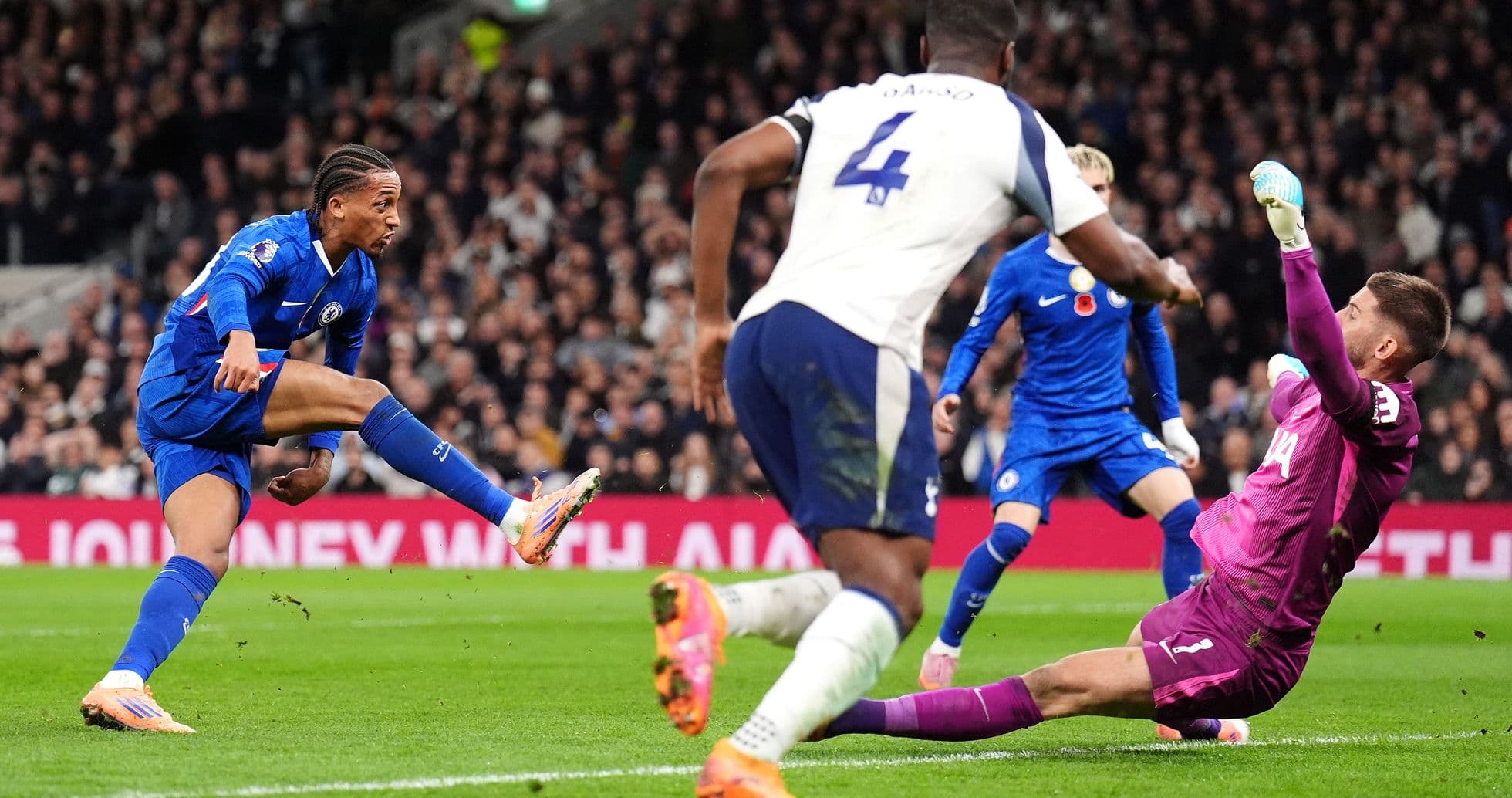
Chelsea’s 2-1 win over Tottenham at Stamford Bridge was a classic example of a side winning the tactical battle without winning the statistical one. Both teams lined up in a 4-2-3-1, but their interpretations of the shape diverged sharply: Chelsea leaned into vertical transitions and compactness without the ball, while Tottenham tried to dominate territory and possession, only to run into a well-structured block and a ruthless home side in key moments.
Out of possession, Chelsea’s 4-2-3-1 behaved more like a 4-4-1-1. Liam Delap led the line, with Cole Palmer operating between Tottenham’s pivot and centre-backs, screening passes into João Palhinha and Rodrigo Bentancur. Pedro Neto and Enzo Fernandez dropped alongside the double pivot of Andrey Santos and Moises Caicedo to create a narrow midfield four. This compactness forced Tottenham wide, which is reflected in their profile of 8 shots inside the box but only 3 on target: they reached advanced zones but were often shooting under pressure or from crowded central areas.
First Goal
The first goal on 18 minutes underlined Chelsea’s plan. Winning the ball and breaking quickly, Chelsea used Neto’s ability to carry and combine on the right. His assist for Enzo Fernandez came after Tottenham’s midfield line was bypassed in transition, leaving their centre-backs exposed. With Tottenham’s full-backs, particularly Destiny Udogie, aggressive in their starting positions, the spaces behind and between the lines were repeatedly vulnerable when possession was lost.
Tottenham’s Control
Tottenham’s own 4-2-3-1 was built to control the ball, and the numbers support that: 56% possession, 538 passes with 473 accurate (88%). They circulated well through Palhinha and Bentancur, drawing Chelsea’s first line out and then finding the half-spaces for Randal Kolo Muani and Mathys Tel. However, Chelsea’s back four, with Jorrel Hato and Wesley Fofana centrally and Marc Cucurella and J. Acheampong wide, stayed compact and rarely overcommitted. Tottenham managed 9 total shots, matching Chelsea’s 9, but the quality of their finishing and Chelsea’s ability to collapse around the ball-carrier meant only 3 efforts tested Robert Sanchez.
Chelsea’s Direct Approach
Chelsea were far more direct with their use of the ball: 44% possession, 425 passes with 355 accurate (84%) points to a slightly more vertical approach. They accepted longer spells without the ball, trusting their structure and then looking to break quickly into space. The second goal, on 67 minutes, was emblematic. Enzo Fernandez, now increasingly influential between the lines, turned provider for Andrey Santos. Arriving from deeper midfield, Santos exploited Tottenham’s stretched shape after a turnover, timing his run into the box to finish and give Chelsea a 2-0 lead that reflected their efficiency rather than their volume of chances.
Expected Goals Figures
The expected goals figures sharpen this picture. Tottenham posted 1.72 xG to Chelsea’s 0.63, underlining that the visitors generated more and better shooting opportunities across the 90 minutes. Yet Chelsea converted their limited xG into two goals, while Tottenham had to wait until the 74th minute for Richarlison’s strike, assisted by P. M. Sarr after a triple substitution reshaped their attacking structure. Roberto De Zerbi’s changes — James Maddison for Kolo Muani, Djed Spence for Udogie, and P. M. Sarr for Palhinha — pushed Tottenham into a more aggressive, risk-on posture. Sarr’s forward running and Maddison’s creativity finally prised Chelsea open, but it came at the cost of even more defensive exposure in transition.
Goalkeeping Performances
Defensively, both goalkeepers had relatively light but high-impact evenings. Robert Sanchez (Chelsea) made 2 saves from Tottenham’s 3 shots on target. Given Tottenham’s xG of 1.72 and Chelsea’s goals prevented figure of -1.08, the model suggests that, across the season context, Chelsea’s goalkeeping and last-ditch defending in this match conceded slightly more than an average keeper might be expected to, even if on the night the raw save count was modest. At the other end, A. Kinsky (Tottenham) also recorded 2 saves from Chelsea’s 4 shots on target. With Chelsea’s xG at just 0.63 and Tottenham’s goals prevented also at -1.08, Kinsky’s performance, too, sits below a neutral benchmark: Chelsea scored twice from relatively low-probability situations, underlining how clinical they were when they did reach dangerous positions.
Discipline Profile
The discipline profile tells its own tactical story. Tottenham committed 18 fouls to Chelsea’s 11 and collected 3 yellow cards, all for “Foul”: Pedro Porro on 28 minutes, Micky van de Ven on 43, and Destiny Udogie on 63. Each of those bookings stemmed from being late to Chelsea’s transitional threats or being forced into recovery challenges after positional risks. Chelsea’s 4 yellow cards were more varied and speak to game management: Jorrel Hato for “Time wasting” at 79 minutes as Chelsea protected their lead; Marc Cucurella for “Argument” at 85, reflecting rising tension; and Liam Delap (87) plus Dário Essugo (90+2) both for “Foul” as Chelsea disrupted Tottenham’s late attacks.
Defensive Commitment
Chelsea’s 3 blocked shots versus Tottenham’s 1 further emphasise the home side’s commitment to protecting the box. Even as Tottenham pushed, Chelsea’s defensive line and midfield screen were prepared to collapse centrally, sacrificing some territorial control to preserve high-value spaces. Corner counts — 3 for Chelsea, 4 for Tottenham — were relatively balanced, but Tottenham’s inability to convert territorial pressure and set-piece volume into clear, uncontested headers again points to Chelsea’s organisation.
In the end, this was a match where structure, transition efficiency, and game management outweighed control and chance creation. Tottenham’s higher xG, greater possession, and superior passing metrics suggest a side that largely dictated the ball. Chelsea, however, dictated the terms: limiting the quality of Tottenham’s looks, striking twice from relatively low-xG situations, and then using tactical fouls and time management to close out a 2-1 win that was more about execution than dominance.
Related News

Premier League Managers Facing Potential Sackings During International Break

Arsenal's Myles Lewis-Skelly Names Unexpected Tottenham Rival as Toughest Premier League Opponent

Three Premier League Players Shining Early This Season

Premier League Early Season Reactions: Man City’s Strength, Arsenal’s Flaws, United’s Struggles

Premier League Returns October 10 After Extended September-October International Break

Fulham and Manchester United Share Points in 1-1 Draw