
Colombia vs Ghana: A Clash of Heavyweights in Kansas City
The Round of 32 closes with a clash that feels bigger than its billing. On one side, Colombia – slick, settled, and striding into the knockouts like a team that expects to be around deep into July. On the other, Ghana – scarred, stubborn, and already rewriting their own history just by being here.
Kick-off comes in Kansas City on 4 July 2026 at 01:30 GMT, 20:30 EST (3 July). The stakes are obvious. For Colombia, anything short of progress will feel like a derailment. For Ghana, this is house money – but they are not flying to the Midwest to play tourists.
Colombia arrive humming, not just hoping
Néstor Lorenzo’s side have not just qualified; they have imposed themselves.
Top of Group K with seven points, Colombia moved through the first phase with the kind of assurance that makes opponents nervous before the anthem even finishes. They brushed aside Uzbekistan, edged DR Congo, then went toe-to-toe with Portugal in a 0-0 draw that crackled with quality and control.
One goal conceded in three group games. Six scored in their last five matches overall, none allowed. The numbers tell a story of balance: a team that can cut you open, but won’t leave the back door swinging in the wind.
The structure is clear. Camilo Vargas behind a back four that understands both line and timing. A midfield that can bite and build. And then the artistry, where Colombia still lean on a familiar conductor.
At 34, James Rodríguez remains the metronome and the scalpel. His vision still bends games, his left foot still finds passes others don’t even see. Lorenzo will again ask him to unlock the spaces between Ghana’s lines, to feed the runners darting either side of him.
Up front, there is another boost. Luis Suárez has shaken off the minor fitness concern that kept him to a substitute role against Portugal and is ready to start. With Luis Díaz prowling the left, James floating inside and Suárez back to lead the line, Colombia’s front three carry the sort of menace that forces defences to retreat even before the ball arrives.
And then there is the right flank. Daniel Muñoz, already with two goals in this tournament, plays full-back like a winger and finishes like a forward. His combinations with Jhon Arias and the midfield shuttlers have become a key pattern of Colombia’s attacking play. Overloads, underlaps, late arrivals into the box – that corridor is where they like to twist the knife.
Ghana: underdogs with a steel edge
Ghana’s route has been far less smooth, but no less compelling.
They came out of a turbulent Group L as one of the best third-placed teams, finishing on four points. They opened with a vital 1-0 win over Panama, dug deep for a gritty 0-0 draw with co-hosts England, then fell 2-1 to Croatia in a game that snapped their unbeaten run but not their resolve.
Strip it back and the picture is clear: three goals scored, four conceded across their last five games, form reading W-D-L-D-L. This is not a side sweeping teams away. This is a side surviving, adapting, and hanging in long enough to give their talent a chance.
The milestone is already historic – a first progression beyond the group stage in the modern era. But Carlos Queiroz is not in the business of sentimental victories. His Ghana are built to frustrate, to compress space, to make superior opponents feel the drag of every yard.
The medical team has delivered a crucial piece of good news. Antoine Semenyo, the Manchester City midfielder who scared the camp with an ankle issue, is expected to start. His energy and ability to carry the ball under pressure give Ghana a vital outlet when the press closes in.
Around him, the spine is seasoned. Thomas Partey, the midfield general, remains the organiser and enforcer. Jordan Ayew, the veteran forward, leads the line with the experience of countless high-pressure nights. They know they will be outgunned on paper. They also know tournaments are littered with the wreckage of favourites who thought the script was already written.
Where the game will be won: the right vs the block
Tactically, the battle lines are obvious. The outcome is not.
Colombia will again look to their right. Muñoz bombing on. The midfield shuttling across to create triangles. James drifting over to overload that channel, inviting Díaz to appear on the far post when the cross comes in.
Ghana’s job is to cut the oxygen to that side. That means an organised mid-block, not a frantic low one. Compressing the space where Colombia like to rotate, especially in the engine room, and refusing to get dragged out by decoy runs.
At the heart of it sits a duel that could tilt the whole evening: Richard Ríos against Thomas Partey.
Ríos wants to step forward, to punch passes through lines and feed Colombia’s attackers between the gaps. Partey wants to break that rhythm, to step in, intercept, foul when necessary, and turn those broken moves into counters.
If Partey disrupts Ríos, Ghana can slow the game to their pace. Fewer clean balls to Díaz. Fewer moments where James receives between the lines facing goal. More chances for Ghana’s own wide threats, like Kamaldeen Sulemana, to spring into the spaces Colombia leave when they attack in numbers.
Because that is the other side of this matchup. For all Colombia’s control, they must guard against exactly what Ghana will be waiting for: a loose pass, a turnover in midfield, and a lightning vertical break.
Discipline vs firepower
Both camps arrive with settled squads and, crucially, clean bills of health.
Colombia’s likely XI reads like a continuation of what has already worked: Vargas; Muñoz, Jhon Lucumí, Davinson Sánchez, Johan Mojica; Gustavo Puerta, Jefferson Lerma, Jhon Arias; James Rodríguez, Luis Suárez, Luis Díaz.
Across that group, the roles are defined. Lerma and Puerta to secure the middle. Arias to shuttle and connect. James to orchestrate. Díaz to isolate and destroy full-backs. Suárez to occupy centre-backs and finish the moves.
Ghana’s projected line-up mirrors their approach: Benjamin Asare; Marvin Senaya, Jonas Adjetey, Derrick Luckassen, Gideon Mensah; Kamaldeen Sulemana, Thomas Partey, Elisha Owusu, Kwasi Sibo, Antoine Semenyo; Jordan Ayew.
It is a shape built for work. A back four that must stay compact, a midfield five that shifts, screens and squeezes, and Ayew up front to hold, foul, win free-kicks, and buy time.
For Ghana, the challenge is brutal but simple to describe: keep a clean sheet, or at least keep the game alive long enough for doubt to creep into Colombian minds.
That demands perfection in communication. The backline must track Muñoz’s surges without losing Díaz at the far post. The midfield must recognise when James drifts into pockets and when to pass him on. One lapse, one misread run, and Colombia have the tools to punish.
For Colombia, the warning is just as clear. Patience will be everything. Pushing too many bodies forward in search of an early breakthrough opens the door to exactly the kind of rapid, vertical counter that Ghana have prepared for. The temptation to force the issue in knockout football is huge. The punishment for doing so against an organised underdog can be even bigger.
Rare meeting, huge implications
There is no recent head-to-head history to lean on here. No familiar scars, no old grudges. This is a rare intercontinental encounter at a major tournament, played on neutral ground, with both nations at very different points in their footballing cycles.
Colombia arrive as group winners, in form, unbeaten across their last five, and carrying the weight of expectation. Ghana come in from third place, with a mixed run of results but a sense of freedom and history already made.
One side is expected to progress. The other is built to make that expectation feel heavier with every passing minute.
In Kansas City, the equation is stark. Can Colombia’s right flank and their veteran playmaker tear open a disciplined African block? Or will Ghana’s structure, Partey’s authority, and Ayew’s nous drag this into the kind of tense, nervy contest where giants so often fall?
The next chapter of this World Cup will be written down that touchline.
Related News
Anthony Joshua Names Murat Gassiev as Next Opponent if He Defeats Tyson Fury
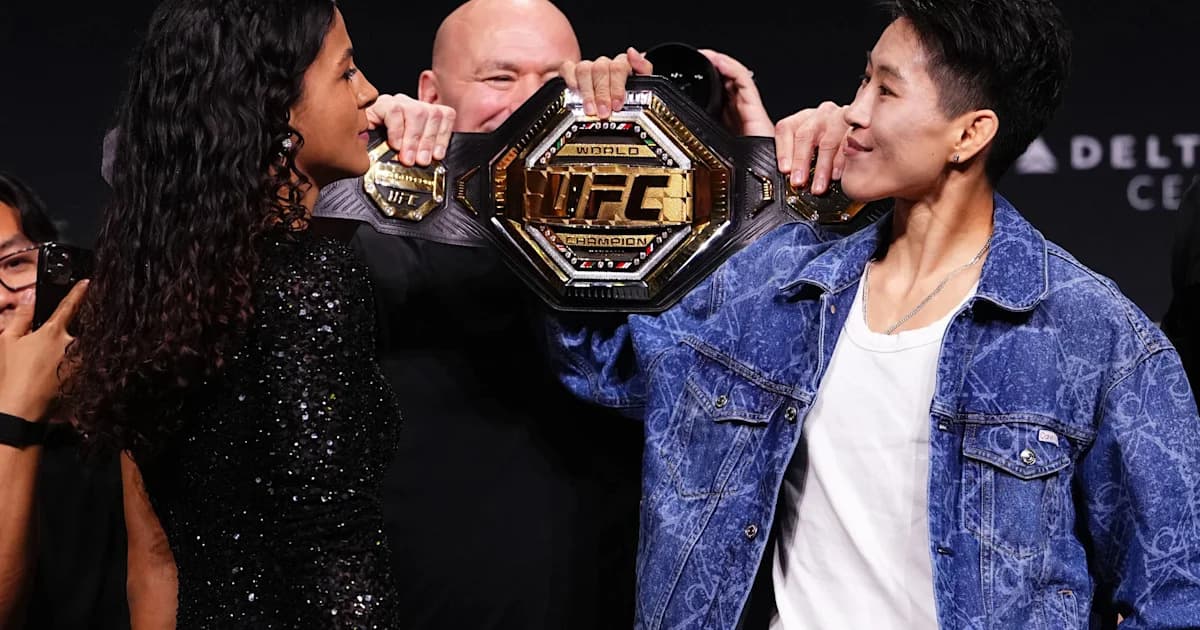
UFC 332: Start Time and Fight Highlights for Natalia Silva vs. Wang Cong
Court McGee Opens Up About Choosing UFC 332 as His Final MMA Fight
WBC Orders Lightweight Title Unification: William Zepeda vs Jadier Herrera
BCCI Pension List: Monthly Payments to Retired Indian Cricketers in 2025
Why Fury vs Joshua Is Set for Cardiff, and Dua Lipa’s Unexpected Role