
Everton vs Sunderland: Tactical Clash at Hill Dickinson Stadium
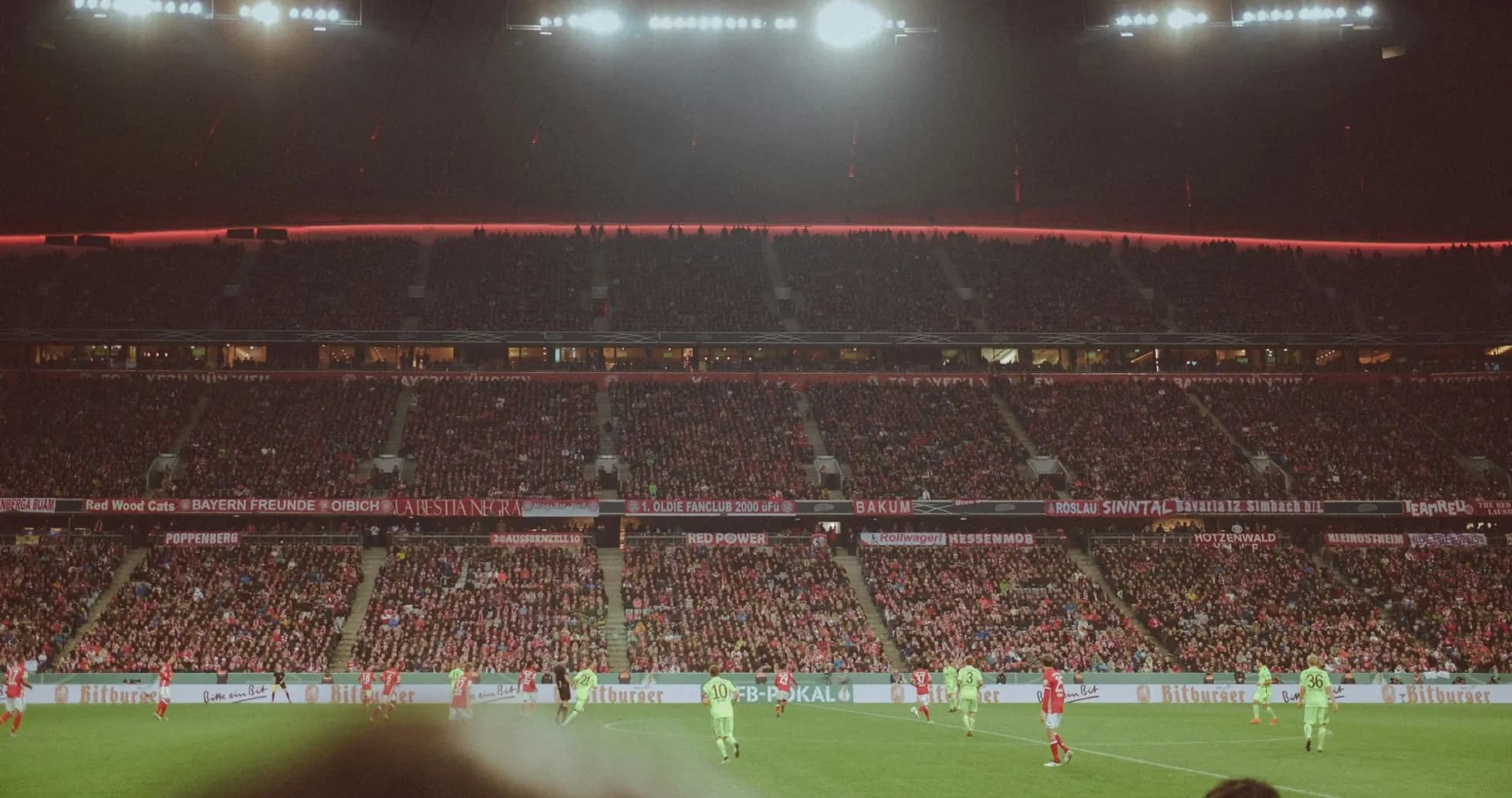
Hill Dickinson Stadium felt like a crossroads rather than a coronation. Following this result, Everton’s 3-1 home defeat to Sunderland in Round 37 of the Premier League was less about the scoreline and more about two contrasting tactical identities colliding at the wrong moment for the hosts.
Everton entered the afternoon 12th in the table on 49 points, their overall goal difference at -2, the product of 47 goals scored and 49 conceded in total this campaign. Sunderland arrived in Liverpool 9th with 51 points and a total goal difference of -7 (40 for, 47 against overall), a side that has mixed defensive frailty with a stubborn capacity to survive.
Both coaches mirrored each other on the whiteboard, lining up in 4-2-3-1. For Everton, Leighton Baines doubled down on the structure that has defined their season: 4-2-3-1 has been used in 36 of their 37 league matches. Sunderland’s Regis Le Bris, more tactically eclectic across the season, chose the same shape that has been his most-used base, deployed 20 times overall.
Everton’s shape told a story of enforced compromise. With J. Branthwaite (hamstring injury), J. Grealish (foot injury) and I. Gueye (injury) all missing this fixture, Baines had to lean heavily on structural discipline rather than individual inspiration. J. Pickford started behind a back four of J. O'Brien, J. Tarkowski, M. Keane and V. Mykolenko. In front of them, J. Garner and T. Iroegbunam formed the double pivot, with a creative line of M. Rohl, K. Dewsbury-Hall and I. Ndiaye supporting lone striker Beto.
The absences hit hardest between the lines. Without Grealish’s ball-carrying and final-third subtlety, Everton’s attacking band lacked a natural tempo-setter. Without Gueye, the midfield lost a specialist destroyer, placing greater defensive responsibility on Garner and Iroegbunam.
Sunderland’s own absentees shaped a different kind of response. D. Ballard (suspended after a red card), S. Moore (wrist injury), R. Mundle (hamstring injury) and B. Traore (knee injury) were all missing, but Le Bris still fielded a side that looked balanced and physically robust. R. Roefs started in goal, protected by a back four of L. Geertruida, N. Mukiele, O. Alderete and Reinildo Mandava. In midfield, G. Xhaka and N. Sadiki sat as the double pivot, with T. Hume, E. Le Fée and N. Angulo behind centre-forward B. Brobbey.
The disciplinary undercurrent to this fixture was always going to be important. Heading into this game, Everton had collected a notable volume of cards late on: 20.83% of their yellow cards arrived between 46-60 minutes and another 20.83% between 76-90, with a further 16.67% in added time (91-105). Their red-card profile was even more volatile: 25.00% of reds in the opening 0-15 minutes, 25.00% between 61-75, and 50.00% in the 76-90 window. Sunderland, by contrast, tended to pick up yellows in the 46-60 minute band (23.38%) and had a spread of reds across 16-30, 31-45 and 91-105, each at 33.33%. This was always likely to be a game where control of emotion would matter as much as control of territory.
Everton’s seasonal DNA at home has been one of narrow margins. At home they have scored 26 and conceded 27 in total, averaging 1.4 goals for and 1.4 against per home match. Sunderland’s away profile is more brittle: on their travels they have scored 17 and conceded 28 in total, averaging 0.9 goals for and 1.5 against away. On paper, Hill Dickinson Stadium should have been a platform for Everton to grind out a result; instead, Sunderland’s structure and decision-making inverted the script.
The “Hunter vs Shield” matchup revolved around Sunderland’s forward line against an Everton defence shorn of Branthwaite’s presence. O'Brien, who has already seen red once this season, and Tarkowski were tasked with containing Brobbey’s physicality and Angulo’s movement. Sunderland’s total defensive record of 47 goals conceded in 37 matches (1.3 per game overall) is hardly elite, but the pairing of Mukiele and Alderete offered enough aerial and positional solidity to funnel Everton’s attacks into predictable wide areas.
In midfield, the “Engine Room” battle defined the game’s rhythm. Garner, statistically one of the league’s standout contributors from deep, arrived with 7 total assists and 2 goals, underpinned by 1,736 total passes and 52 key passes at an 87% accuracy rate in the assists dataset. He is also the league’s most-booked player, with 12 yellow cards, a walking embodiment of Everton’s risk-reward axis. He was paired with Iroegbunam, whose task was to screen and shuttle rather than dictate.
Opposite them, Xhaka and Le Fée formed a complementary axis. Xhaka, with 6 total assists, 1 goal and 1,753 total passes at 83% accuracy, set Sunderland’s tempo from deep, while also contributing 50 tackles and 20 successful blocks. Le Fée, with 5 total goals and 6 assists, 49 key passes and 22 total shots, provided the vertical thrust between the lines. Crucially, Le Fée’s penalty record (3 scored, 1 missed) underscores Sunderland’s willingness to funnel attacks into high-leverage central zones, even if it comes with the blemish of that single miss.
Tactically, Sunderland’s 4-2-3-1 outperformed Everton’s mirror. Xhaka’s positioning allowed Mandava to step aggressively into midfield without leaving the back line exposed, while Hume’s dual identity as a wide midfielder and auxiliary full-back gave Le Bris the flexibility to tilt the shape into a 4-3-3 or a 4-4-2 block out of possession. Everton, by contrast, often found their double pivot pinned: Garner was forced deeper to aid build-up, leaving Dewsbury-Hall and Rohl to create under pressure with little room between Sunderland’s lines.
Everton’s season-long penalty profile—2 total penalties, 2 scored, 0 missed—speaks to a side that rarely lives in the box for sustained spells, relying instead on structured attacks and set patterns. Sunderland’s 4 total penalties, all converted in the team data, reflect a more opportunistic edge, one that was mirrored in their ability to turn limited away attacking volume (0.9 goals per game on their travels heading into this fixture) into three goals on the day.
Following this result, the statistical prognosis for both sides diverges sharply. Everton’s overall record of 13 wins, 10 draws and 14 defeats from 37 matches, with 47 scored and 49 conceded, paints a picture of equilibrium constantly tipping the wrong way in key moments. Sunderland, with 13 wins, 12 draws and 12 defeats, 40 scored and 47 conceded overall, remain a side that lives on the knife-edge but increasingly finds a way to lean toward the right side of variance.
In xG terms—though not explicitly provided, we can infer from profiles—Everton’s balanced goals-for and goals-against averages (1.3 both overall) suggest a team whose Expected Goals and Expected Goals Against are likely to hover around parity. Sunderland’s lower attacking average (1.1 goals for overall) against a similar 1.3 goals against points to a side that often loses the xG battle but compensates with moments of efficiency and game-state management.
This 3-1 away win, then, feels less like a freak result and more like the logical endpoint of two trajectories. Everton’s reliance on a rigid 4-2-3-1 without their key individual difference-makers left them brittle once the first wave of pressure broke. Sunderland, marshalled by Xhaka’s metronome and Le Fée’s incision, showed that even a team with a negative goal difference and modest away scoring rate can, with the right structure and emotional control, turn a difficult away day into a statement of tactical maturity.
Related News

Premier League Managers Facing Potential Sackings During International Break

Arsenal's Myles Lewis-Skelly Names Unexpected Tottenham Rival as Toughest Premier League Opponent

Three Premier League Players Shining Early This Season

Premier League Early Season Reactions: Man City’s Strength, Arsenal’s Flaws, United’s Struggles

Premier League Returns October 10 After Extended September-October International Break

Fulham and Manchester United Share Points in 1-1 Draw