
Federico Valverde's Transformation: From Right-Back to Midfield Pillar
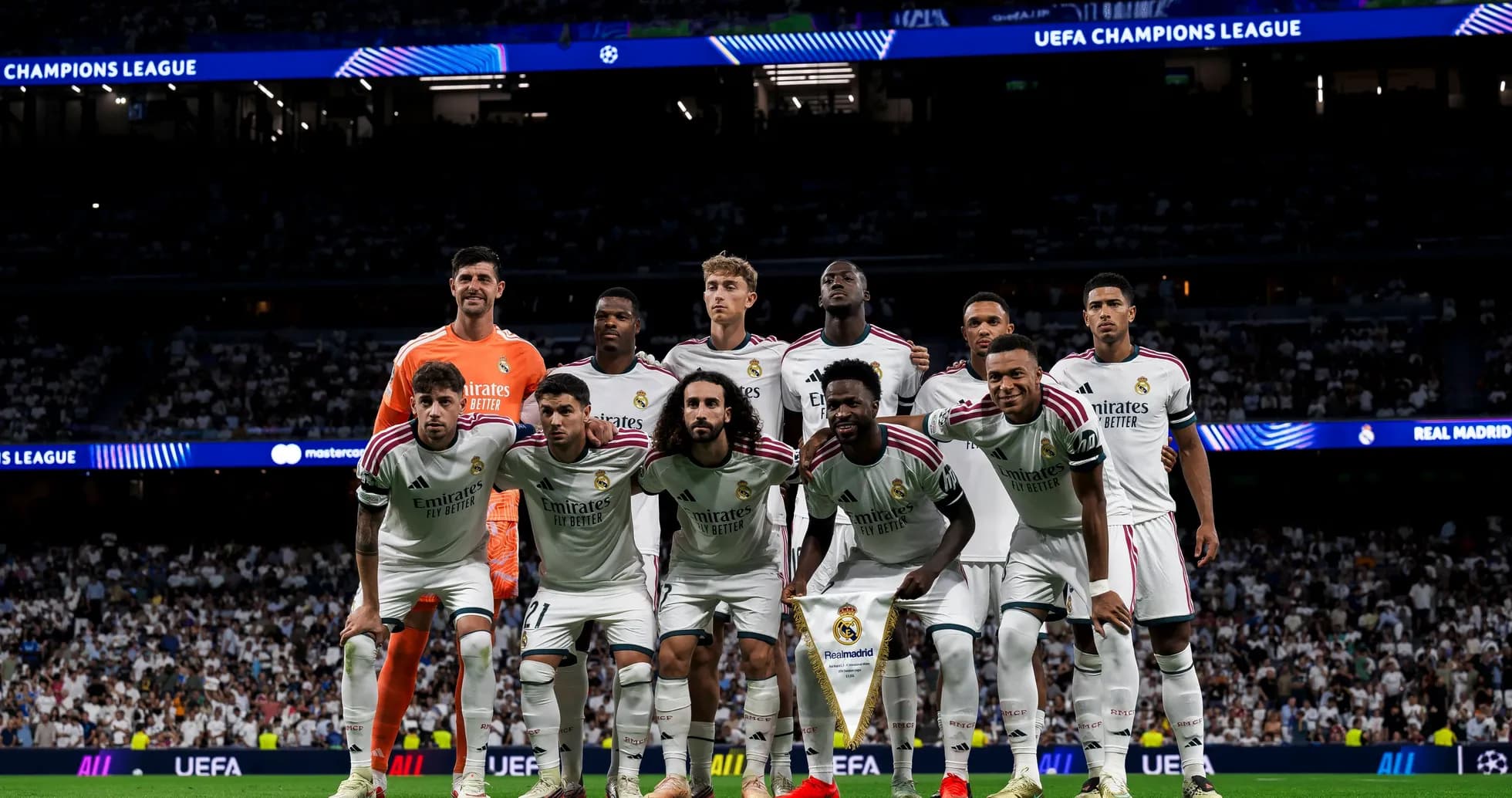
Federico Valverde goes back to Vallecas this weekend with a very different story to tell.
The last time he faced Rayo Vallecano, he did it as an emergency right-back, a symbol of a crisis-ridden Real Madrid under Xabi Alonso. Now he returns as one of the pillars of José Mourinho’s midfield, a player restored to his natural habitat and to his full authority.
From discomfort to breaking point
That turbulent chapter started with injuries. Dani Carvajal and Trent Alexander-Arnold both went down, and Alonso turned to Valverde to plug the gap on the right side of defence.
Valverde accepted. Reluctantly. He ran the flank, did the job, and kept quiet for a while. But the strain built up.
The breaking point came before a Champions League trip to Kazakhstan to face Kairat Almaty. On the eve of the game, Valverde stopped disguising how he felt about the role.
“I was not born to play as a full-back, and I did not grow up learning to play in this position. Because of an emergency, I found myself playing there,” he said in a press conference.
The honesty landed with a thud inside the club. Alonso reacted immediately. In the next game, Valverde lost his place; Marco Asensio was deployed at full-back instead. The message was clear: the coach would decide the positions, not the players.
The cold night in Kazakhstan
From that moment, everything Valverde did was under the microscope.
In Kazakhstan, as Real Madrid warmed up, the cameras picked him out: face set, hands clasped behind his back, watching on. He did not play a single minute. He did not even come on as a substitute.
It turned into a strange anomaly in his season. That Champions League tie was the only game in the competition in which he failed to appear. In every other one, he featured, including the night he hit a hat-trick against Manchester City.
The contrast was stark. A player decisive on the biggest stage, yet frozen out in the middle of an internal storm over his position.
The end of the full-back experiment
The turning point came with a change in the dugout. When Álvaro Arbeloa took over in January, the insistence on using Valverde at right-back began to fade.
He still had to see out that phase. By the time he played his final match in that role – away to Rayo – he had amassed 16 appearances as a makeshift full-back. Sixteen games in a position he never truly embraced.
The experience left a mark. Valverde had done it out of loyalty to the shirt and the club, but he never pretended it was where he belonged. For him, being “a real footballer” meant operating in midfield, where his energy, range and timing could shape the game instead of simply containing it.
Mourinho’s reset
Everything shifted once Mourinho walked through the door.
The Portuguese coach put Valverde straight back in the centre of the pitch and built around him. No half-measures, no experiments on the flank. He has started every match this season under Mourinho, a sign of trust as much as tactical conviction.
Mourinho didn’t just restore his position. He handed him responsibility. Valverde became one of the cornerstones of the new project, and the transformation was obvious: the hesitant full-back disappeared, replaced by a commanding midfielder driving Madrid’s play.
He has even pushed higher up the pitch. A goal against Inter underlined his growing attacking influence and his importance in the new system. This is the version of Valverde Madrid always hoped to see – and the one Mourinho has fully unleashed.
Peace with Tchouaméni
There was one more issue to settle: the tension with Aurélien Tchouaméni after last season’s altercation between the two.
Mourinho chose to address it head-on in his latest press conference, but only to underline that the players had already done the work themselves.
“They are the ones who did everything, and I did nothing. If I had arrived in the dressing room without knowing anything, I would have thought they were close friends,” he said.
“When I arrived, and Tchouaméni returned from the World Cup, I was paying attention to find out whether I needed to intervene and play the role of peace minister, but I did nothing. The credit all goes to the players.”
Valverde’s journey from reluctant right-back to indispensable midfielder is now tied not just to his own resilience, but to that renewed harmony in the middle of the park.
And so he goes back to Rayo, not as a stopgap on the flank, but as a reference point in Mourinho’s Madrid. The crisis that once pushed him out of position is over. The question now is how far he can drive this team from where he always knew he belonged.
Related News
Real Madrid Concerned as Ibrahima Konaté Exits France Squad with Knee Injury
Ibrahima Konate Withdraws from France Squad; Man Utd's Leny Yoro Called Up by Zidane
4 Free Agent Strikers Manchester United Could Sign Following Sesko's Injury
Bosnia Coach Sergej Barbarez Criticizes Newcastle United Over Amar Dedic's Hamstring Injury
Kenya to Face Rwanda in Friendly Match During International Window
Mbappé's Flu Disrupts Zidane's First Camp with France