
Feyenoord's Fireworks Incident Overshadows Victory
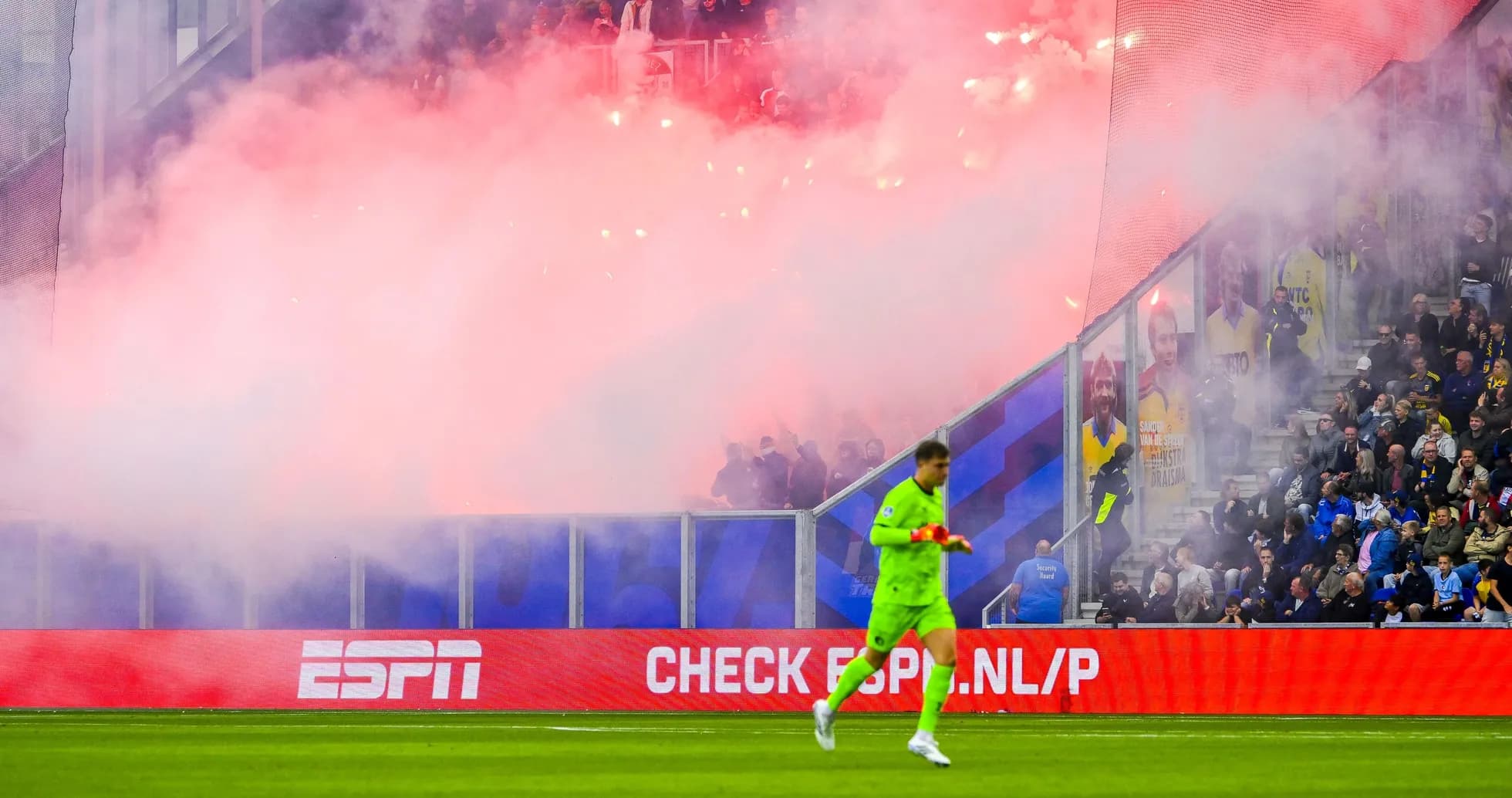
The fireworks started long before the celebrations.
Feyenoord’s 5-2 win at SC Cambuur on Sunday should have been about goals, form and a title push. Instead, the Eredivisie spent another weekend staring at smoke, sirens and a crisis it cannot shake.
Chaos in the 12th minute
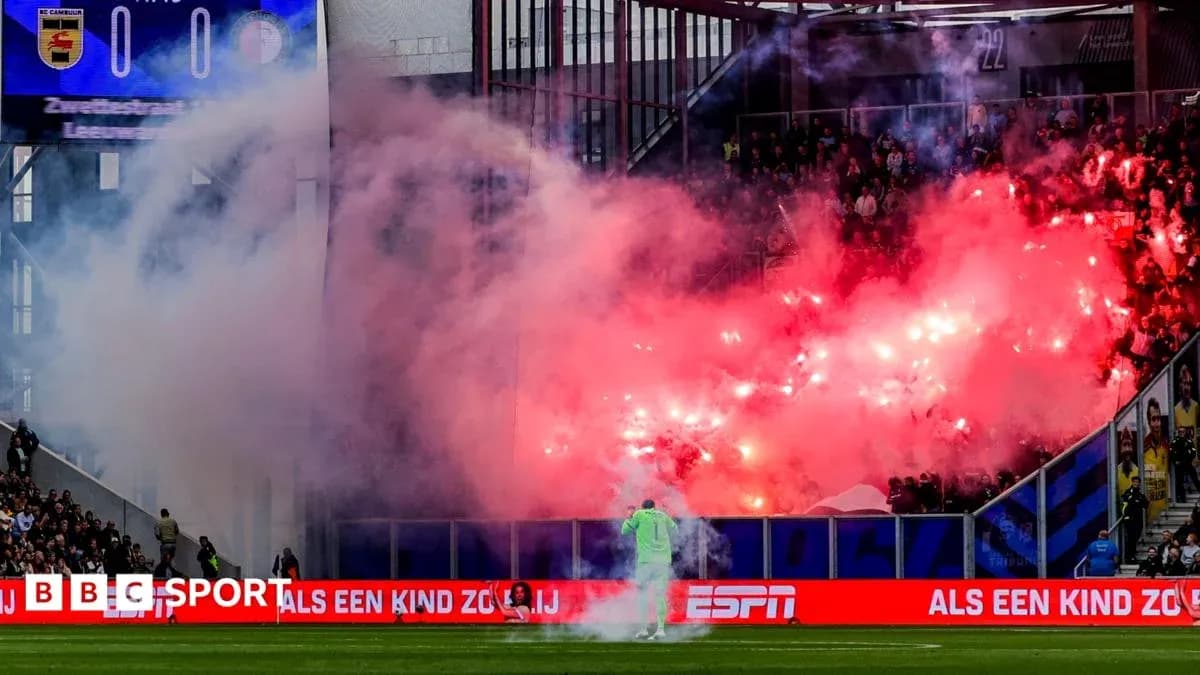
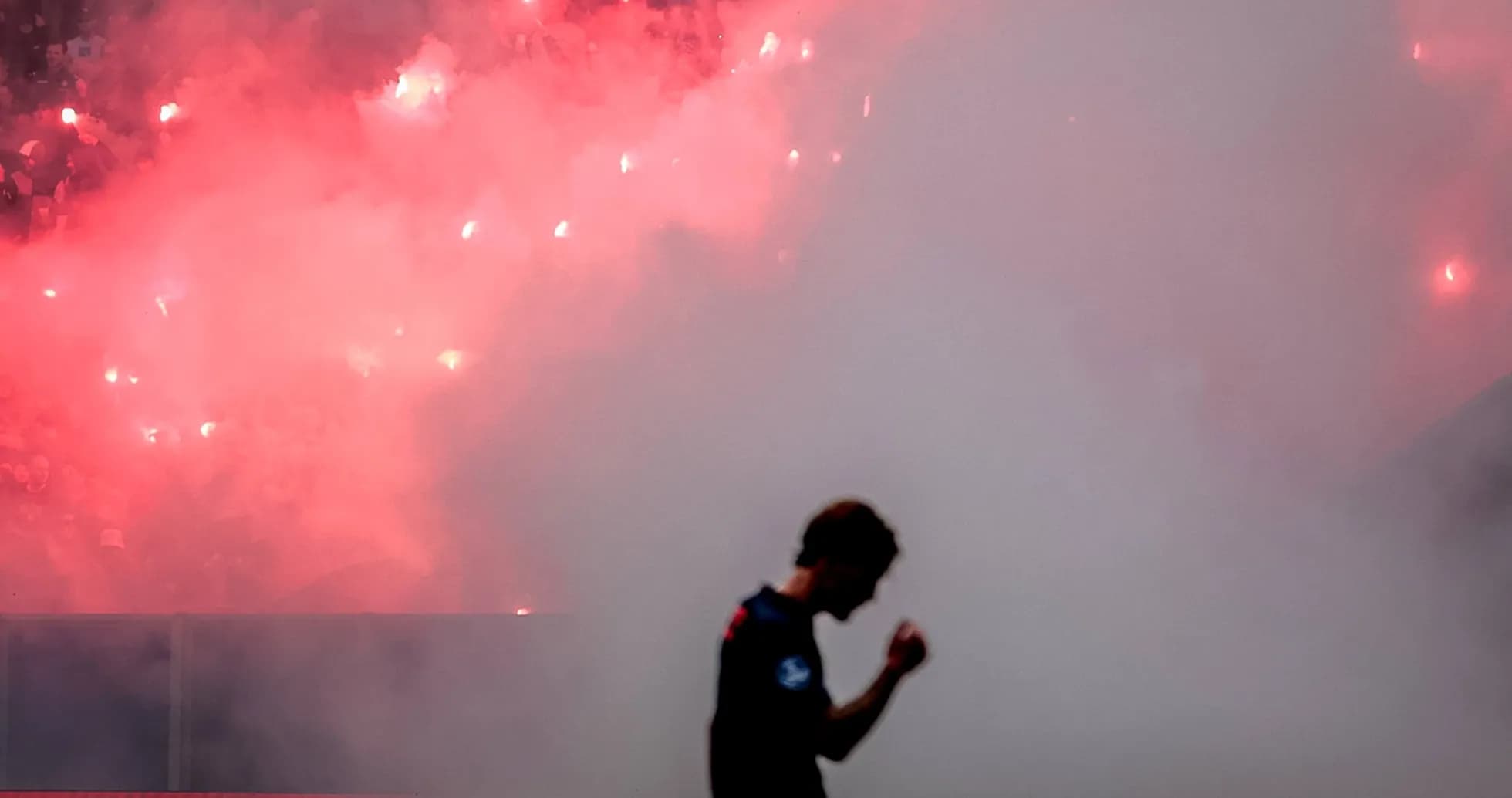
The trouble erupted early at the Kooi Stadion. In the 12th minute, the away end turned into a wall of red as visiting Feyenoord supporters lit a barrage of flares and hurled fireworks toward the pitch and into the home sections.
Within seconds, smoke drifted across the field and explosions crackled dangerously close to the players. One firework detonated just meters from Feyenoord goalkeeper Tjark Ernst, a flashpoint that underlined how close this came to disaster.
The referee had no choice. Players were led off, the match halted for around 10 minutes while the stadium tried to regain control and the air cleared enough to see the pitch again.
The game would resume. The damage in the stands, though, was already done.
Injuries in the stands
Cambuur later confirmed that five home supporters were injured in the incident. In a detailed medical update, the club reported fans suffering burns, hearing damage and eye injuries after fireworks were fired directly into areas packed with home followers in Leeuwarden.
These were not near-misses. They were direct hits.
As Feyenoord cruised to a dominant scoreline, the atmosphere around the club turned heavy. The three points felt hollow against the sight of injured supporters leaving the ground.
Feyenoord’s apology and internal reckoning
Head coach Giovanni van Bronckhorst, still settling into his role and already forced to confront one of the ugliest sides of the modern game, moved quickly. He apologised directly to Cambuur’s hierarchy on behalf of Feyenoord after the final whistle, acknowledging that the scenes in the away end had overshadowed everything on the pitch.
The club followed up with a firm statement, declaring it “firmly distances itself from the unacceptable events” and promising internal action. Feyenoord announced it will request and review all available camera footage in an attempt to identify those responsible for what it described as life‑threatening behaviour.
Inside the club, the mood was raw. General manager Robert Eenhoorn cut a visibly shaken figure as he addressed the incident.
“I cannot be happy,” he admitted. “Frustration prevails too much for that. This problem obviously does not only affect Feyenoord and is unfortunately something we have been unable to put a stop to for decades. We will therefore have to sit down again with all stakeholders, clubs, the KNVB [Dutch football association], and the authorities to look for a solution together.”
The result, he made clear, was secondary. Safety came first, and once again Dutch football had failed to guarantee it.
Cambuur’s anger and a city on edge
For Cambuur, only recently back in the Eredivisie after three seasons away, this was supposed to be another step in their return to the top flight. Instead, the club was left to count the cost of a home match that turned into a security nightmare.
The administration promised a full investigation alongside local police and government officials. In its official communication, Cambuur did not soften its language, branding the behaviour of the visiting fans completely unacceptable.
“It should be clear that setting off and firing fireworks is completely unacceptable and has no place in a football stadium whatsoever,” the club stated.
The city weighed in as well. Leeuwarden mayor Foort van Oosten condemned the incident in the strongest terms and pledged a thorough investigation into how such a large quantity of pyrotechnics was smuggled into the Kooi Stadion.
That question cuts straight to the heart of the Eredivisie’s growing problem: if this much material can get through security, what else is possible?
A league under scrutiny
This was not an isolated flashpoint. Dutch football has been wrestling with escalating fan disorder, from flares to fireworks to repeated stoppages. The memory of last season’s abandoned match between Ajax and Groningen, halted due to similar pyrotechnic chaos, still lingers.
Now the spotlight falls on the security protocols at Eredivisie grounds. Are the current measures enough? The events in Leeuwarden suggest the answer is no.
One decision in particular has triggered fierce debate: the choice to play on.
Five supporters were injured, yet the match continued once the smoke cleared and the pitch was deemed safe. Under current KNVB rules, a game must be permanently abandoned if a player or match official is struck. When it is fans who are hurt, the guidelines are far less defined.
Jan Bluyssen, the KNVB’s manager of professional football competition affairs, did not hide from the uncomfortable reality. Speaking to Dutch news agency ANP, he admitted that the optics of continuing the match were troubling.
“That doesn’t feel right,” Bluyssen said.
Those four words cut to the core of the issue. The laws cover the referee and the players. The people in the stands still feel like an afterthought.
Pressure on the KNVB
The governing body now faces intense pressure to act. Calls are growing for tougher sanctions on clubs whose supporters cause physical harm, whether at home or away.
The KNVB has confirmed it will revisit its protocols on crowd disorder, with a stated aim of placing supporter safety above the completion of any fixture. That is a strong promise. Turning it into policy, and then into consistent action, will be the real test.
On the scoreboard, Feyenoord walked away with a commanding win and another step forward in their campaign. On the terraces, Dutch football took another step back.
How many more games like this will it take before the league finally draws a hard line between spectacle and danger?
Related News

Madjo: Aston Villa's Rising Star and England's Future
Jordan Pickford's Game-Changing Save Against Crystal Palace
Milos Kerkez Faces Tough Test as Liverpool Left-Back Against Newcastle
Feyenoord Fans Cause Injuries at SC Cambuur Match
Valentijn Driessen Calls for Ban on Away Supporters After Fireworks Chaos
Crystal Palace vs Manchester City: Premier League Clash at Selhurst Park