
Fiorentina vs Atalanta: Season Finale Draw Highlights Contrasting Campaigns
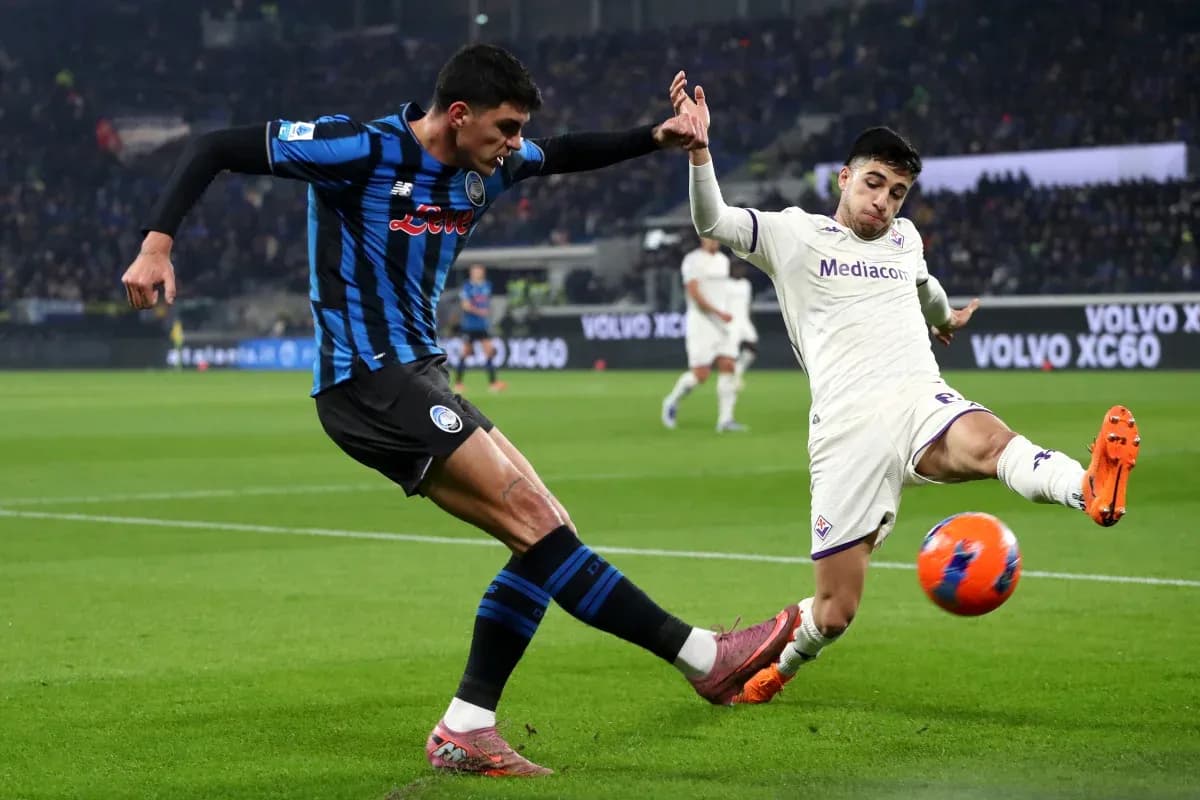
Stadio Artemio Franchi closed its Serie A season under floodlights and tension, with Fiorentina and Atalanta drawing 1–1 in a match that neatly encapsulated their contrasting campaigns. Following this result, the league table underlines the gap: Fiorentina end in 15th on 42 points with a goal difference of -9 (41 scored, 50 conceded overall), while Atalanta finish 7th on 59 points, their +15 goal difference (51 for, 36 against overall) securing a European ticket.
I. The Big Picture – Styles Colliding
Fiorentina’s season-long identity has been one of fragility and compromise. Overall they averaged 1.1 goals scored and 1.3 conceded per game, with symmetry at home: 21 scored and 21 conceded at the Franchi across 19 matches, again 1.1 for and 1.1 against on average at home. A record of 4 home wins, 9 draws and 6 defeats paints a side that rarely overwhelmed visitors, instead grinding through tight contests.
Atalanta arrive from the opposite end of the spectrum: a structured, high-floor machine. On their travels they won 6, drew 8 and lost only 5, scoring 26 and conceding 21 away. That translates to 1.4 goals scored and 1.1 conceded on their travels, numbers that mirror their overall balance of 1.3 for and 0.9 against. They have kept 13 clean sheets overall, 6 of them away, and failed to score only 2 times on their travels – a ruthless consistency that underpins their 7th-place finish.
Vanoli leaned into Fiorentina’s most-used shape, the 4‑3‑3 that has started 15 times this season. O. Christensen sat behind a back four of Dodo, P. Comuzzo, D. Rugani and R. Gosens. The midfield trio of G. Fabbian, R. Mandragora and M. Brescianini offered legs and passing angles, while the front line of J. Harrison, R. Piccoli and A. Gudmundsson was tasked with stretching Atalanta’s three-man defence.
Raffaele Palladino, meanwhile, doubled down on Atalanta’s structural identity: a 3‑4‑2‑1 that has been used 34 times this campaign. M. Sportiello started in goal, shielded by G. Scalvini, I. Hien and H. Ahanor. The wing-backs R. Bellanova and Y. Musah flanked a central duo of M. De Roon and M. Pasalic, with L. Samardzic and K. Sulemana supporting lone striker G. Raspadori between the lines.
II. Tactical Voids and Discipline
Fiorentina came into this fixture shorn of both depth and edge. In attack, M. Kean’s calf injury removed a direct, penalty-box presence from the bench. On the left, F. Parisi’s knee injury limited Vanoli’s options for a more natural overlapping full-back, forcing continued reliance on R. Gosens’ dual role as defender and auxiliary winger. Most significant structurally was L. Ranieri’s suspension for a red card: a left-sided defender with 1 goal, strong duel numbers and 1 red this season. His absence pushed Comuzzo and Rugani into a partnership that, while solid on paper, lacks Ranieri’s aggression stepping out of the line.
This matters particularly for a Fiorentina side already living on disciplinary edge. Across the season they collected a heavy yellow-card load, with M. Pongracic alone booked 12 times and blocking 27 shots as a front-foot defender. The team’s yellow-card timing shows a late-game spike: 25.30% of their yellows arrived between 76–90 minutes, and their red cards also cluster late, with 66.67% shown in that same 76–90 window. Even without Ranieri, the tactical message was clear: manage emotions as much as space in the closing stages.
Atalanta’s absences were more about rotation than identity. L. Bernasconi’s knee injury and O. Kossounou’s thigh problem trimmed Palladino’s defensive options, but did not touch the core of his preferred XI. Their own disciplinary profile is spiky but controlled: yellows rise towards the end, with 23.33% between 76–90 minutes, and their two reds this season split between 0–15 and 76–90. Palladino’s side, like Fiorentina, tends to play on the edge when fatigue sets in.
III. Key Matchups – Hunter vs Shield, Engine Room vs Engine Room
The most intriguing “Hunter vs Shield” battle sat slightly off-stage. On the Atalanta bench, N. Krstović arrived as one of Serie A’s most productive forwards: 10 goals and 5 assists in 33 appearances, with 75 shots and 34 on target. His blend of penalty-box presence and link play (501 passes, 21 key passes, 73% accuracy) makes him a late-game weapon. Alongside him, G. Scamacca brings another 10 goals and 2 successful penalties from 24 appearances, a different profile of target man who wins his share of duels and thrives on crosses.
Against that potential double threat, Fiorentina’s central defence had to operate almost perfectly. Rugani’s experience and Comuzzo’s positioning were vital, but without Ranieri’s left-footed aggression, Fiorentina risked being pinned deeper if Krstović or Scamacca entered to attack crosses from Bellanova and Musah. The draw suggests they held firm often enough, but the underlying matchup tilted towards Atalanta’s firepower.
In the “Engine Room”, the duel between Fiorentina’s trio and Atalanta’s central box defined the rhythm. Mandragora and Brescianini needed to break Atalanta’s lines with forward passes into Gudmundsson’s feet; the Icelandic attacker’s season – 5 goals, 4 assists, 32 key passes and 39 dribbles attempted – shows how central he is to Fiorentina’s chance creation. His red card earlier in the campaign underlines that he plays on the edge, but his ability to receive between lines was one of the home side’s few reliable weapons.
Opposite him, De Roon and Pasalic formed a disciplined screen. De Roon’s job was to suffocate Gudmundsson’s pockets and disrupt Mandragora’s build-up, while Pasalic timed his runs to support Raspadori and occupy Fiorentina’s pivots. With Samardzic and Sulemana floating in half-spaces, Atalanta repeatedly looked to overload the channels around Dodo and Gosens, pulling Fabbian and Brescianini into uncomfortable defensive decisions.
IV. Statistical Prognosis – Margins and Missed Edges
Following this result, the numbers still point to Atalanta as the more sustainable side. Overall they concede only 0.9 goals per game, compared to Fiorentina’s 1.3, while scoring more both home and away. Their 13 clean sheets and 8 total games failing to score (just 2 away) contrast with Fiorentina’s 10 clean sheets and 11 matches without a goal. Even in a 1–1 draw, the underlying balance of threat and control remained in Atalanta’s favour.
Fiorentina’s penalty record – 6 taken, 6 scored overall, with 100.00% conversion and no misses – offers one of the few pristine statistical edges in their season, a reminder that when they do reach the box with composure, they can punish. But their broader attacking output, 41 goals in 38 matches, aligns with a side that relies on moments from Gudmundsson and set pieces rather than sustained pressure.
Atalanta, by contrast, can rotate between Raspadori, Krstović, Scamacca and the creative thrust of C. De Ketelaere – who has 5 assists, 63 key passes and 102 dribbles attempted – to find solutions in tight games. Even when they fail to win, their structure and depth repeatedly generate chances consistent with strong xG profiles.
In Florence, the final whistle froze a snapshot: Fiorentina clinging to safety with a draw that fits their season of narrow margins, Atalanta departing with the point that typifies their stability. The numbers suggest that, over a longer horizon, Palladino’s side will continue to live nearer the top, while Vanoli’s Fiorentina must rewire both their defensive discipline and attacking fluency if they are to turn nights like this into something more than survival.
Related News

David Alaba Poised for Surprising Move to Udinese in Serie A
Milan Dominates Lecce: Tactical Analysis of a 3-0 Victory

Juventus Defeats Atalanta 2-0: Tactical Insights and Key Matchups
Frosinone's Tactical Mastery Shines in 2–0 Victory Over Como
Fiorentina and Napoli Share Points in Serie A Clash
AS Roma vs Inter: Tactical Insights from Serie A Clash