
Fiorentina Edges Genoa 3-2 in Tense Serie A Women's Clash
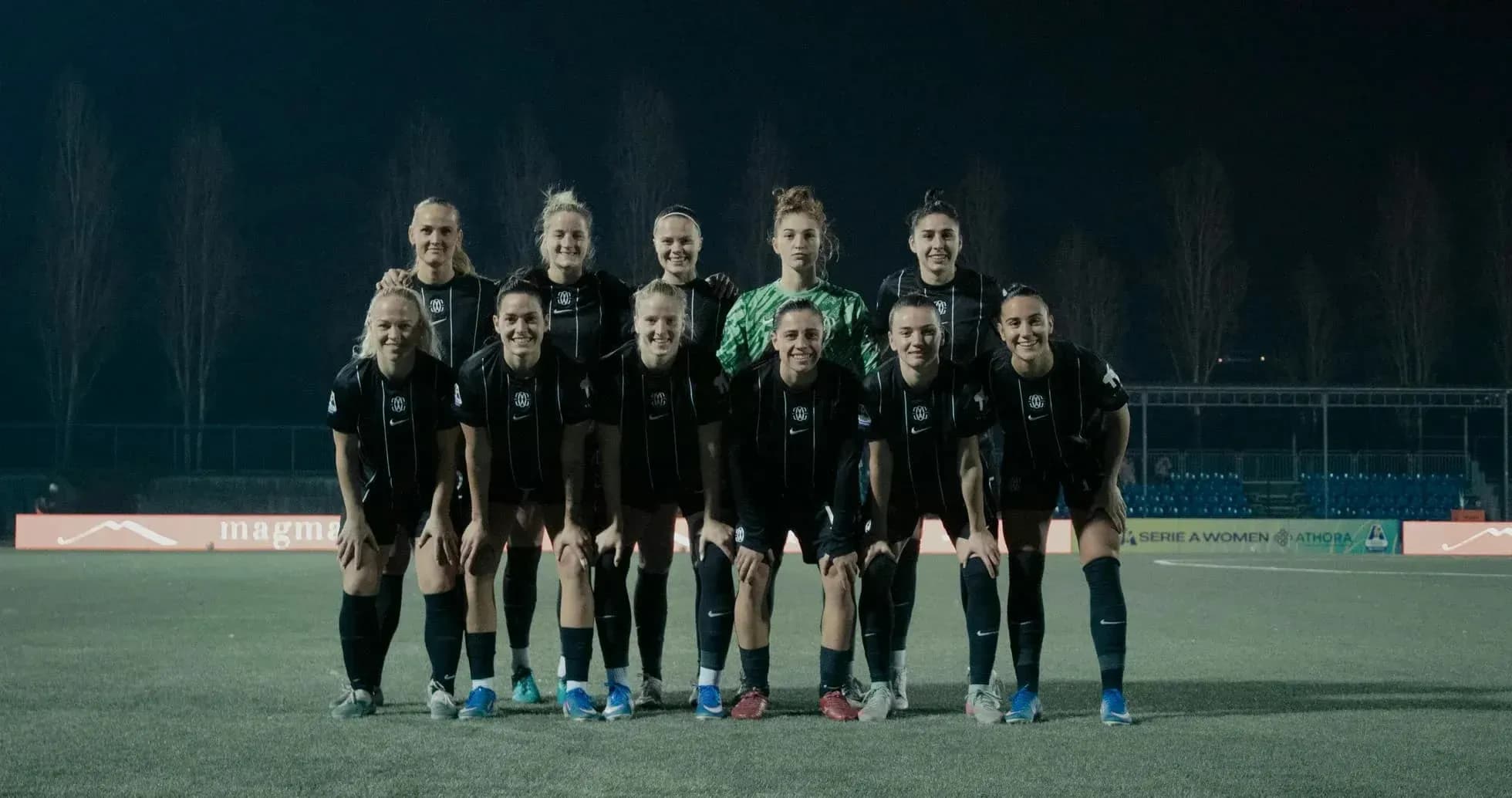
Under the grey Genoese sky of Stadio Luigi Ferraris, a relegation fight met European ambition and, over 90 tense minutes, the table told its truth. Genoa W, 12th in Serie A Women with 10 points and a goal difference of -23 heading into this game, pushed Fiorentina W to the brink but ultimately fell 3-2, a result that underlined both their fragility and their stubborn refusal to go quietly.
Fiorentina arrived as a side with European pretensions: 5th in the table with 33 points and a goal difference of 2, shaped by a balanced campaign of 9 wins, 6 draws and 6 defeats in total. Their season-long scoring profile — 31 goals for and 29 against overall — has painted them as a team that lives in the margins, rarely blowing opponents away but often finding enough edge to survive. On their travels they had been steady rather than spectacular: 4 away wins, 3 draws and 4 defeats, scoring 12 and conceding 15.
Genoa, by contrast, came into this fixture with the numbers of a side clinging on. Overall they had just 2 wins, 4 draws and 15 defeats from 21 matches, scoring 18 and conceding 41. At home, though, there was at least a faint heartbeat: 2 wins and a draw from 11 outings, with 11 goals for and 19 against. The Luigi Ferraris has seen them score an average of 1.0 goal per home game, but the 1.7 goals conceded at home on average has kept them permanently under water.
I. The Big Picture: Styles Colliding
The match itself, finishing 3-2 to Fiorentina after a 1-1 half-time scoreline, felt like a compressed version of both teams’ seasons. Genoa’s campaign-long form line — a bruising sequence of “LLWLWLLLLDLLLLLDDLLDL” — speaks of a side that can occasionally spark but struggles to sustain performance over 90 minutes. Fiorentina’s own form — “LDWWWDLWWDLLLWWDDLDWW” — is streaky but far more resilient, with clusters of wins that have kept them firmly in the top half.
Tactically, the raw data suggests both coaches leaned on familiar structures. Genoa’s season has been defined by four-at-the-back systems: 4-3-3 (used 6 times), 4-1-4-1 and 4-2-3-1 among others, all hinting at a team trying to find the right balance between protecting a vulnerable defence and giving their limited attacking options a platform. Fiorentina, too, are built on a 4-3-3 base (7 uses), occasionally shifting into 4-2-3-1 or 4-1-4-1 to tilt the midfield battle.
II. Tactical Voids and Disciplinary Edges
There were no listed absences in the data, so both squads appeared close to full strength. For Genoa, that meant a spine anchored by C. Forcinella in goal, with A. Acuti and A. Hilaj starting, and the experienced N. Cinotti available from the bench. Fiorentina could call upon their creative and disciplinary lightning rod S. Bredgaard, and the league’s top-10 scorer I. Omarsdottir in the front line.
If there is a silent storyline to Genoa’s season, it is discipline under pressure. Their yellow card distribution shows a clear late-game tilt: 30.77% of their cautions arrive between 76-90 minutes, the single highest window, with another 19.23% between 61-75. That late spike hints at a team that tires, chases games, and ends up making desperate interventions. Fiorentina’s yellows are more spread but still peak in the 46-60 minute window at 28.57%, reflecting an aggressive restart after half-time.
Red cards tell a different tale. Fiorentina carry a sharp edge in high-stakes moments: A. Bonfantini features among the top red-card profiles in the league, with 2 yellows and 1 yellow-red, and the team’s only recorded red card this season comes in the 76-90 minute band (100.00% of their reds). Genoa, by contrast, have no recorded red cards in their season distribution, though Acuti and Cinotti both sit on 4 yellows each, living on the disciplinary line.
III. Key Matchups: Hunter vs Shield, Engine Room vs Enforcer
The headline attacking threat belonged to Fiorentina. I. Omarsdottir, with 4 goals in total from 19 appearances, is a top-10 scorer in the league. Her profile — 13 shots in total, 6 on target, 9 key passes and 70 duels contested — makes her more than a pure finisher; she is a focal point who can occupy centre-backs and link with runners. Against a Genoa defence that had conceded 41 goals overall (19 at home), her movement between the lines and into the channels was always likely to be decisive.
Behind her, S. Bredgaard is the creative metronome. With 5 assists in total — second-best in the league — and 17 key passes from 245 total, she is Fiorentina’s main line-breaker. Her 23 shots (12 on target) and 28 dribbles attempted underline a winger or advanced attacker who is constantly probing. She also carries a disciplinary edge: 4 yellow cards in total, which reflects her willingness to counter-press and foul if needed.
On the Genoa side, the “shield” is more collective than individual. A. Hilaj, listed as an attacker but with 21 tackles, 9 successful blocks and 26 interceptions, embodies Genoa’s defensive graft from the front. Those 9 blocked shots are not incidental; they show a player who often ends up deep, helping a back line under siege. Alongside her, Acuti’s 26 tackles and 21 interceptions in midfield mark her as the primary ball-winner, even if her 15 fouls committed and 4 yellows illustrate the cost of living in constant defensive fire.
Cinotti adds another layer to the engine room. With 21 tackles, 11 interceptions and 73 duels contested (41 won), she is a combative midfielder who can step into second balls and disrupt Fiorentina’s rhythm. But she also carries a small, telling blemish: she has missed 1 penalty in total this season. In a side that has scored only 18 goals overall, that single miss is emblematic of Genoa’s razor-thin margins.
The “Hunter vs Shield” dynamic, then, was clear: Omarsdottir and Bredgaard’s combined threat against a Genoa unit that concedes 2.0 goals on average overall and 1.7 at home. Fiorentina’s attack averages 1.5 goals overall and 1.1 on their travels, so a three-goal haul here represents an overperformance against their usual away output — and a harsh confirmation of Genoa’s defensive issues.
IV. Statistical Prognosis and What the 3-2 Means
Following this result, the numbers fall into place with grim logic. Genoa’s inability to keep games under control is written in their season-long balance: 3 clean sheets in total, but 41 goals conceded and 7 matches where they have failed to score. They can keep things tight on the odd day, but more often they are asked to chase, and their late yellow-card surge suggests they do it with growing desperation.
Fiorentina, meanwhile, consolidate their identity as a side that plays on the front foot but accepts risk. With 5 clean sheets overall and 5 penalties scored from 5 taken (100.00% conversion, with no misses), they combine attacking initiative with ruthless efficiency from the spot. Even without an explicit xG figure, the structural data is telling: a team that consistently generates enough chances to average 1.5 goals per game overall, against an opponent that routinely ships 2.0, is statistically favoured. A 3-2 away win fits that script.
In narrative terms, this match felt like Genoa’s season in miniature: brave, occasionally incisive — they did score twice at home, matching their 1.0 home average and surpassing it — but ultimately undone by defensive frailty and the superior quality of a top-half side. Fiorentina’s squad depth, with options like S. Wijnants, A. Tortelli and E. Woldvik on the bench, underlined the gap in resources.
As the final whistle blew at Luigi Ferraris, the table hardened into reality. Fiorentina’s blend of Omarsdottir’s cutting edge and Bredgaard’s creativity had once again nudged them toward their European ceiling. Genoa, anchored by the tireless work of Hilaj, Acuti and Cinotti, were left with the familiar feeling of having fought well but fallen just short — a story their numbers, and now this 3-2 defeat, continue to tell with unforgiving clarity.
Related News

Napoli W vs Sassuolo W: Serie A Women Season Finale Analysis

Ternana W Upset AC Milan W in Serie A Women Finale

Parma W vs Juventus W: Serie A Women's Match Analysis

Roma W’s Dominance Secures 2-0 Victory Over Genoa W

Como W Shocks Inter Milano W with 3–0 Victory

Fiorentina W vs Lazio W: Serie A Women Season Finale Insights