
Fiorentina vs Genoa: A Tactical Stalemate in Serie A
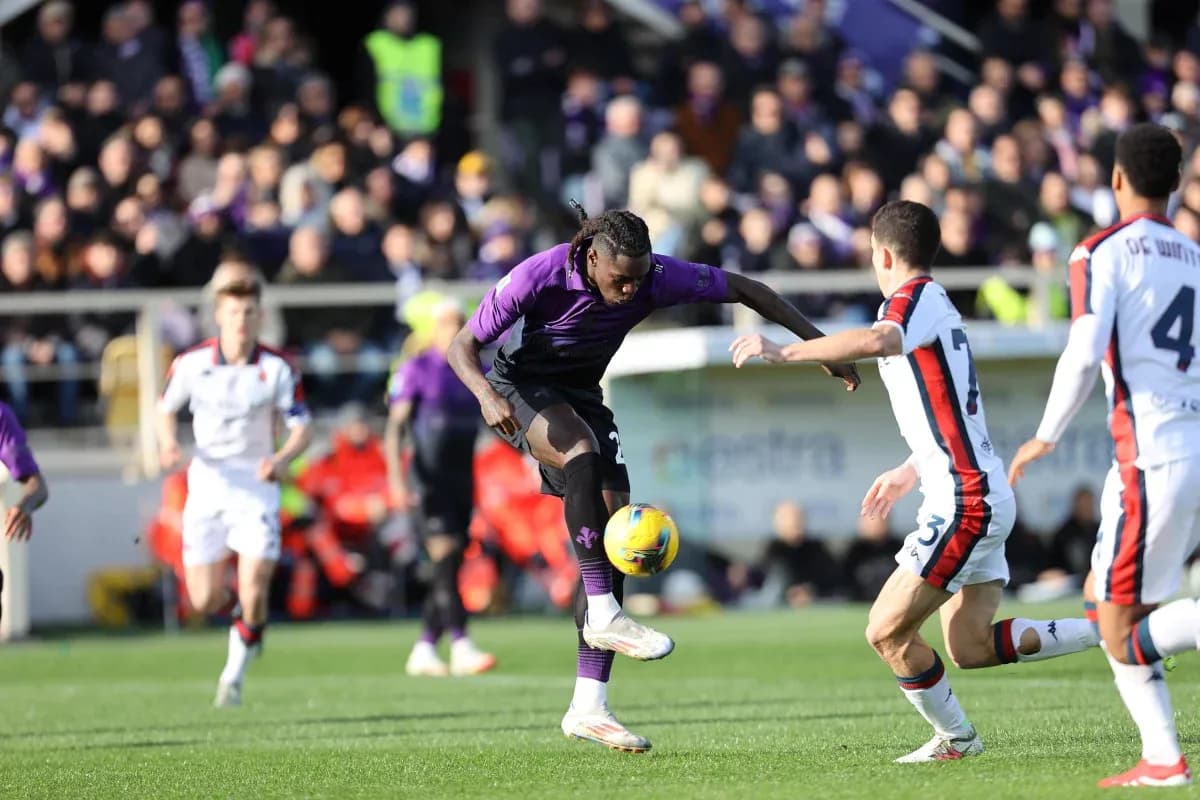
The late spring light over Stadio Artemio Franchi felt almost deceptive for what this game really was: a tense, attritional scrap between two sides whose seasons have been defined by grind more than glamour. Fiorentina, 15th in Serie A with 38 points and a goal difference of -11 heading into this game, met a Genoa side only marginally better off, 14th with 41 points and a goal difference of -8. The 0-0 that followed in Florence fit the seasonal DNA of both teams almost too perfectly.
This was Round 36 of the regular season, and you could see the weight of a long campaign in the way both coaches approached their lineups. Paolo Vanoli leaned into familiarity, restoring Fiorentina’s most-used structure: a 4-3-3, the formation they have deployed 13 times in Serie A this season. Daniele De Rossi, by contrast, doubled down on Genoa’s three-at-the-back identity with a 3-4-2-1, one of the systems that has underpinned their 10 wins and 11 draws in 36 matches.
Fiorentina's Lineup
For Fiorentina, the absences were telling. M. Kean, their top league scorer with 8 goals and 2 successful penalties from 2 attempts, was ruled out with a calf injury. Without him, Vanoli had to improvise a front line of F. Parisi, R. Braschi and M. Solomon. It stripped Fiorentina of their most proven penalty-box presence and forced them into a more collective, less incisive attacking profile.
Further back, the spine was built around two of Serie A’s most card-prone defenders. M. Pongračić, who has accumulated 11 yellow cards this season, anchored the right side of central defence, with L. Ranieri (8 yellows) to his left. Together they embody Fiorentina’s defensive personality: combative, willing to step in front of danger, occasionally overstepping the disciplinary line. Pongračić has blocked 23 shots this season, a testament to how often he is the last line between opponent and goal.
In front of them, the midfield trio of R. Mandragora, N. Fagioli and C. Ndour was tasked with knitting together a side that, heading into this game, had scored 38 goals in total (20 at home, 18 on their travels) and conceded 49 overall (20 at home, 29 away). The symmetry at home – 20 scored, 20 conceded, an average of 1.1 goals for and 1.1 against per home game – speaks to a team that rarely cuts loose but often keeps things on a knife edge.
Genoa's Selection
Genoa’s selection told its own story of adaptation. De Rossi was without T. Baldanzi (thigh injury), M. Cornet and S. Otoa (both listed as inactive), Junior Messias (muscle injury) and B. Norton-Cuffy (thigh injury). That cluster of absences, many of them attacking or wide options, pushed Genoa toward a more functional, hard-running XI.
The back three of A. Marcandalli, L. Ostigard and N. Zatterstrom shielded J. Bijlow, supported by a busy midfield line of M. E. Ellertsson, Amorim, M. Frendrup and A. Martin. Crucially, A. Martin is not just a wing-back here; he is Genoa’s creative metronome. With 5 assists and 60 key passes in Serie A this season, he arrived in Florence as one of the league’s more productive full-back creators, even if he has also missed one penalty. Ahead of them, J. Ekhator and Vitinha floated behind L. Colombo, trying to find pockets between Fiorentina’s lines.
Disciplinary Undercurrent
The disciplinary undercurrent was impossible to ignore. Heading into this game, Fiorentina’s yellow card distribution showed a clear late-game spike: 25.00% of their cautions have arrived between 76-90 minutes. Genoa’s peak comes earlier in the second half, with 24.59% of their yellows between 61-75 minutes. Add in the fact that Genoa’s red cards are scattered across 0-15, 46-60 and 91-105 minutes, and you had a match primed for late drama, even if it never truly exploded.
Without detailed xG numbers from this fixture, the statistical prognosis has to lean on season-long patterns. Fiorentina’s campaign has been defined by narrow margins and inconsistency in the final third: they have failed to score in 11 of their 36 league matches, despite averaging 1.1 goals per game overall. Yet their penalty record is flawless: 6 penalties taken, 6 scored, 100.00% conversion. In a tight game like this, the absence of Kean – who has scored 2 of those spot-kicks – removed a high-leverage weapon.
Genoa, meanwhile, came in with a slightly sharper edge in both boxes. They have scored 40 goals overall (21 at home, 19 away) and conceded 48 (24 home, 24 away), averaging 1.1 goals for and 1.3 against both at home and on their travels. They are more comfortable in stalemates than Fiorentina: 11 draws in 36 matches, and they have failed to score in 14 games, leaning heavily on structure and clean sheets (9 in total, 5 away).
Match Outcome
That context makes the 0-0 feel less like a missed opportunity and more like an inevitable convergence of profiles. Fiorentina’s 4-3-3, with its emphasis on control rather than chaos, met Genoa’s 3-4-2-1, which is built to compress space and funnel opponents wide. The “Hunter vs Shield” battle never quite ignited because the primary hunter – Kean – was absent, and Genoa’s shield, marshalled by Ostigard and Marcandalli, was built precisely to deal with improvised forward lines like Parisi–Braschi–Solomon.
In the “Engine Room”, Mandragora and Fagioli were matched by Frendrup and Amorim. It was less a clash of archetypes and more a mirror: two industrious pairs, both more comfortable recycling possession than breaking lines. A. Martin’s advanced positioning down the left was Genoa’s main attempt to tilt the balance, but every time he pushed on, he ran into the disciplined axis of Dodo and Pongračić, whose anticipation and blocking instincts have been a quiet strength for Fiorentina all season.
Following this result, nothing truly seismic shifts in the table, but the game crystallises who these teams are. Fiorentina remain a side whose home numbers (4 wins, 8 draws, 6 losses from 18 matches) scream caution and containment. Genoa continue to be stubborn travellers, with 4 away wins, 7 draws and 7 defeats, often happy to take the point and move on.
From a tactical lens, the 0-0 is less a disappointment and more a confirmation: when two low-scoring, structurally disciplined sides meet this late in the season, and when key attacking talents like Kean and Baldanzi are missing, the most likely outcome is precisely what unfolded in Florence – a chess match that never quite tips into chaos, decided not by xG fireworks but by the quiet, grinding work of systems holding firm.
Related News

David Alaba Poised for Surprising Move to Udinese in Serie A
Milan Dominates Lecce: Tactical Analysis of a 3-0 Victory

Juventus Defeats Atalanta 2-0: Tactical Insights and Key Matchups
Frosinone's Tactical Mastery Shines in 2–0 Victory Over Como
Fiorentina and Napoli Share Points in Serie A Clash
AS Roma vs Inter: Tactical Insights from Serie A Clash