
Fiorentina W vs Lazio W: Serie A Women Season Finale Insights
At Curva Fiesole – Viola Park, Fiorentina W and Lazio W closed their Serie A Women campaigns with a game that felt like a distilled version of their seasons. The 2–1 home win preserved Fiorentina’s status as the division’s fourth force on 36 points, while Lazio, three points back on 33, were again left balancing ambition with volatility.
Overall this campaign, Fiorentina’s profile has been clear: a side that lives on narrow margins but usually bends them its way. Across 22 matches they scored 33 and conceded 30, a goal difference of +3 that mirrors their form line of “WWWDL” heading into this game. At home, they have been particularly efficient: 6 wins, 3 draws, 2 defeats from 11, with 21 goals for and 15 against. Lazio arrived as the league’s great disruptors: 10 wins, 3 draws, 9 defeats overall, 31 goals for and 30 against (goal difference +1), and a punchy away record of 5 wins, 1 draw and 5 defeats, scoring 18 and conceding 18 on their travels.
I. The Big Picture – Fiorentina’s control vs Lazio’s chaos
The first half followed the season’s script. Fiorentina, who at home average 1.9 goals for and 1.4 against, imposed themselves early and went into the break 1–0 up. Lazio, more comfortable trading blows than managing them, were again forced to chase. The second half opened up into the kind of open contest that suits Gianluca Grassadonia’s team, but Fiorentina’s blend of structure and set-piece threat ultimately carried them to a 2–1 full-time score.
The lineups underlined both teams’ identities. Jesus Pinones-Arce Pablo leaned into a technical, multi-national spine: C. Fiskerstrand in goal, M. Filangeri and E. Lombardi anchoring the back line, E. Severini and S. Bredgaard knitting midfield to attack, and I. Omarsdottir leading the line. Lazio countered with a more vertical, transition-ready XI: F. Durante in goal, the defensive platform of C. Baltrip-Reyes and E. Oliviero, and a fluid attacking trio built around M. Connolly, N. Visentin and M. Monnecchi.
II. Tactical Voids and Discipline – Edges at the margins
There were no officially listed absences, so both coaches had near-full decks to play with. The real absences were structural rather than personnel-based.
For Fiorentina, the risk zone is discipline in the middle third. Over the season, their yellow-card distribution shows a pronounced spike between 46–60 minutes at 26.67%, followed by another swell late on: 20.00% of their yellows arrive between 76–90 minutes, and their only red card of the campaign also comes in that 76–90 window. It speaks to a side that can become stretched and emotional when protecting a lead. In a match where they went ahead early and then had to withstand Lazio’s second-half surge, those tendencies were always lurking beneath the surface.
Lazio’s disciplinary profile is more dramatic. Their yellow cards peak at 46–60 minutes with 22.58%, then stay high through 61–75 (16.13%) and 76–90 (16.13%). Red cards are scattered across key phases: one between 16–30 minutes, one between 76–90, and one between 91–105. Players like F. Simonetti, with 4 yellows and 1 red in just 552 minutes, embody that combustible edge. This match, tight on the scoreboard and emotionally charged by the table context, always risked tipping into a card-heavy contest once Lazio began chasing.
III. Key Matchups – Hunter vs Shield, Engine Room vs Enforcer
The “Hunter vs Shield” storyline was written before kick-off. Lazio’s main scoring threat this season has been M. Piemonte, with 7 goals from 21 shots (12 on target) and an attacking rating of 7.08. Even though she did not start here, her presence in the squad shapes how opponents defend Lazio’s final third. Alongside her, C. Le Bihan’s 3 goals and 2 assists, plus 31 key passes and 21 dribbles attempted, mark her as the creative archer in the final third.
Against that, Fiorentina’s defensive record at home – 15 conceded in 11 – is respectable rather than dominant, but it is built on intelligent positioning rather than pure volume defending. M. Filangeri’s role as a stabiliser, supported by the athleticism of I. Van Der Zanden and the emerging presence of E. Faerge, gives Fiskerstrand a relatively clean line of sight. The fact that Fiorentina have kept 3 clean sheets at home and 5 overall suggests a unit that, while not impermeable, can close ranks when needed.
In the “Engine Room” duel, the contrast was even sharper. For Fiorentina, S. Bredgaard is the creative metronome: 5 assists, 17 key passes and 28 dribbles attempted across the season, with a rating of 7.04. Her ability to receive between the lines and then either turn or slide passes into half-spaces is central to Fiorentina’s 4-3-3 and 4-2-3-1 structures. E. Severini and K. Tryggvadottir provide the legs and coverage around her, freeing Bredgaard to dictate.
Lazio’s response in midfield is led by E. Oliviero, one of the league’s top assist providers with 5. She combines 414 passes at 71% accuracy with 23 tackles, 6 blocks and 13 interceptions, a rare blend of playmaking and ball-winning. Around her, F. Simonetti adds bite and forward running, though her 17 fouls committed and card record make her a tactical risk in high-tempo games like this one.
Out wide and in the channels, Fiorentina’s attacking trident of H. Eiriksdottir, M. Cherubini and Omarsdottir offered varied threats. Omarsdottir, with 4 goals from 13 shots (6 on target), is a penalty-box forward who thrives on early service. Cherubini’s movement off the right and Eiriksdottir’s ability to attack the far post stretched Lazio’s back three and back four structures alike.
Lazio’s counters came through the mobility of M. Connolly and N. Visentin, supported by the late-game punch of N. Karczewska off the bench. Karczewska’s 3 goals from 11 shots and her 64 duels (20 won) make her an ideal chaos striker when the game breaks open.
IV. Statistical Prognosis – Why 2–1 felt “about right”
Following this result, the numbers still tell a story of two closely matched, attack-minded sides. Overall, Fiorentina average 1.5 goals for and 1.4 against per game; Lazio sit at 1.4 for and 1.4 against. A 2–1 scoreline sits neatly within those seasonal bands, with Fiorentina’s home attacking edge nudging them over the line.
Defensively, both teams concede at similar overall rates, but context matters. Fiorentina’s home record of 21 scored and 15 conceded suggests they typically win by a single goal when they do triumph. Lazio’s away balance of 18 scored and 18 conceded points to volatility rather than control – they are as likely to be dragged into a shootout as they are to grind out a clean sheet.
Add in Fiorentina’s perfect penalty record this season – 5 taken, 5 scored, 0 missed – and their late-game card spikes, and you get a picture of a side that plays on the edge but executes under pressure. Lazio, by contrast, have had no penalties this campaign, further underlining their reliance on open-play chaos and wide overloads.
In tactical terms, Fiorentina’s slightly better structure, their home attacking average of 1.9, and the creative superiority of Bredgaard and Omarsdottir over Lazio’s improvised forward combinations justified the narrow margin. Lazio’s away threat and individual quality from Piemonte and Le Bihan ensured the game never felt safe, but across 90 minutes, the 2–1 outcome aligned with the season-long xG and defensive solidity profiles of both squads.
Related News

Napoli W vs Sassuolo W: Serie A Women Season Finale Analysis

Ternana W Upset AC Milan W in Serie A Women Finale

Parma W vs Juventus W: Serie A Women's Match Analysis
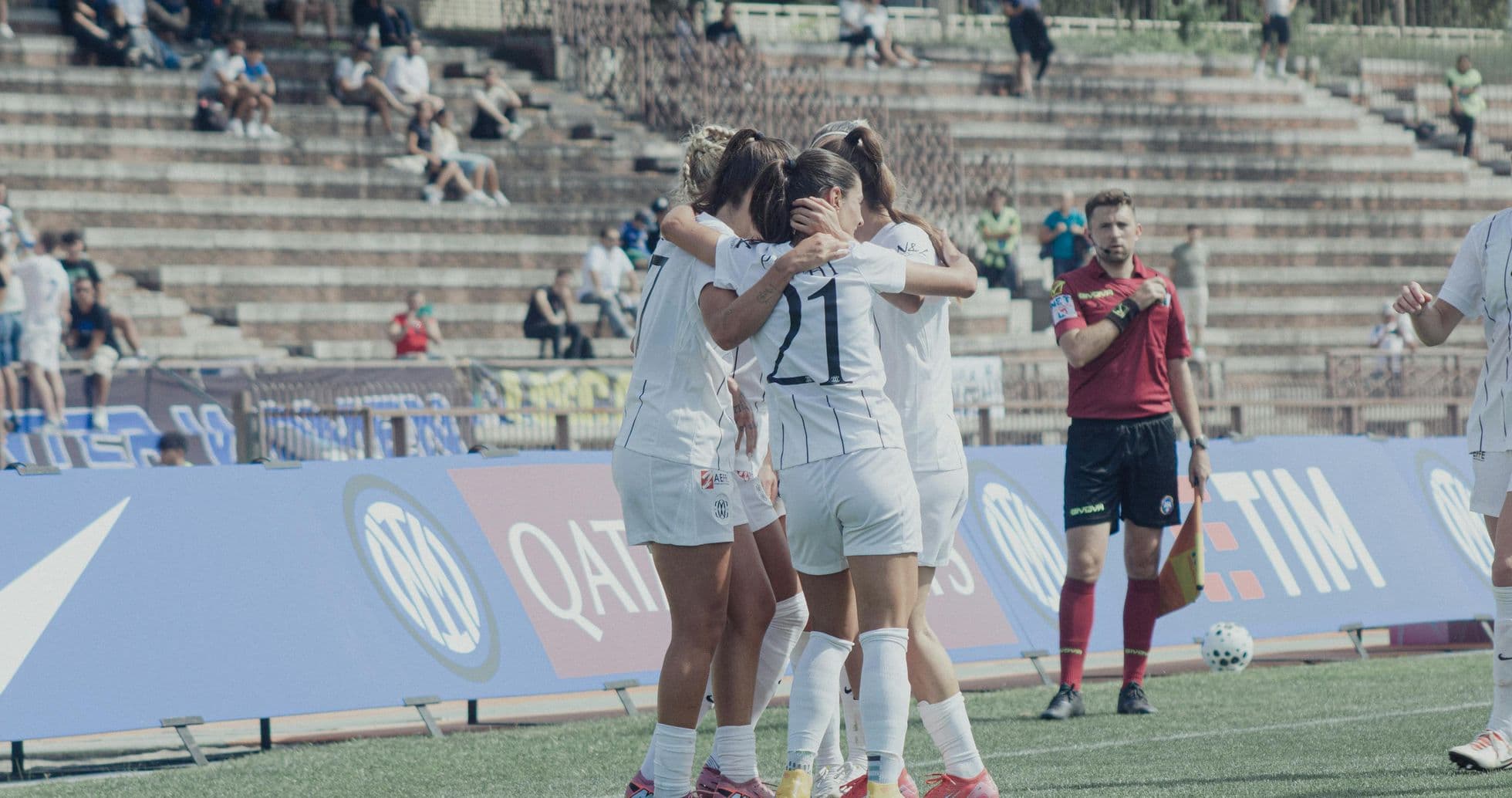
Como W Shocks Inter Milano W with 3–0 Victory

Fiorentina W vs Lazio W: Serie A Women Season Finale Insights

Napoli W vs Sassuolo W Match Preview: Serie A Women