
France vs Senegal: Tactical Insights from World Cup Clash
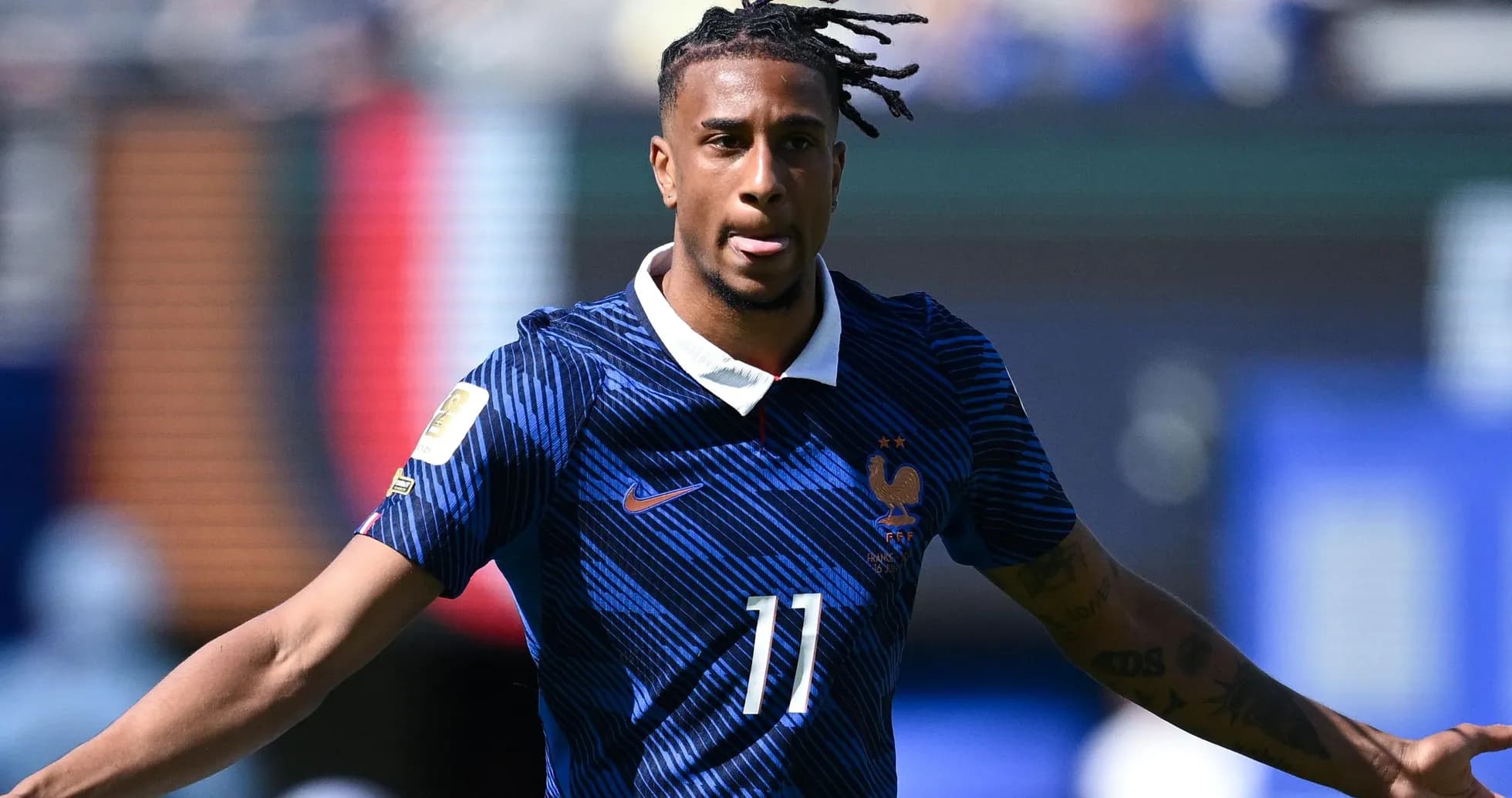
MetLife Stadium felt less like neutral territory and more like a stage built for contrast: a heavyweight in full stride against a proud challenger still learning the contours of this World Cup. Following this result, France’s 3-1 victory over Senegal in Group I is more than just three points; it is a snapshot of two squads at very different stages of tactical maturity.
Match Overview
Heading into this game, France carried the aura of a side built for the latter stages. The standings now confirm that impression: in total this campaign they have played 1 match, taken 3 points, and sit 2nd in Group I with a goal difference of +2, built from 3 goals for and 1 against. Senegal, by contrast, leave East Rutherford with 0 points from their 1 match, 1 goal scored and 3 conceded, their goal difference of -2 neatly mirroring France’s superiority.
Team Strategies
Both coaches set their sides up in a 4-2-3-1, but the shared formation only underlined the gulf in execution. Didier Deschamps’ France looked like a system years in the making; Bouna Thiaw Pape’s Senegal resembled a blueprint still being sketched in pencil.
For France, the spine is unmistakable. Mike Maignan in goal anchors a back four of Jules Kounde, Dayot Upamecano, William Saliba and Theo Hernandez. In front of them, the double pivot of Aurelien Tchouameni and Adrien Rabiot gives Deschamps exactly what he craves: one metronome, one shuttler, both capable of protecting transitions. Higher up, Michael Olise, Ousmane Dembele and Desire Doue form a fluid band of three behind Kylian Mbappe, whose role as the spearhead is already defining the tournament.
Mbappe's Performance
The numbers around Mbappe’s start are stark. In total this campaign, he has 2 goals from 1 appearance, playing all 90 minutes and registering a rating of 8.2. He took 4 shots, all 4 on target, and completed 93% of his 16 passes. It is the profile of a finisher who does not need volume to be decisive. Even more ominously for future opponents, he attempted 6 dribbles; only 1 was successful, yet he still left with a brace. Stop his runs, and he hurts you with movement and finishing. Let him face you, and the dribble threat remains.
Behind him, the depth is already on the scoreboard. Bradley Barcola came from the bench for 10 minutes and still found time to score once, hit the target with his only shot, win 2 of 3 duels and complete 85% of his passes. Deschamps’ bench options – Marcus Thuram, Jean-Philippe Mateta, Rayan Cherki, Warren Zaire-Emery, N’Golo Kante – read like a second XI capable of competing deep into a tournament. Even without explicit injury or suspension absentees listed, the sheer volume of quality on the bench gives France tactical elasticity: they can go more direct with Thuram, more combinational with Cherki, or lock the midfield with Kante and Zaire-Emery.
Defensive Structure
Defensively, France’s numbers are clean if not yet dominant. In total this campaign they have conceded 1 goal in 1 match, an average of 1.0 at home. They have not kept a clean sheet, but the structure is clear: Saliba and Upamecano as the central wall, Hernandez offering thrust on the left, Kounde balancing on the right. With no cards registered in their seasonal data, there is no sign yet of disciplinary instability; Deschamps can rotate by choice, not necessity.
Senegal's Setup
Senegal, meanwhile, are built around a very different kind of star axis. At the back, Edouard Mendy is shielded by a line of Krepin Diatta, Kalidou Koulibaly, Moussa Niakhate and Moussa Diouf. In midfield, the double pivot of Idrissa Gueye and Pape Gueye is designed to break and recycle, while Ismaila Sarr, Lamine Camara and Sadio Mane support Nicolas Jackson up front.
Yet it is off the bench that Senegal’s most incisive contributions have come. Ibrahim Mbaye, only 17, has already scored 1 goal from 1 appearance, playing 15 minutes, with 1 shot and 1 on target, plus 87% passing from 8 attempts. Iliman Ndiaye, likewise a substitute, has delivered 1 assist, 10 completed passes at 90% accuracy and a key pass to his name. The story emerging is that Senegal’s most creative sparks are not yet embedded in the starting XI.
Statistical Overview
Statistically, Senegal’s foundation is fragile. On their travels they have played 1 match, lost it, scored 1 goal and conceded 3, for an away goals-for average of 1.0 and an away goals-against average of 3.0. Their overall goal difference of -2 (1 scored, 3 conceded) reflects a side too easily stretched. They have failed to keep a clean sheet in total this campaign and, crucially, have not yet failed to score either – an important psychological marker that they can hurt teams even in defeat.
The disciplinary log is a blank slate for both sides; no yellow or red card data appears in the seasonal statistics. That absence is itself instructive: there is no looming suspension cloud, no enforced reshuffle. Tactical voids, for now, are more about selection choices than missing personnel.
Key Duels
The key duels across the pitch are already shaping the narrative of the group. The “Hunter vs Shield” battle is Mbappe against any defence that tries to hold a high line. With France averaging 3.0 goals at home in total this campaign and Senegal conceding 3.0 away, the statistical collision is brutal: a ruthless attack against a back line still searching for compactness. Koulibaly and Niakhate will have to compress space far more aggressively in future fixtures, or Mbappe’s vertical runs and Barcola’s late entries will continue to find daylight.
In the “Engine Room”, Tchouameni and Rabiot currently hold a clear edge over Senegal’s Gueye-Gueye tandem. France’s midfield is not yet heavily represented in the assist charts, but their control is visible in how often Mbappe and the wide trio receive the ball in advanced zones. Senegal’s creative fulcrum, by contrast, may need to be Ndiaye, who has already delivered 1 assist and a key pass from the bench. Integrating him earlier could give Mane and Jackson more structured service, rather than relying on broken-play transitions.
Conclusion
From an xG-style prognosis, even without explicit Expected Goals numbers, the shot and scoring data is telling. France have turned 3 total goals from a relatively low volume of recorded shots by their top scorers: Mbappe with 4 shots, Barcola with 1, both perfect in terms of shots on target. That conversion rate is unsustainable at this level, but it speaks to chance quality and shot selection. Senegal, with 1 goal from 1 shot on target by Mbaye and 1 assist from Ndiaye, are similarly reliant on high-efficiency moments rather than sustained pressure.
Following this result, the tactical arc of Group I is clear. France look like a side whose 4-2-3-1 is a polished weapon, with Mbappe as the hunter and a deep bench ready to change the rhythm of any match. Senegal, talented but incomplete, must decide whether to trust their emerging creators – Mbaye and Ndiaye – earlier and more centrally, or risk another game in which structure without incision leaves them chasing shadows. The scoreline at MetLife Stadium feels less like an isolated result and more like a warning: at this World Cup, the teams who know exactly what they are will punish those still searching for themselves.
Related News
Brazil's First Post-World Cup Friendly: What Should the Lineup Be?
Harry Kane Calls England’s World Cup Exit to Argentina His Deepest International Pain
Estevao Opens Up on World Cup Heartbreak and His Unexpected Return to Brazil Under Ancelotti
Thomas Tuchel Shares Unusual Regret After England's 10-Man World Cup Victory Over Mexico
South Korea Names Robert Moreno as Interim Coach After World Cup Exit
Jude Bellingham Returns to Form at Real Madrid Following World Cup Success