
Germany's World Cup Woes: The Case for Nagelsmann's Exit
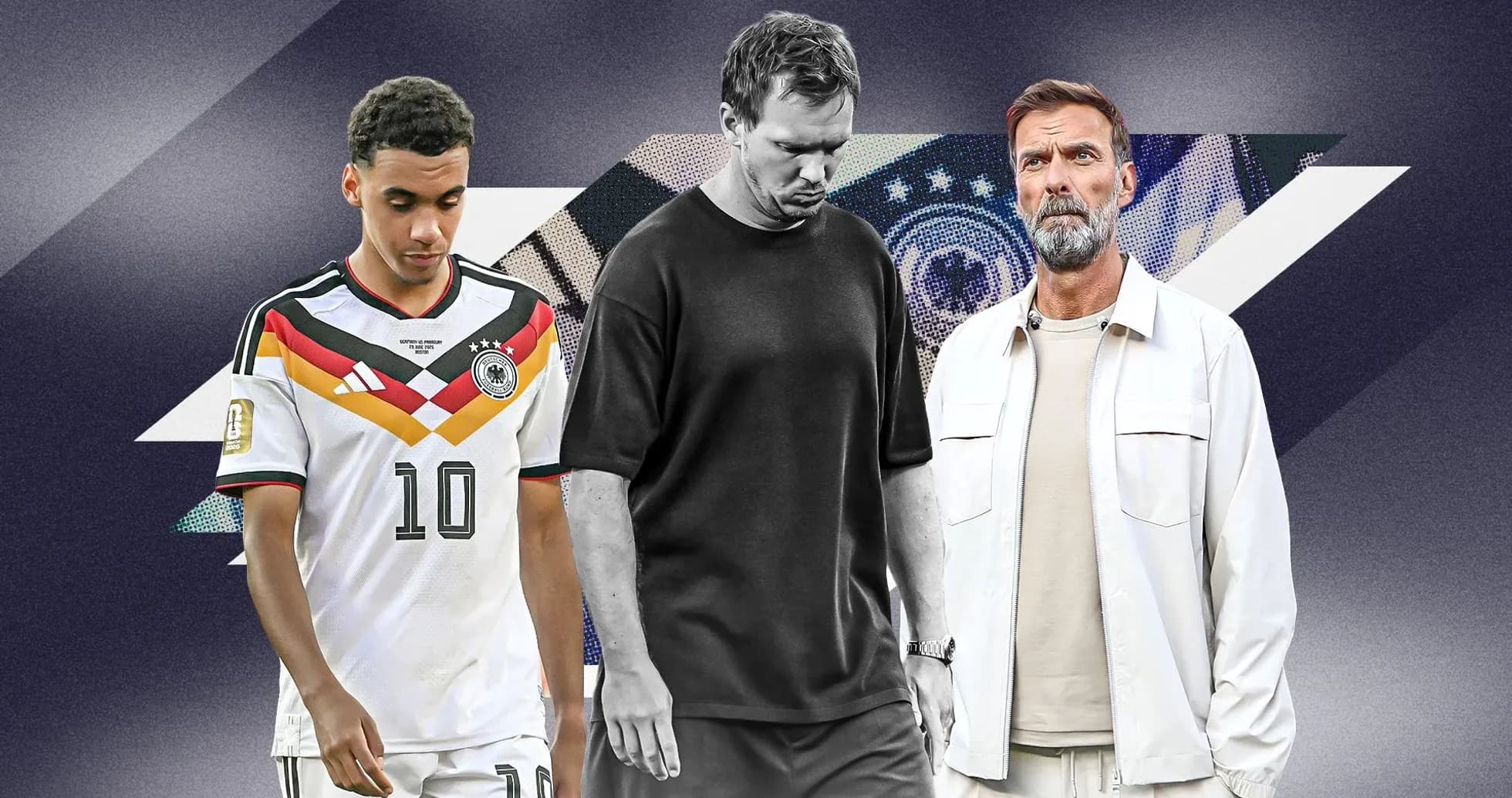
Germany have been here before. That is precisely the problem.
When the world champions crashed out of the 2018 World Cup in the group stage, the logic was brutal but simple: a golden era under Joachim Löw had curdled into chaos. Defeats to Mexico and South Korea made Germany the third successive holders to go home early. The sense inside and outside the DFB was that a 12-year reign had reached its natural end.
It did not. Löw stayed on, his credit in the bank buying him another shot. Germany drifted through three stagnant years, then bowed out to England in the last 16 of Euro 2021. Only then did he walk away.
The lesson should have been obvious. It was not.
Flick, Nagelsmann and a familiar pattern
Hansi Flick arrived as the antidote. Fresh from Bayern Munich, he carried Germany to the 2022 World Cup on a wave of optimism and nostalgia for his treble-winning swagger. Germany took the lead against Japan in their opening game, dominated for long stretches – and still lost. The group exit that followed was dressed up in mitigating factors, but the bottom line remained: another first-round failure.
Again, the expectation was decisive action. Again, it did not come. Flick clung on until autumn 2023, a string of limp performances finally forcing the DFB’s hand and opening the door for Julian Nagelsmann.
Nagelsmann was meant to be the reset button. Young, sharp, tactically inventive, he walked into the job in September 2023 and immediately changed the mood. His selections felt bold rather than sentimental, his messaging clear. Germany went into Euro 2024 on home soil with something they had lacked for years: belief.
For a while, he delivered. Germany reached the quarter-finals, their first genuinely coherent tournament since Euro 2016. The bond between team, coach and supporters returned, if only briefly. The elimination by eventual champions Spain hurt, but it also seemed like a foundation. Nagelsmann, eyes already fixed on the horizon, declared the 2026 World Cup his next great target.
Back then, he was the most popular national coach since peak Löw. That feels like a different lifetime.
A coach burning through credit
Over the last two years, Nagelsmann has spent his public capital at a remarkable rate. Not on bold ideas or high-risk football, but on misjudged words and muddled decisions.
He turned press conferences into platforms for detailed, public critiques of his own players. Every few weeks, another name, another role dissected in front of cameras. It looked less like sharp leadership and more like a man who craved the spotlight. Some statements were clumsy, others flatly contradicted previous promises about how and where certain players would be used.
When the questions turned critical, Nagelsmann often lost his composure. The tone hardened, the answers slipped into patronising lectures. It happened repeatedly at this World Cup, and it chipped away at the trust that had once seemed so natural.
The material calls were no better. After Toni Kroos’ triumphant return for Euro 2024, Nagelsmann went a step further and hauled 40-year-old Manuel Neuer out of international retirement for this tournament. He had publicly denied such a move was on the table. It arrived anyway – a gut punch for Oliver Baumann, who had been flawless through qualifying and had every reason to expect the shirt.
Neuer did nothing disastrous. He also did nothing Baumann could not have done. The whole episode felt like a needless indulgence, badly communicated and poorly justified.
Then came Joshua Kimmich. Germany’s captain was shunted back and forth between right-back and central midfield, even within the same match, most notably in the defeat to Paraguay. It was tinkering for its own sake, a coach unable to commit to a clear plan for one of his most important players.
A World Cup without a heartbeat
The loss to Paraguay at Foxborough was not a freak result. It was the logical conclusion of a tournament that never found a rhythm.
Germany showed no tangible progress from the Euros. Aside from a short, frantic burst after half-time against minnows Curaçao, they consistently played below their level. The attack lacked imagination, the defence looked brittle, and the performances against Ivory Coast, Ecuador and Paraguay all carried the same dead weight: a talented squad playing without conviction or structure.
On paper, this campaign may even be worse than 2022. Back then, Germany at least dug out a draw against Spain. This time, there was no such statement, no moment to cling to.
To their credit, the players did not turn on their coach. They stepped in front of the cameras and took collective responsibility, deliberately shielding Nagelsmann from direct blame. That matters in a dressing room. It does not change the core truth.
It is the national coach’s job to provide a coherent game plan. Nagelsmann did not. His in-game management was erratic: questionable substitutions against Ecuador, and the decision to start super-sub Undav against Paraguay, blunting one of his few reliable impact options from the bench.
All of it played out under the coldest spotlight possible.
Klopp on the gantry, the future in plain sight
As Germany unravelled, every misstep was dissected in real time on television by the one man many supporters already see as Nagelsmann’s successor: Jürgen Klopp.
“You have to attack down the wings. There’s no alternative,” Klopp told Magenta TV after the elimination. It was not an offhand remark. It was a pointed diagnosis of a team that had repeatedly tried to play through clogged central areas and paid the price.
“We all know how well these guys can play, but they didn’t bring that to the pitch,” he continued. “In three months, we’ll be raving about [Florian] Wirtz and [Jamal] Musiala again about how great they are, but not now.
“Paraguay had the opportunity to achieve something, Germany was under pressure to achieve something. Everyone in the stadium thought: Now they’ll turn it around! But we didn’t. We let them off the hook... We can talk about the DFB. We absolutely have to change a few things.”
The words landed because they came from Klopp, but also because they echoed what millions of Germans had just watched. A team that blinked under pressure. A structure that never truly fit its brightest talents. A federation that has hesitated once too often.
For a growing section of the fanbase, the solution is obvious. Klopp, now Red Bull’s head of soccer, should leave his executive role and step into the Germany dugout, steering the national team through Euro 2028 and the 2030 World Cup. His appointment would trigger a wave of euphoria across German football, the kind of emotional surge the DFB has not felt in a decade.
Klopp, though, refused to take the bait when asked in Boston.
“I haven’t thought about that yet. I understand that when the national coach position is discussed, my name is mentioned in some form. But it’s not the moment to really talk about it. There’s nothing to say about it. I have a job that I enjoy very much. As far as I know, it’s not a part-time job.”
He did not say yes. He did not say no. He simply left the door half-open.
One decision the DFB cannot delay
Inside the DFB, Nagelsmann still has powerful allies. The squad has publicly backed him. Sporting director Rudi Völler has done the same. That was also true, once, for Löw. It was true for Flick. Loyalty and continuity are admirable traits – until they become a shield for inaction.
Germany cannot afford a third repetition of the same mistake: clinging to a failing project in the hope that time alone will fix it.
The path is brutally clear. First, the DFB must part ways with Nagelsmann. Not after a long review, not after another cycle of friendly matches, but now. Then they must move for Klopp with the same clarity and conviction they have so often lacked since 2014.
Because if they hesitate again, if they wait for the moment to be perfect, they may find that the one man who could have led a new era has already moved on – and that their chance to change the story of German football has gone with him.
Related News
Anthony Joshua Names Murat Gassiev as Next Opponent if He Defeats Tyson Fury
UFC 332: Start Time and Fight Highlights for Natalia Silva vs. Wang Cong
Court McGee Opens Up About Choosing UFC 332 as His Final MMA Fight
WBC Orders Lightweight Title Unification: William Zepeda vs Jadier Herrera
BCCI Pension List: Monthly Payments to Retired Indian Cricketers in 2025
Why Fury vs Joshua Is Set for Cardiff, and Dua Lipa’s Unexpected Role