
Hellas Verona vs Como: A Clash of Seasons
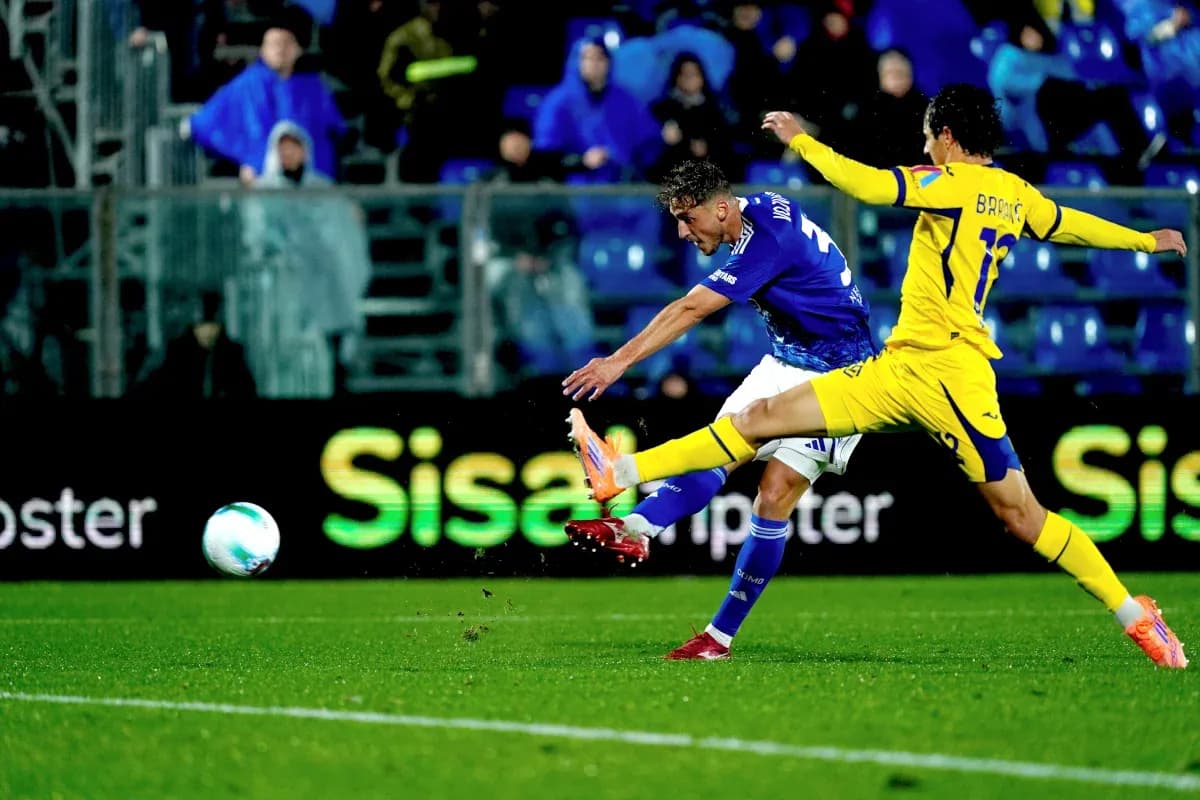
Stadio Marcantonio Bentegodi felt like a stadium caught between two seasons. For Hellas Verona, this was a campaign already defined by struggle; for Como, a year of ascent and European ambition. The final scoreline – Hellas Verona 0, Como 1 – merely confirmed what the table had been whispering for weeks.
Match Statistics
Heading into this game, the numbers painted a stark contrast. Verona were 19th in Serie A with 20 points from 36 matches, their overall goal difference a bruising -34, the product of 24 goals scored and 58 conceded. At home, they had won just 1 of 18, drawing 5 and losing 12, with only 12 goals scored and 26 conceded. Their attacking output at the Bentegodi – 0.7 goals per game at home – was the profile of a side that lives on the margins, hoping for narrow wins or stalemates rather than imposing themselves.
Como arrived from the opposite end of the spectrum. Sixth in the table on 65 points after 36 games, they carried a positive overall goal difference of 32, derived from 60 goals scored and 28 conceded. On their travels, they had been quietly ruthless: 9 away wins, 5 draws and 4 defeats, with 26 goals scored and just 13 conceded, an away average of 1.4 goals for and 0.7 against. That away defensive record, married to one of the division’s more fluid attacking structures, underpinned their push towards the European places.
Tactical Setups
Paolo Sammarco’s response to Verona’s predicament was to double down on structure. His 3-5-1-1 was conservative by design: L. Montipo behind a back three of V. Nelsson, A. Edmundsson and N. Valentini, with M. Frese and R. Belghali as wide midfielders. Inside, J. Akpa Akpro and R. Gagliardini flanked A. Bernede, with T. Suslov asked to knit play behind lone forward K. Bowie.
It was a shape that spoke to Verona’s season-long identity. This is a side that has kept 6 clean sheets overall but failed to score in 19 of 36 matches. Their overall defensive average of 1.6 goals conceded per game, combined with such a blunt attack, leaves almost no margin for error. The three centre-backs were there to protect a fragile core; the five-man midfield to clog passing lanes rather than dictate.
Cesc Fabregas, in contrast, arrived in Verona with a clear blueprint. Como lined up in their familiar 4-2-3-1 – a system they have used 32 times this season – with J. Butez in goal, a back four of M. Vojvoda, Diego Carlos, M. O. Kempf and A. Valle, a double pivot of M. Perrone and L. Da Cunha, and a technically gifted band of three – A. Diao, N. Paz and J. Rodriguez – operating behind centre-forward A. Douvikas.
This was not just a formation; it was a statement of control. Como’s season has been defined by balance: an overall average of 1.7 goals scored and only 0.8 conceded, and 18 clean sheets in total. Even away from home, they have kept 9 clean sheets in 18, mirroring their home record. Their structure is built around an intelligent press, measured possession and the individual quality of their attacking core.
Key Absentees
The absentees sharpened the tactical edges. Verona were without A. Bella-Kotchap, D. Mosquera, C. Niasse, G. Orban, D. Oyegoke and S. Serdar – a cluster that stripped depth from both defence and midfield, and crucially removed Orban’s 7-goal threat from the front line. For a team that had only scored 24 in total this campaign, losing that cutting edge forced Sammarco into a more makeshift attacking plan, leaning on the movement of Bowie and the creativity of Suslov.
Como, too, were not untouched. J. Addai was sidelined with an Achilles tendon injury, while Jacobo Ramón Naveros missed out through yellow-card suspension. The latter’s absence was particularly significant. He has been a defensive pillar this season, with 10 yellow cards and 1 red, and a profile defined by aggression and aerial dominance. Without him, Fabregas entrusted the heart of his defence to Diego Carlos and Kempf, a pairing strong in experience but subtly different in rhythm and distribution.
Disciplinary Trends
Discipline, in truth, hovered over both sides. Verona’s season-long card profile shows a tendency to collect yellow cards in the 31-60 minute window, with 21.43% of their yellows arriving between 31-45 minutes and 22.62% between 46-60. Their red-card distribution is even more telling: 50.00% of their reds have come late, between 76-90 minutes, reflecting a team that often ends games under intense pressure and emotional strain. Como, meanwhile, see 19.48% of their yellows in each of the 61-75 and 76-90 minute bands, and all of their reds this season have arrived between 76-90 minutes. This is a side that pushes the line aggressively in the closing stages, especially when protecting a lead.
Key Matchups
Within this landscape, the key matchups were clearly drawn.
The “Hunter vs Shield” duel revolved around A. Douvikas and Verona’s three-man defence. Douvikas, one of Serie A’s leading scorers with 13 goals and 1 assist from 36 appearances, is more than a penalty-box poacher. His 44 total shots and 27 on target, alongside 22 key passes, underline a forward who can both finish and combine. Up against a Verona back line that has conceded 26 goals at home and 58 overall, his movement between Nelsson and Edmundsson, and into the channels vacated by Frese and Belghali when they advanced, was always likely to decide the rhythm of the match.
Behind him, N. Paz operated as the creative fulcrum and secondary scorer. With 12 goals and 6 assists, plus 86 shots (48 on target) and 51 key passes, he arrived in Verona as one of the league’s most complete attacking midfielders. His duel with Gagliardini and Akpa Akpro in the “Engine Room” was as much about territory as it was about tackles. Gagliardini, who has amassed 9 yellow cards and 71 tackles, and Akpa Akpro, with 39 tackles and 9 yellows of his own, embody Verona’s combative core. Their brief was simple and brutal: disrupt Paz’s rhythm, deny him time to thread passes into Douvikas and Diao, and turn the game into a scrap.
On Como’s side of the midfield, M. Perrone quietly held the balance. With 2060 passes at 91% accuracy, 55 tackles and 8 yellow cards, he is the metronome and the enforcer rolled into one. His ability to circulate possession under pressure, while still stepping in to break up counters, allowed Fabregas to commit numbers ahead of the ball without losing defensive stability.
Wide, the battle between Verona’s wing-backs and Como’s advanced midfielders carried its own narrative. M. Frese, who has 76 tackles and 8 yellow cards, was tasked with containing J. Rodriguez, one of Serie A’s most productive young creators with 7 assists and 33 key passes. Every time Frese stepped high to support Suslov and Bowie, he risked leaving space behind for Rodriguez’s dribbling and underlapping runs.
Late-Game Dynamics
In disciplinary terms, this was a match primed for flashpoints. Como’s late-game red-card pattern – 100.00% of their reds arriving between 76-90 minutes – suggested that if Verona could drag the contest into a chaotic finale, they might find an opening through sheer persistence. But to do that, they needed to overcome their own late-game discipline issues, with half of their reds also clustered in that same 76-90 window.
Statistical Prognosis
From a statistical prognosis perspective, the contours of the game were always likely to favour Como. Their away defensive average of 0.7 goals conceded per match, backed by 9 away clean sheets, aligned almost perfectly against Verona’s home attacking average of 0.7 goals scored. On the other side of the ball, Como’s away scoring rate of 1.4 goals per game was set against a Verona home defensive average of 1.4 conceded – a symmetrical intersection that suggested a narrow but decisive advantage for the visitors.
Layer in Como’s penalty record – 4 penalties taken, 4 scored, 0 missed – and their clinical edge in high-leverage moments stood in contrast to Verona’s reliance on volume and set-piece scraps. Even in the creative zones, Como’s trio of Paz (6 assists), Rodriguez (7 assists) and Perrone (4 assists) gave them multiple avenues to generate chances, whereas Verona, stripped of Orban and with no comparable attacking production in the data, were always likely to rely on isolated moments from Suslov or Bowie.
Conclusion
Following this result, the 1-0 scoreline felt less like a surprise and more like a statistical inevitability made flesh. Como’s structural solidity, their superior individual quality in the final third and their season-long defensive discipline away from home all converged on the Bentegodi pitch. Verona, brave in shape and honest in effort, again found that organisation alone cannot compensate for a chronic lack of cutting edge.
In tactical terms, this was a match that distilled an entire season: Verona’s 3-5-1-1, a formation they have used sparingly compared to their more common 3-5-2, bought them defensive stability but blunted what little attacking threat they possessed. Como’s 4-2-3-1, honed over 32 league outings, gave them control of space, time on the ball for their creators and just enough incision for Douvikas and company to tilt the contest.
On a day when one club edged closer to the trapdoor and the other tightened its grip on Europe, the numbers and the narrative moved in lockstep.
Related News

David Alaba Poised for Surprising Move to Udinese in Serie A

Milan Dominates Lecce: Tactical Analysis of a 3-0 Victory

Juventus Defeats Atalanta 2-0: Tactical Insights and Key Matchups
Frosinone's Tactical Mastery Shines in 2–0 Victory Over Como

Fiorentina and Napoli Share Points in Serie A Clash

AS Roma vs Inter: Tactical Insights from Serie A Clash