
Impact of International Break on Premier League and Championship Teams
The domestic game has slammed on the brakes – and this time, it’s not just a quick pit stop.
For the first time, the Premier League and Championship are shutting down for three weeks for an international window that fuses what used to be September and October into one long stretch. Four games for the national teams, one continuous block, and in theory, one week handed back to club football later in the season.
But that doesn’t change one simple reality: three weeks is a long time for elite players to go without competitive football. So across England, managers and clubs are drawing up very different plans to keep their squads sharp, sane and, crucially, fit.
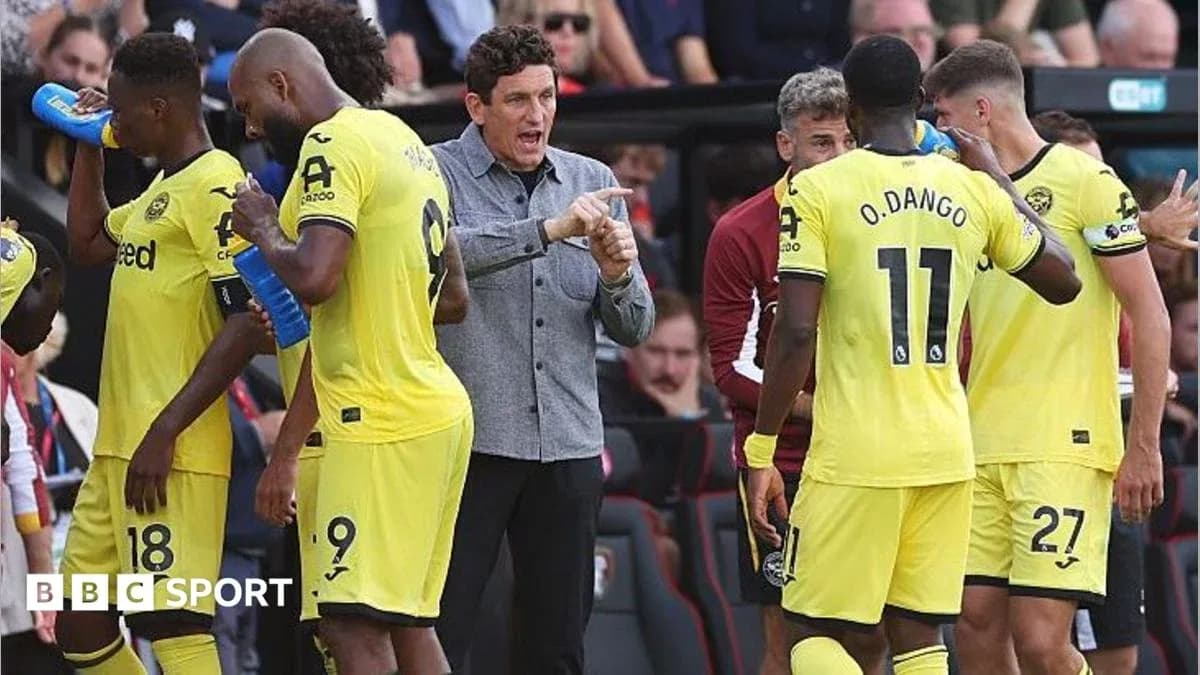
Brentford: a week off, then back to work
At Brentford, the training ground is quieter than usual. As with most Premier League squads, a large chunk of Thomas Frank’s group are away with their countries. Around 12 players are staying behind, among them Callum Wilson and Igor Thiago, plus five returning from injury.
Because the Bees played Chelsea on the Friday night before the break, their pause is even longer than most. The response has been decisive: a week off for the first-team players, individual programmes in hand, and the freedom to leave the country – within reason. Nobody is expecting long-haul flights to be waved through.
The plan is clear. The group gathers again on Saturday, 26 September, and the intensity begins to climb. On the weekend of 3 October, Brentford will play a behind-closed-doors friendly against another English club.
That game could be a key moment for Nathan Collins and Sepp van den Berg as they edge back towards full action. The rest of the squad for that match is likely to be fleshed out with under-21 players, giving the club a chance to blend recovery with development.
The second international break of the season will be a different story entirely. Brentford face Brighton on Sunday, 8 November and are then back at it against Everton on Saturday, 21 November. With competitive fixtures either side, there will be no time or need for another friendly. Players might get the odd day off, but otherwise it will be a standard training rhythm leading straight into preparations for the Toffees.
Liverpool: ticking over with a skeleton crew
Liverpool’s situation is more familiar: a big club with a small group left behind. The bulk of the squad will scatter across the globe on international duty, leaving Andoni Iraola to work with those who remain and to manage their workloads carefully.
They will train, they will rest, but they will not have long together as a full group before the fixtures return. Iraola has already accepted that he will have “no more than three days probably to prepare” for the home clash with Manchester City on 11 October once his internationals come back.
In a title race decided by fine margins, three days is nothing. Yet that’s the reality of this new calendar.
Aston Villa: Emery’s emotional return
Aston Villa are taking a very different route through the break.
Unai Emery is heading back to familiar territory, returning to Sevilla, the club where he won three consecutive Europa League titles and built his European reputation. This time, he goes as the visiting manager.
Sevilla and Villa will meet in the 15th edition of the Antonio Puerta Trophy on Friday, 2 October. The match is played in memory of Antonio Puerta, the Sevilla wing-back who died at the age of 22 on 28 August 2007 after suffering multiple cardiac arrests during a La Liga game against Getafe.
For Villa, it’s part tribute, part high-level friendly, and a chance to keep their rhythm against strong opposition while much of the league is scattered.
Championship: chance to reset, not just rest
Drop down a division and the picture changes. The Championship is affected by international call-ups, but not torn apart by them in the same way.
Many clubs lose only a handful of players. Blackburn Rovers, for example, have just four called up. For Tony Mowbray, that turns this three-week spell into an opportunity.
Rovers have been hit hard by injuries early in the season, with more than 10 players ruled out in the opening weeks. The break offers breathing space. Players like Gady Beyuku and Moussa Baradji, who have only just made their comebacks, can build up minutes. Others, such as Scott Wharton, can edge closer to a return without the pressure of twice-weekly fixtures.
After their trip to Portsmouth on Saturday, Blackburn headed back to Lancashire and straight onto the training ground for a few days’ work. The schedule has been relentless, with league games and Carabao Cup ties stacked together, and this is Mowbray’s first real chance since returning to the club in the summer to put his stamp on the squad in a proper training block.
But he knows when to ease off. Players will be given a few days off at the end of the week. Someone like Yuri Ribeiro will have the option to fly back to Portugal and see family, recharge, and return fresher.
Then the pattern repeats. Training in the first half of the second week, a short break over the weekend, and in week three, a return to a normal pre-match build-up ahead of the home game against Cardiff.
Mowbray is also trying to arrange a behind-closed-doors friendly against a Premier League or League One side. The logic is simple: give returning players valuable minutes and keep the rest of the squad sharp.
When the shorter, two-week break arrives in November, the approach will shift again. Players might still get a brief rest, but any matches are more likely to be internal games, mixing senior pros with under-21s.
League One: still playing, but stretched
In League One, the equation is different again. The division continues through the international window unless a club has three call-ups that meet the EFL’s criteria, at which point they can request a postponement.
The result this time? Only four of the 12 scheduled matches have survived on each of the two weekends.
Clubs saw this coming and planned around it. Many arranged Football League Trophy fixtures across these three weeks, using a competition where rotation is standard practice to keep their squads active. Those games go ahead even when league fixtures are called off, so there is still meaningful football to be played.
Twelve teams will contest two Trophy ties during this period, with 10 clubs playing once. That left just Leyton Orient and Reading in danger of having no football at all. As it stands, both have only had one league match postponed, so they will not be staring at a full three-week blank.
Three weeks without league football was always going to feel strange in a sport built on rhythm and routine. Now the question is simple: when the domestic game restarts, who will have used this unfamiliar pause to their advantage – and who will be left playing catch-up?
Related News
Real Madrid Concerned as Ibrahima Konaté Exits France Squad with Knee Injury
Ibrahima Konate Withdraws from France Squad; Man Utd's Leny Yoro Called Up by Zidane

4 Free Agent Strikers Manchester United Could Sign Following Sesko's Injury
Bosnia Coach Sergej Barbarez Criticizes Newcastle United Over Amar Dedic's Hamstring Injury
Kenya to Face Rwanda in Friendly Match During International Window

Mbappé's Flu Disrupts Zidane's First Camp with France