
Ivory Coast vs Ecuador: World Cup 2026 Group Stage Analysis
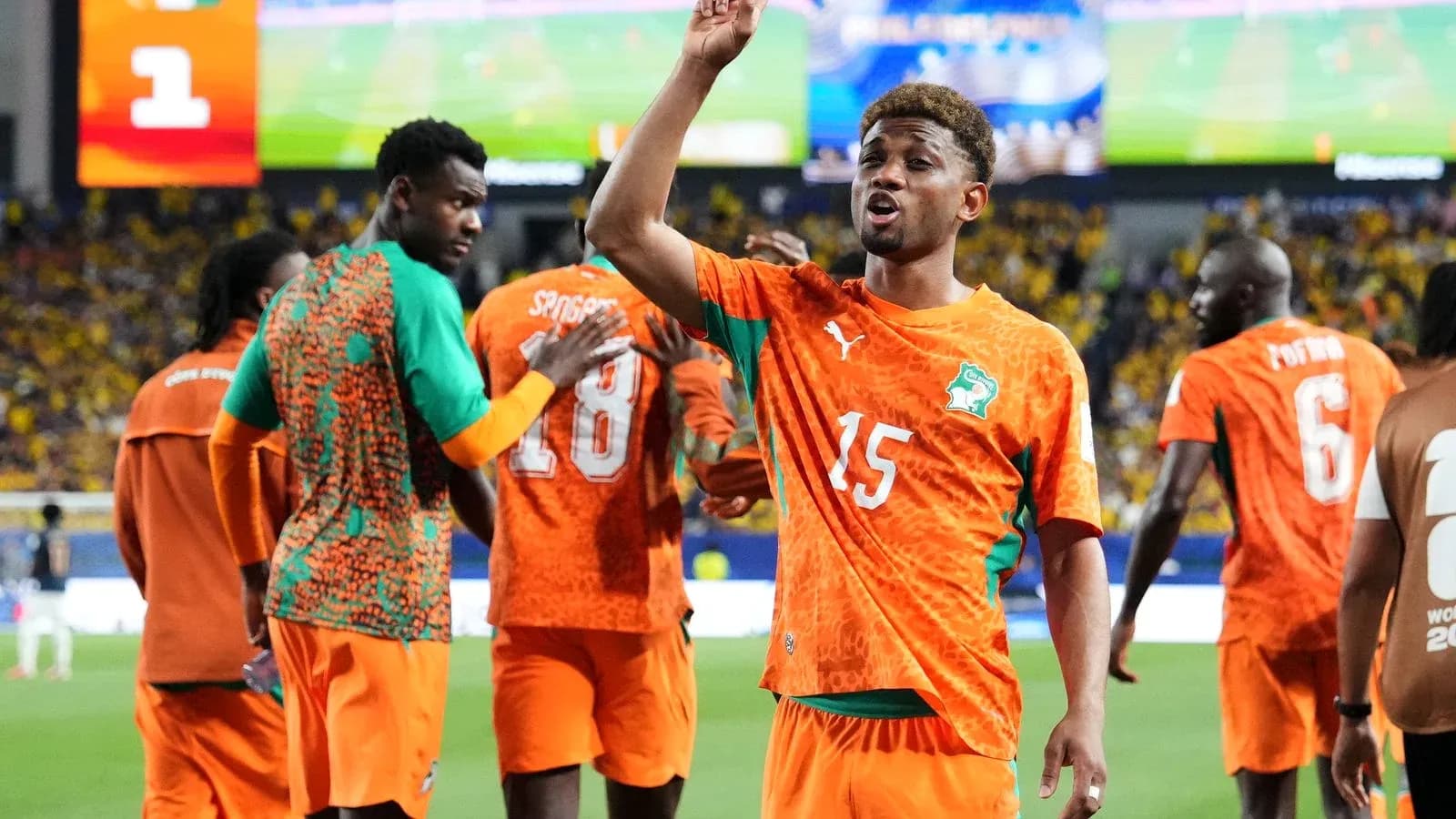
On a humid Philadelphia night at Lincoln Financial Field, Ivory Coast and Ecuador opened their World Cup 2026 accounts with mirror formations and very different emotional outcomes. The Group Stage – 1 fixture ended 1–0 to Ivory Coast, a narrow margin that nonetheless reshapes Group E: following this result, Ivory Coast sit 2nd with 3 points and a goal difference of +1 (1 scored, 0 conceded), while Ecuador are 3rd with 0 points and a goal difference of -1 (0 scored, 1 conceded).
I. The Big Picture – Two 4-4-2s, one statement win
Both sides lined up in a 4-4-2, but the systems carried distinct identities. Emerse Fae’s Ivory Coast leaned into structure and vertical power. At home in this tournament context, they have now played 1 match, won 1, and kept a clean sheet, with an average of 1.0 goals for and 0.0 against at home. The template is clear: functional rather than flamboyant, but ruthlessly stable.
Sebastian Beccacece’s Ecuador, on their travels in this group, opened with a loss in their only away fixture so far, conceding 1.0 goals on average and failing to score. The 4-4-2 was more elastic, built to spring in transition, but it ran into an Ivorian block that, overall this campaign, has yet to concede a single goal.
The match itself unfolded as a chess game decided by a single decisive thrust. With the score locked 0–0 at half-time, Ivory Coast’s bench became the turning point. A. Diallo, who did not start but came [IN] from the bench, changed the rhythm with 34 minutes of high-impact chaos: 2 shots, both on target, 1 goal, and an 8.2 rating in his only appearance so far. His dribbling numbers (6 attempts, 5 successful) underlined what the eye test already suggested – he was the one player Ecuador never solved.
II. Tactical Voids and Discipline – Edges in the margins
There were no listed absentees in the data, so both coaches essentially had full decks to play with. The difference lay in how they managed the emotional temperature of a tight opener.
Ivory Coast’s disciplinary profile across the tournament so far shows a front‑loaded edge. All of their yellow cards have come before half-time: 1 in the 16–30' window and 2 in the 31–45' window. That means 100% of their cautions so far have arrived before the interval, a clear sign of an aggressive early press and physical duels in midfield. S. Fofana embodies that edge: in his 77 minutes, he committed 1 foul, received a yellow card, and still contributed 36 passes at 88% accuracy, 1 key pass, and 2 interceptions. He also blocked 1 shot, underlining his two‑way role.
Ecuador’s card distribution tells a different story. Their only yellow card of the campaign has arrived in the 61–75' window, a 100.00% concentration in that late-middle phase. It suggests a team chasing the game, stretching to recover possession as fatigue sets in. The top disciplinary figure in the wider data is J. Porozo, who, in his 28‑minute cameo, committed 2 fouls and took a yellow card. Even as a substitute, his profile hints at a defender who defends on the edge – potentially vital in future matches when Ecuador need to protect a lead, but risky when chasing.
Crucially, neither side has seen a red card in this campaign, and neither has had penalties to manage: both Ivory Coast and Ecuador have a penalty total of 0, with 0 scored and 0 missed. There is no spot‑kick safety net in their statistical story yet; everything has to be constructed from open play.
III. Key Matchups – Hunter vs Shield, Engine Room vs Enforcer
Hunter vs Shield
The “Hunter vs Shield” narrative revolves around A. Diallo and the defensive records on show. Diallo’s 1 goal in 1 appearance makes him Ivory Coast’s sharpest edge in the early Golden Boot conversation. On the other side of the ball, Ecuador’s defensive record overall is 1 goal conceded in 1 match, an average of 1.0 goals against on their travels in this group. That is not disastrous, but it is unforgiving in a short group – every lapse is magnified.
Structurally, Ecuador’s back four of A. Franco, J. Ordonez, W. Pacho, and P. Hincapie is built for duels and recovery runs. Yet the introduction of Diallo asked a different question: could they handle a wide attacker who receives between the lines, drives 1v1, and forces defenders to step out? With Diallo winning 6 of his 8 duels and completing 5 of 6 dribbles, the answer in this opener was no. That single crack in the Shield defined the match.
Engine Room – Kessie and S. Fofana vs M. Caicedo
In midfield, the “Engine Room” duel was pure World Cup theatre. Ivory Coast’s double axis of F. Kessie and S. Fofana sat in front of a back four that, overall, has yet to concede. Their job was to compress the central lane, win second balls, and funnel Ecuador into predictable wide patterns.
M. Caicedo, with P. Vite and A. Minda around him, tried to tilt the pitch the other way. Ecuador’s problem was not shape but progression. With no goals for in total this campaign and a failed‑to‑score total of 1 (away and overall), the data paints a team that can reach the final third but struggles to convert occupation into clear chances. Caicedo’s industry could not unlock a block where even the more attacking Ivorian midfielder, S. Fofana, was contributing interceptions and shot blocking on top of his forward thrusts.
IV. Statistical Prognosis – What this result really says
Following this result, the numbers sketch two contrasting trajectories.
Ivory Coast’s all‑round record is pristine: 1 match played in total, 1 win, 0 draws, 0 losses, 1 goal for, 0 against, 1 clean sheet, and 0 matches failed to score. At home in this tournament context, they average 1.0 goals for and 0.0 against, with their biggest home win a 1–0 – the very scoreline recorded here. Their lineups data shows a single, trusted 4‑4‑2 used once; continuity is a weapon.
Ecuador’s total record is the mirror image: 1 match played, 0 wins, 0 draws, 1 loss, 0 goals for, 1 against. On their travels in this group, they concede 1.0 goals on average and have failed to score in their only away outing. Their biggest defeat away is 1–0 – again, this match. The 4‑4‑2 has been used once; whether Beccacece sticks or twists tactically may define their survival.
Without explicit xG numbers, the prognosis leans on structure and trends. Ivory Coast’s defensive solidity – 0.0 goals conceded on average overall – combined with the emergence of a high‑impact game‑changer in A. Diallo suggests a side whose underlying performance should sustain results even when margins are thin. Their card profile, concentrated before half-time, is a warning sign, but also a marker of controlled aggression when the press is at full intensity.
Ecuador, by contrast, look like a team whose defensive xG against is probably reasonable – only 1 goal conceded overall – but whose offensive xG for is lagging behind. No goals, no penalties, and a reliance on forwards like G. Plata and E. Valencia to conjure something from limited service is a fragile model. The late‑phase yellow‑card spike hints at frustration and fatigue rather than controlled game management.
In tactical terms, Ivory Coast leave Philadelphia looking like a Round of 32 team in waiting, exactly as their current table description suggests. Ecuador leave with work to do: the structure is there, the talent is there, but until the Hunter emerges on their side and the Engine Room finds verticality, the Shield alone will not be enough.
Related News
Brazil's First Post-World Cup Friendly: What Should the Lineup Be?
Harry Kane Calls England’s World Cup Exit to Argentina His Deepest International Pain
Estevao Opens Up on World Cup Heartbreak and His Unexpected Return to Brazil Under Ancelotti
Thomas Tuchel Shares Unusual Regret After England's 10-Man World Cup Victory Over Mexico
South Korea Names Robert Moreno as Interim Coach After World Cup Exit

Jude Bellingham Returns to Form at Real Madrid Following World Cup Success