
Jackie Bachteler's Inspirational Return as Burnley Women's Manager
On Sunday at Turf Moor, Jackie Bachteler will finally walk out as Burnley’s women’s team manager. Nine months ago, she could barely walk at all.
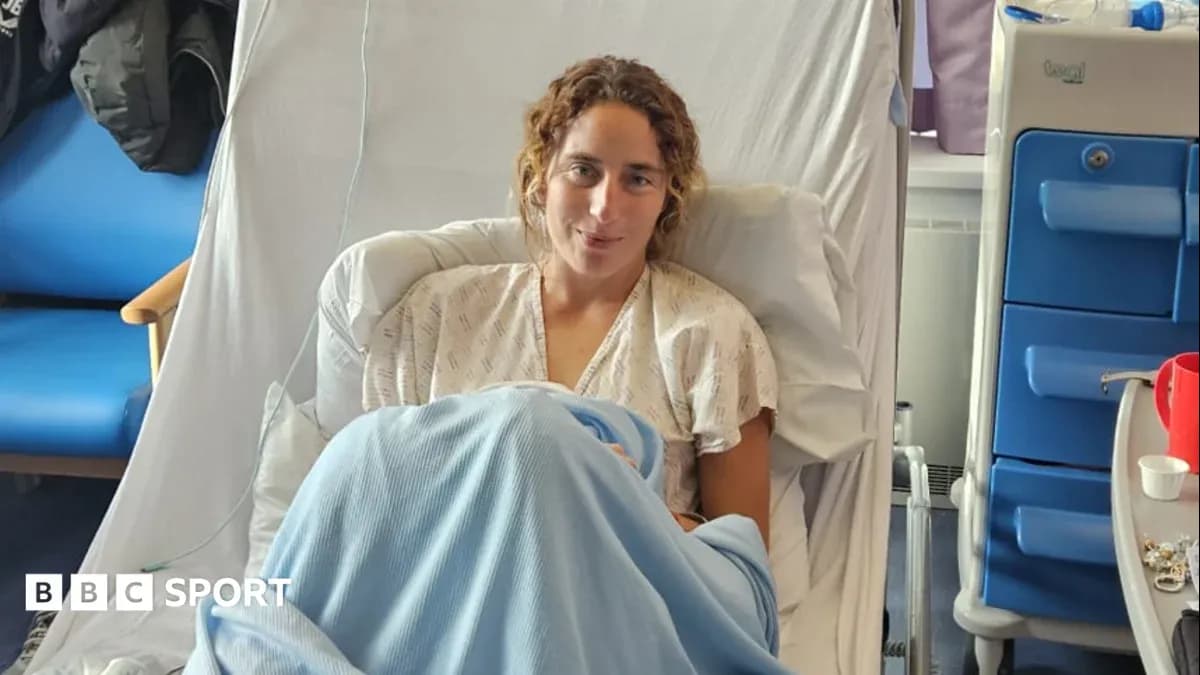
Back then, football plans, tactics boards and training schedules were replaced by oxygen masks, IV lines and the cold, relentless beeping of hospital machines. The American coach, who arrived from San Diego in December to work with Burnley’s women’s first team and the men’s academy, was suddenly fighting for her life.
She thought she was just tired. Jet lag, a new job, a packed schedule – it felt like the usual grind. A cold, maybe.
Then one morning at the training ground, the floor went from under her.
“The whole room spun,” she recalled to BBC Sport. She stepped outside for air but could not catch her breath. Instinct took over. She called for the club doctor.
The men’s team doctor was on site. He checked her over. Her blood pressure crashed, her oxygen levels plummeted. Within minutes she was in an ambulance, heading to A&E with a growing sense that something was badly wrong.
“To be honest, I thought I was going to die. I just had this feeling in my body like ‘this is it’.”
At first, hospital staff treated her lungs and tried to discharge her. She refused to go. She knew this was more than a chest infection.
“They gave me some treatment for my lungs and then they tried to send me home, but I knew something wasn’t right and asked them to do more.”
They checked her blood pressure again. It nosedived. She became so dizzy she could not walk. Confusion set in. Blotches appeared on her skin.
Then came the rush.
“They did a blood test and all of a sudden four or five doctors were sprinting towards me. I had two IVs with fluids and antibiotics, as well as an oxygen mask.”
The diagnosis: sepsis. A life-threatening reaction to infection that can shut down the body in hours.
Bachteler was moved into intensive care. For a couple of days, her blood was tested every 20 minutes. Her organs were monitored constantly. She lay in an ICU bed in a foreign country, far from home, with no family at her side.
Her parents were in the United States. Her wife was trapped in Finland by a snowstorm. The video calls could not soften the isolation.
“On my third day in hospital, I tried to stand up and I couldn’t. The nurses told me not to walk and when you hear that it’s a bit of an alarm bell.
“It was just lung treatment after lung treatment, fluids after fluids, antibiotics and everything else. I had to get help to use the bathroom.
“It was close to when you face your mortality. It just gives you another perspective on life.”
That perspective came at a cost. She had to learn to walk again. Her coaching career, which had just taken a major step forward with the move to Burnley, was suddenly on hold.
Months later, in July, Burnley welcomed her back and handed her the women’s team. The job she had crossed the Atlantic for was still there. She, though, was changed.
The illness did not end when she left hospital. Post-sepsis syndrome clings on. Dizzy spells. Crushing fatigue. Tremors when she pushes herself too far. Mental fog. Memory lapses.
During a pre-season friendly this summer, the heat on the touchline hit her hard.
“It was so hot with the sun facing the bench. I got up in the second half and it was like when you have too much wine, you get up and you’re like, ‘woah!’
“I was just so dizzy. I gave the instruction, talked to the team and then I went to the cafe on site and said to them: ‘Can I sit in your freezer?’
“I just needed to calm down. Then I started crying because my nervous system is still recovering and it’s just been really, really hard.”
Through it all, Burnley have wrapped themselves around her. She says the club doctors “saved her life” and connected her with a respiratory specialist. The players have sent messages, stepped up when she needed to delegate. She calls her staff “phenomenal”.
Her family have carried the emotional weight with her. One day in May underlined how fragile recovery can be.
Her parents flew over from the US. They went out for a Sunday dinner. The noise in the restaurant overwhelmed her.
“It was loud. I just got so dizzy and they could see it. As we were walking back, I was shaking and I didn’t know where I was.
“They started crying, both of them. I think it was even harder for them. I get emotional any time I talk about my family with this.”
When her wife finally made it to see her in hospital, the shock was brutal. The weight loss. The weakness. The athlete who had prided herself on her fitness could not manage the stairs without being held up.
“I’m really athletic and I’m really fit, but then I wasn’t able to walk. She had to hold me up going down the stairs.”
Bachteler now has regular respiratory therapy to rebuild her lungs. The symptoms linger: fatigue, brain fog, memory issues, tremors, dizzy spells that can strike without warning. But she is moving forward.
“I’m definitely in a good way though. I’m about 70 to 80% Jackie again and that’s thanks to the club, the doctors here and the NHS – but it was close.
“If I had gone home that day when the emergency room tried to send me back, I wouldn’t be sitting here today.”
Every day she leaves the training ground with the same thought: she has been given a second chance. Football still matters, but differently now.
“A loss is a loss. I really believe in what I’m doing and in the people that I’m doing it with. Now the worst thing that will happen is that we lose a game.”
On Sunday, Burnley host Sunderland in the Women’s Super League 2 at Turf Moor. Kick-off is at 14:00 BST. The date carries extra weight. It is World Sepsis Day.
For Bachteler, it is not just a fixture. It is a platform.
“I realised it’s a leading cause of death. I didn’t even know what sepsis was before. I thought it was something you heard on Grey’s Anatomy.
“I didn’t understand the severity of it and how much it’s missed by doctors. The amount of people that have been affected really shocked me. It’s a silent killer.
“Hopefully I can use the game as a tool to help others recognise the signs and let them know they are not alone. Over 50% of survivors have post-sepsis syndrome.”
So when she steps out at Turf Moor, on a day dedicated to awareness of the illness that almost killed her, it will mean more than a managerial debut.
“To be standing on the pitch, doing something that I love, that I’ve dreamed of doing every single day and knowing that wouldn’t have been the case almost a year ago, it’s a bit poetic it’s on World Sepsis Day.”
Related News

Mourinho Reflects on 4–1 Victory and Player Development

Hull City Shock Chelsea at Stamford Bridge
Jackie Bachteler's Inspirational Return as Burnley Women's Manager

Napoli vs Bologna: Allegri Faces Pressure in Crucial Match

Manchester Derby Preview: United vs City at Old Trafford

Elversberg vs Bayern Munich: A Clash of Top Six Rivals