
Jeremy Doku Faces Choice Between Fatherhood and World Cup
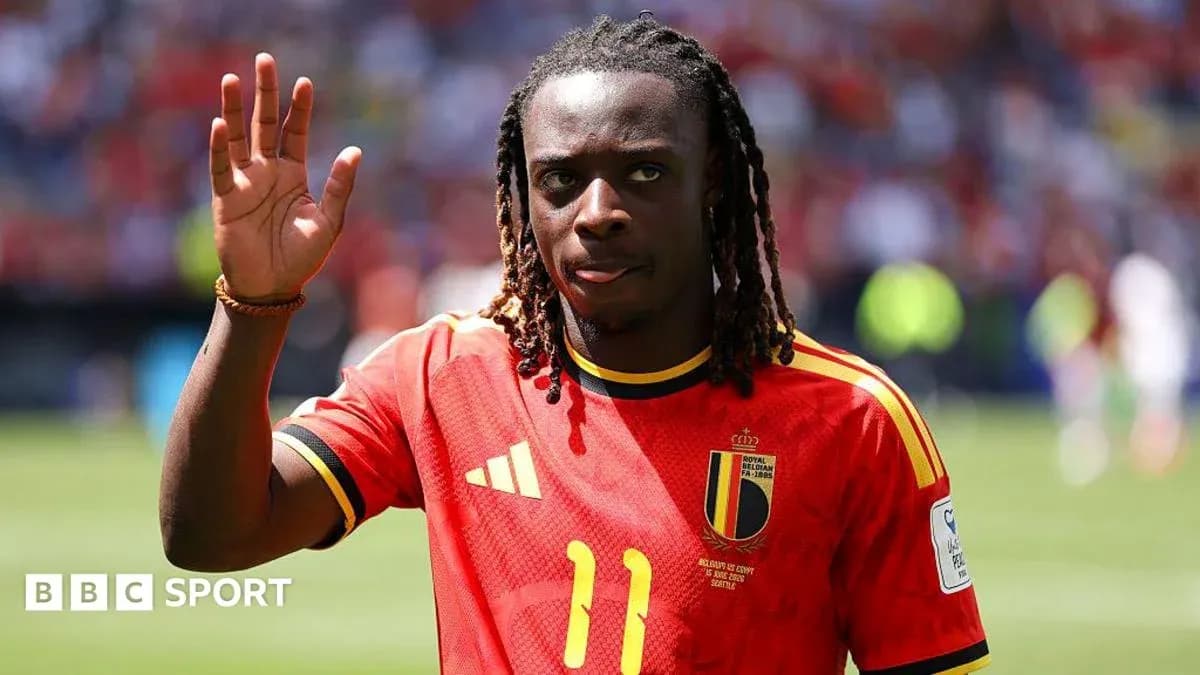
Jeremy Doku has drawn his line in the sand. World Cup or not, title on the line or not, when his first child arrives, he intends to be there.
The Manchester City winger, a livewire for Belgium and a central piece of their Group G campaign, is due to become a father next month. His wife Shireen is expecting during the second week of July, right when the World Cup moves into its most ruthless phase. For Belgium, that could mean a quarter-final. For Doku, it could mean a choice.
He already knows where his heart sits.
“If you ask me what I want, my answer is that nobody wants to miss the birth of their first child,” the 24-year-old told Reuters. He stopped there, then acknowledged the reality of his profession. “But I also know that football involves many other considerations. I know the federation supports its players and understands their situations. We'll see what we can do.”
Those words lit the fuse. Not in the dressing room, not among team-mates, but on French television.
A TV rant and a backlash
On L'Équipe’s channel, presenter France Pierron tore into the idea of Doku leaving mid-tournament. She described a father as “completely useless” at the birth and even called it a “disgusting moment”.
The reaction was instant and fierce.
L'Équipe issued a statement apologising, stressing Pierron’s comments were “very far removed” from the organisation’s values. Pierron apologised as well, and reports in France said she would not front her show on Monday.
Across football, the response was almost unanimous: Doku was right to put family first.
“It only happens once”
England striker Ollie Watkins, a father of two, did not bother with diplomacy.
“I think someone labelled it disgusting and I think for a start that's not a way to label a birth,” he said. Watkins has seen both sides of the experience – a relatively smooth delivery with his wife, and more difficult stories from family and friends.
“It only happens once – welcoming your first child to the world – and it is a blessing,” he said. “There's a lot of times where you're away from family and friends during the season and it's very difficult, so to miss that would be tough and I see where he's coming from.”
The Professional Footballers’ Association echoed that stance. The union stressed that the game’s demands cannot come at the cost of “fundamental family moments”.
“While every situation is different, we believe players should be supported in balancing their professional responsibilities with important life events,” a PFA spokesperson said. “Supporting players as people, not just athletes, is an important part of creating a healthy professional working environment.”
The Fatherhood Institute, which works to support men as active caregivers, went even further. Deputy chief executive Jeremy Davies told BBC Sport the debate revealed how some still view elite male athletes.
“It makes me think of gladiators in the Colosseum,” he said. “We want these men to be these heroic figures who exist for our entertainment. They get paid lots of money but there are some things that are worth a lot more.”
A game still built around mothers, not fathers
Football’s rulebook reflects that imbalance. Fifa regulations guarantee maternity leave for female players – a minimum of 14 weeks’ paid absence, eight of those after the birth.
For fathers? Nothing specific.
No standard paternity leave. No clear framework. Just case-by-case decisions, hurried arrangements and managers and players trying to stitch together a solution around training schedules and fixtures.
One club kept a car idling outside the stadium for a player whose partner was about to give birth, ready to whisk him away at a moment’s notice. At a top-flight European side, a manager skipped a match entirely to stay with his wife as she went into labour with their second child.
He watched the game on television instead, wired into the bench through an earpiece.
“Ten minutes into the game she started getting labour pains,” said the manager, now working in the Championship. “We were 2-1 up at half-time but she was getting more into labour. I rang the hospital to say we were going to come in, but had to stop because we got a penalty.
“We scored, I knew we won the game, and we came right in. Our daughter was born two hours later.
“It's less common with managers because they are typically older but the game doesn't stop... you need to win the next game.”
The message is clear: the calendar never pauses. Families have to bend around it.
Doku is not alone
If Doku does leave Belgium’s camp, he will be walking a path others have already taken.
In 2018, Fabian Delph flew out of England’s World Cup base in Russia to be in the UK for the birth of his daughter. Pep Guardiola allowed David Silva to miss two Manchester City games that same year after the premature arrival of his son. During the Covid pandemic, David de Gea received extended leave from Manchester United when his partner Edurne gave birth to their daughter in 2021.
Others have had to settle for a screen instead of a delivery room.
This weekend, Norway defender Leo Ostigard watched the birth of his son on FaceTime while on World Cup duty. Ruben Neves did the same in January 2021, staring at his phone on Wolves’ team bus after a 1-0 defeat at Crystal Palace as his third child was born back in Portugal. Travel restrictions blocked him from joining his wife and doctor.
The pattern runs beyond football. Cricketer Jamie Smith missed England’s second Test defeat by New Zealand last week after his daughter’s birth. In 2010, Sir James Anderson flew home between Ashes Tests in Australia to be there for his second child. In the NBA, Anthony Edwards left at half-time of a game in 2024 so he could reach the hospital in time for his daughter’s arrival.
Tennis has wrestled with the same dilemma. In 2016, Sir Andy Murray made it plain he would walk away from the Australian Open if his wife Kim went into labour.
“I'd be way more disappointed winning the Australian Open and not being at the birth of the child,” he said then.
Not everyone has chosen – or been able – to step away. Darts player Rob Cross missed the birth of his third child in 2017 as he fought to qualify for the World Matchplay. For some, the stakes of a career on the brink outweigh even moments like that.
A personal choice in a public arena
For Doku, the decision will unfold under the harshest spotlight: a World Cup, knockout football, a nation’s hopes, and the glare of global television.
On the pitch, he has already shown his value. He played 86 minutes in Belgium’s opening 1-1 draw with Egypt, stretching defences and carrying the ball with his usual menace, before illness ruled him out of the 0-0 stalemate with Iran.
Off it, he now finds himself at the centre of a wider argument about what elite sport expects from men when they become fathers.
He knows the stakes. He knows the schedule. He also knows what it means to hold your first child.
If Belgium are still alive in the tournament when that moment comes, the winger will face a choice no tactics board can solve. And when he makes it, the question will not be whether football understands – but whether it is finally ready to let family come first.
Related News
Anthony Joshua Names Murat Gassiev as Next Opponent if He Defeats Tyson Fury
UFC 332: Start Time and Fight Highlights for Natalia Silva vs. Wang Cong
Court McGee Opens Up About Choosing UFC 332 as His Final MMA Fight
WBC Orders Lightweight Title Unification: William Zepeda vs Jadier Herrera
BCCI Pension List: Monthly Payments to Retired Indian Cricketers in 2025
Why Fury vs Joshua Is Set for Cardiff, and Dua Lipa’s Unexpected Role