
Remembering John Thomson: The Prince of Goalkeepers
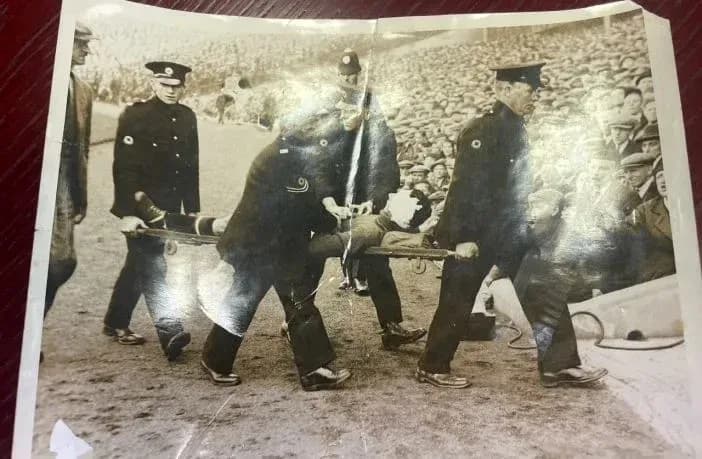
In football, “tragedy” gets thrown around too easily. A late equaliser, a cup exit, a missed penalty – all too often dressed up as something far darker than sport deserves.
But 5 September 1931 at Ibrox was different. That afternoon, Celtic goalkeeper John Thomson went out to play an Old Firm league match and never came home. For many who watched him, it felt as if Scottish football lost two lives that day: the young man himself, and the future he was certain to command.
From the pits to the posts
John Thomson was born on 28 January 1909, not in the mining village that would claim him as its own, but in Kirkcaldy. Within a year his family moved to Cardenden in Fife, a tight-knit community built on coal and hard labour. That was where he grew up, and where his story truly began.
The mines shaped him. As a teenager he went down the pits at Bowhill Colliery, working as a labourer like so many boys before him. The work was brutal, the air thick and unforgiving. Football offered a way out, a different kind of risk.
He shone at school level, but it was in the Juniors that his name began to travel. First Bowhill Rovers, then Wellesley Juniors from 1925. Local reporters took notice. They wrote that this teenager from Cardenden had the tools to become a top-class goalkeeper. They were not exaggerating.
Trial matches followed with Raith Rovers and Cowdenbeath. Both saw the potential. Neither made the decisive move.
That came in October 1926. Celtic scout Steve Callaghan went to an East of Fife Cup tie to watch another goalkeeper. He left talking only about Thomson, who had starred for Wellesley against Denbeath Star. One tramcar journey and a persuasive conversation later, the 17‑year‑old signed for Celtic on 1 November 1926 for £10, famously putting pen to paper on top of a fuse box.
A miner’s son, on his way to becoming a Celtic icon.
Rapid rise to the top
Thomson did not have to wait long. On 12 February 1927, at Dens Park against Dundee, he made his Celtic first‑team debut. Celtic won 2–1. Supporters and coaches saw enough to know they had something special. Thomson saw only the goal he conceded and blamed himself. That demand for perfection would define him.
By the end of that season he had a Scottish Cup winner’s medal. Celtic beat East Fife 3–1 in front of almost 80,000 at Hampden, the teenager helping to secure the trophy. Four years later, in 1931, he lifted the Scottish Cup again after a replayed final against Motherwell – a 4–2 win following a 2–2 draw.
He added three Glasgow Cup medals, and between 1927 and 1931 he played 188 times for Celtic. In that short span he moved from promising youngster to the immovable presence at the back of the team.
His form demanded international recognition. Scotland called him up in 1930. Across four caps, he kept three clean sheets and conceded just one goal. His debut came in Paris, where he helped Scotland to a 2–0 victory. His final international appearance was even more memorable: a 2–0 win over England at Hampden, watched by 131,000 people.
By then his reputation had spread far beyond Glasgow’s east end. He turned out four times for the Scottish League XI. Clubs in England took notice, with Arsenal among those keen to tempt him south. Celtic had a gem, and everyone knew it.
Bravery with a cost
Why did Thomson stand apart? Agility, yes. Shot-stopping, of course. But above all, courage.
This was an era when goalkeepers had little protection. Studs were high, pitches were heavy, and every cross into the box carried danger. Thomson met it head‑on. He dived at feet, flung himself into crowds, and treated every 50–50 as his to win.
His mother feared the worst long before Ibrox. In 1930 he suffered a serious injury against Airdrie that shook the family. The worry never left her. Sadly, her fears proved horribly well founded.
The collision at Ibrox
On the morning of 5 September 1931, Thomson left his flat in Victoria Road on Glasgow’s south side. His destination was not far away in distance, but a world away in intensity: Ibrox Park, Rangers v Celtic in the league.
The first half brought no goals. Thomson was typically assured, marshalling his defence and giving Celtic licence to attack. The match had the familiar crackle of an Old Firm contest, but nothing yet to hint at what was coming.
Early in the second half, the game changed in an instant.
Rangers forward Sam English broke through the Celtic back line. Thomson, as he always did, refused to hold his ground. He charged from his goal, diving at English’s feet in a desperate attempt to smother the ball. Both men committed fully. Both went for the same space.
They collided with awful force. English’s knee or boot caught Thomson on the head. At first, many in the crowd thought he was simply stunned. Collisions like that were part of the game then, almost expected.
The silence that followed told a different story.
Thomson lay motionless. Medical staff sprinted onto the pitch. He was lifted onto a stretcher and carried away. The decision that followed now seems almost unthinkable: the match went on. With no substitutes allowed, defender Chic Geatons, another Fifer, pulled on the goalkeeper’s jersey.
The game finished 0–0. Nobody cared about the score.
A fight he could not win
Thomson was rushed to the Victoria Infirmary. Doctors fought to save him, but the damage was too severe. He had suffered a fractured skull and associated brain injuries.
A car was sent to Fife to bring his parents to Glasgow. They arrived to find their son critically injured. Not long after they reached the hospital, John Thomson died. He was 22.
An inquiry later ruled the death accidental. Those who were there – players, officials, witnesses – agreed that Sam English had done nothing wrong. Both men had simply thrown themselves into a challenge, driven by the same desire to win the ball.
For English, the ruling offered little comfort. The incident haunted him for the rest of his life.
A nation in mourning
News of Thomson’s death stunned Scottish football. Celtic supporters, Rangers fans and neutrals alike felt the loss. The rivalry that usually divided Glasgow paused, if only briefly.
A memorial service took place at Trinity Church in the city’s west end. Both Celtic and Rangers attended, including English. The crowds outside were so large that police had to help the teams into the building.
Four days later, on 9 September 1931, Cardenden said goodbye.
Around 40,000 people came to the mining village for Thomson’s funeral. Thousands travelled from Glasgow, some walking the 55 miles to Fife. His Celtic teammates carried the coffin, a final act of loyalty that underlined the bond he had forged in such a short career.
At his grave, a single line was carved into the stone:
“They never die who live in the hearts they leave behind.”
Over time, those words became inseparable from his name.
The weight on Sam English
Thomson’s death did not just scar Celtic. It marked English as well.
He continued to play, but the collision at Ibrox followed him. Opposing supporters taunted him, ignoring the fact that Thomson’s own parents had publicly forgiven him and refused to blame him for what had happened.
For English, there was no escape from that afternoon, no matter what any official report said.
Legacy of the ‘Prince of goalkeepers’
Celtic struggled in the months after the tragedy. Filling the position was a footballing necessity, not an emotional one. Canadian goalkeeper Joe Kennaway eventually took over the gloves, but nobody at Celtic confused succession with replacement.
Thomson’s story lived on. Supporters wrote poems and songs that still echo around the club today. Writers and historians produced books and articles, each retelling the rise of the miner’s son who became Celtic’s “Prince of goalkeepers” and died in pursuit of a ball.
Many fans still make the journey to Cardenden to stand by his grave, often tying visits to charity events and commemorations. For them, the inscription on his headstone is not just sentiment. It is a promise kept.
Football moves quickly. Seasons blur, heroes come and go. Yet 95 years after that Old Firm match at Ibrox, the name John Thomson still carries a hush.
Some players are remembered for trophies. He is remembered for a life cut short, for courage without compromise, and for the enduring question of what he might have become had fate given him just a little more time.
Related News
Real Madrid Concerned as Ibrahima Konaté Exits France Squad with Knee Injury

Ibrahima Konate Withdraws from France Squad; Man Utd's Leny Yoro Called Up by Zidane
4 Free Agent Strikers Manchester United Could Sign Following Sesko's Injury
Bosnia Coach Sergej Barbarez Criticizes Newcastle United Over Amar Dedic's Hamstring Injury

Kenya to Face Rwanda in Friendly Match During International Window

Mbappé's Flu Disrupts Zidane's First Camp with France