
Leeds Secures Narrow 1-0 Victory Over Brighton in Tactical Clash
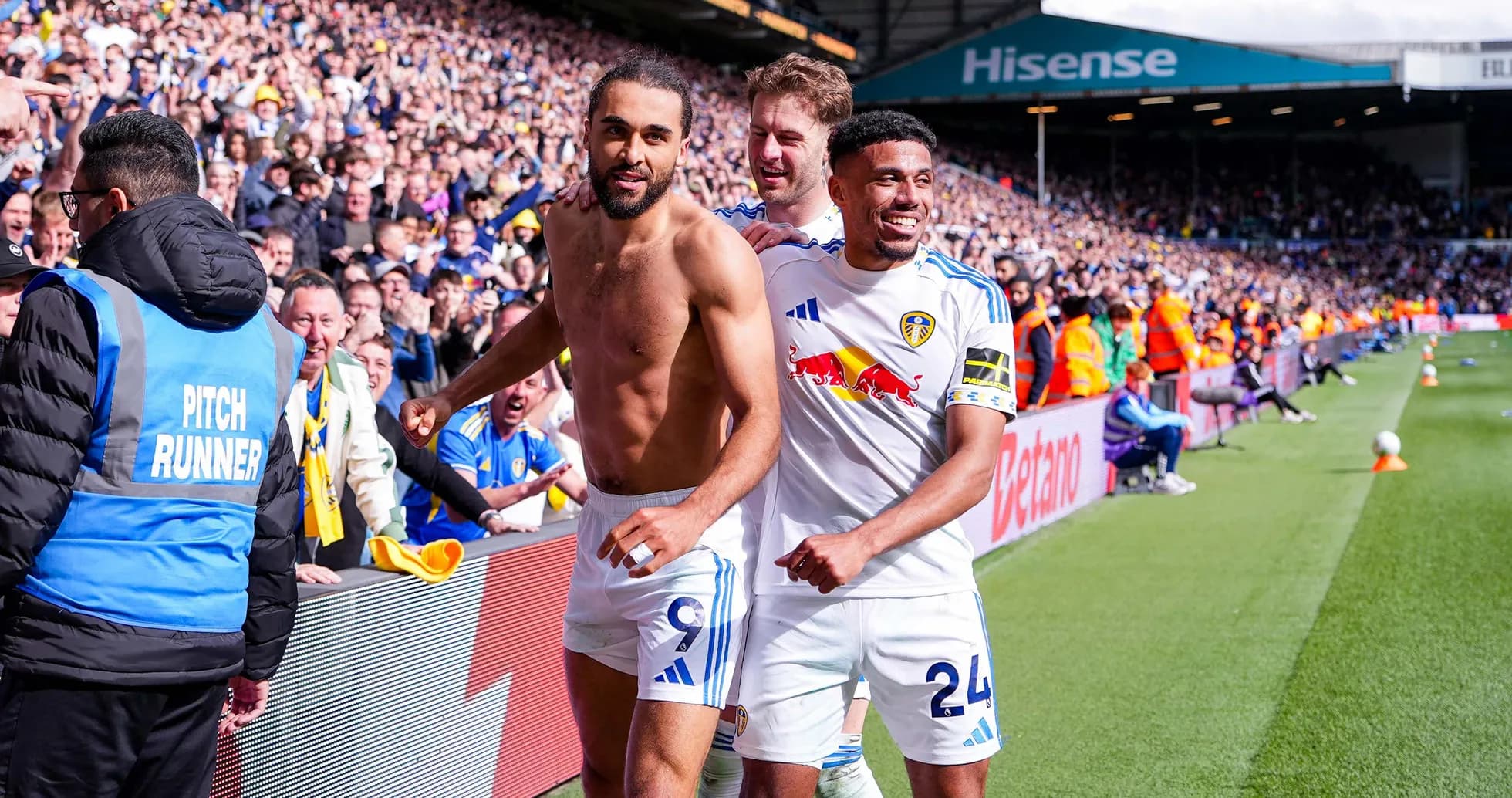
Leeds edged a highly asymmetric tactical contest at Elland Road, grinding out a 1-0 win over Brighton in Premier League Regular Season - 37 despite spending most of the afternoon without the ball. Michael Oliver oversaw a match in which Brighton’s structure and volume of chances suggested control, but Daniel Farke’s compact 3-5-2, plus a late moment of penalty-box sharpness from Dominic Calvert-Lewin, decided it. The halftime score of 0-0 reflected Leeds’ defensive resilience more than parity of play. Across 90 minutes, Brighton’s 66% possession and 19 total shots were undone by Leeds’ penalty-box concentration, a goalkeeper in command, and a well-timed substitution pattern that kept the hosts’ block fresh enough to survive.
Final Score: Leeds 1-0 Brighton
The scoring sequence was brutally simple. With the game still goalless entering the final minute of normal time, Leeds finally turned one of their rare attacking forays into a decisive action. At 90', D. Calvert-Lewin (Leeds) struck the only goal of the match (no assist), converting Leeds’ sole shot on target into a 1-0 lead. There were no further goals in added time, and the match finished Leeds 1-0 Brighton.
Disciplinary action was minimal but late. Only one card was shown in the entire game, and it arrived deep into stoppage time: 90+7' Dominic Calvert-Lewin (Leeds) — additionalInfo was null in the data, so no specific reason was recorded. That single yellow card meant Leeds finished with one booking, Brighton with none, for a total of one card. The timing underlined the emotional intensity of the closing minutes, as Leeds defended their narrow advantage under sustained pressure.
Leeds' Tactical Setup
Farke’s 3-5-2 was built to absorb, not to dictate. With K. Darlow in goal behind a back three of S. Bornauw, J. Bijol and J. Rodon, Leeds focused on protecting the central corridor and defending the box. The wing-backs J. Justin and D. James, plus a narrow midfield trio of A. Tanaka, E. Ampadu and A. Stach, compressed space in front of the centre-backs, forcing Brighton to circulate possession rather than slice through. Up front, B. Aaronson and D. Calvert-Lewin were asked to press selectively and hold up rare clearances.
The statistical profile shows the plan clearly. Leeds had just 34% possession and completed 186 of 278 passes (278 passes, 186 accurate, 67%), yet they kept Brighton off the scoresheet. Their attacking output was minimal: 7 total shots, only 1 on goal, and xG of 0.76. But that single shot on target was Calvert-Lewin’s winner, illustrating a game state where Leeds were content to play for low volume and high defensive control, trusting that one moment might suffice.
The substitutions were crucial in sustaining intensity. On 60', Farke executed a triple change to refresh legs in key zones: W. Gnonto (IN) came on for D. James (OUT), S. Longstaff (IN) came on for A. Tanaka (OUT), and L. Nmecha (IN) came on for B. Aaronson (OUT). This re-energised both flanks and central midfield, allowing Leeds to maintain their compact 5-3-2 shape without losing running power. At 74', J. Piroe (IN) came on for A. Stach (OUT), adding a more direct, forward-facing option in the attacking band while Ampadu continued as the screening pivot. Finally, at 90+1', S. Byram (IN) came on for S. Bornauw (OUT), a defensive like-for-like move aimed at seeing out the final minutes with fresh defensive legs and aerial presence.
Brighton's Tactical Approach
Brighton, under Fabian Hurzeler’s 4-2-3-1, dominated the ball but were repeatedly funnelled into crowded central zones. B. Verbruggen was largely untested, making just 1 save, while his outfield teammates constructed a high-possession, high-volume attacking performance: 542 passes, 457 accurate (84%), 19 total shots, 8 on goal, and xG of 2.7. The double pivot of P. Gross and C. Baleba tried to dictate tempo and find the advanced line of F. Kadioglu, J. Hinshelwood, Y. Minteh and D. Welbeck between Leeds’ lines.
Hurzeler’s substitutions were designed to refresh the attacking structure rather than change the fundamental shape. At 65', D. Gomez (IN) came on for J. Veltman (OUT), likely pushing fresh energy down the right and adding a more adventurous profile from full-back or wide midfield. At the same time, G. Rutter (IN) replaced D. Welbeck (OUT), offering different movement against Leeds’ back three. On 82', Y. Ayari (IN) came on for C. Baleba (OUT), and C. Kostoulas (IN) came on for J. Hinshelwood (OUT), injecting new legs and creativity into the central and advanced midfield zones. Finally, at 90+3', S. March (IN) replaced Y. Minteh (OUT), providing late crossing quality from wide areas as Brighton chased an equaliser.
Goalkeeper Performances
Goalkeeper performance underpinned the result. For Leeds, K. Darlow faced 8 shots on goal and made 7 saves, with goals prevented measured at -0.01. That figure suggests his shot-stopping roughly matched expectation, but the broader defensive unit helped by limiting shot quality despite volume. For Brighton, B. Verbruggen’s 1 save and goals prevented of -0.01 reflect a quiet afternoon until the decisive moment, when he could not stop Calvert-Lewin’s finish.
Statistical Verdict
The statistical verdict is stark. Brighton’s 66% possession, superior passing accuracy, and far higher xG (2.7 to Leeds’ 0.76) indicate they controlled territory and chance creation. They also led in attacking metrics: 19 shots to 7, 8 on target to 1, and 15 efforts inside the box to Leeds’ 3. Leeds, meanwhile, held a slight edge in set-piece volume with 7 corners to Brighton’s 8 being nearly even, but committed 9 fouls to Brighton’s 7 while picking up the only yellow card. Yet the only number that mattered was the scoreline: Leeds 1-0 Brighton. Within that context, Leeds’ defensive index for this match was outstanding relative to the pressure absorbed, and their overall form on the day was defined by discipline, structure, and ruthless exploitation of their single clear opportunity.
Related News

Premier League Managers Facing Potential Sackings During International Break
Arsenal's Myles Lewis-Skelly Names Unexpected Tottenham Rival as Toughest Premier League Opponent

Three Premier League Players Shining Early This Season

Premier League Early Season Reactions: Man City’s Strength, Arsenal’s Flaws, United’s Struggles

Premier League Returns October 10 After Extended September-October International Break

Fulham and Manchester United Share Points in 1-1 Draw