
Lionel Messi Questions Football Future After Father's Death
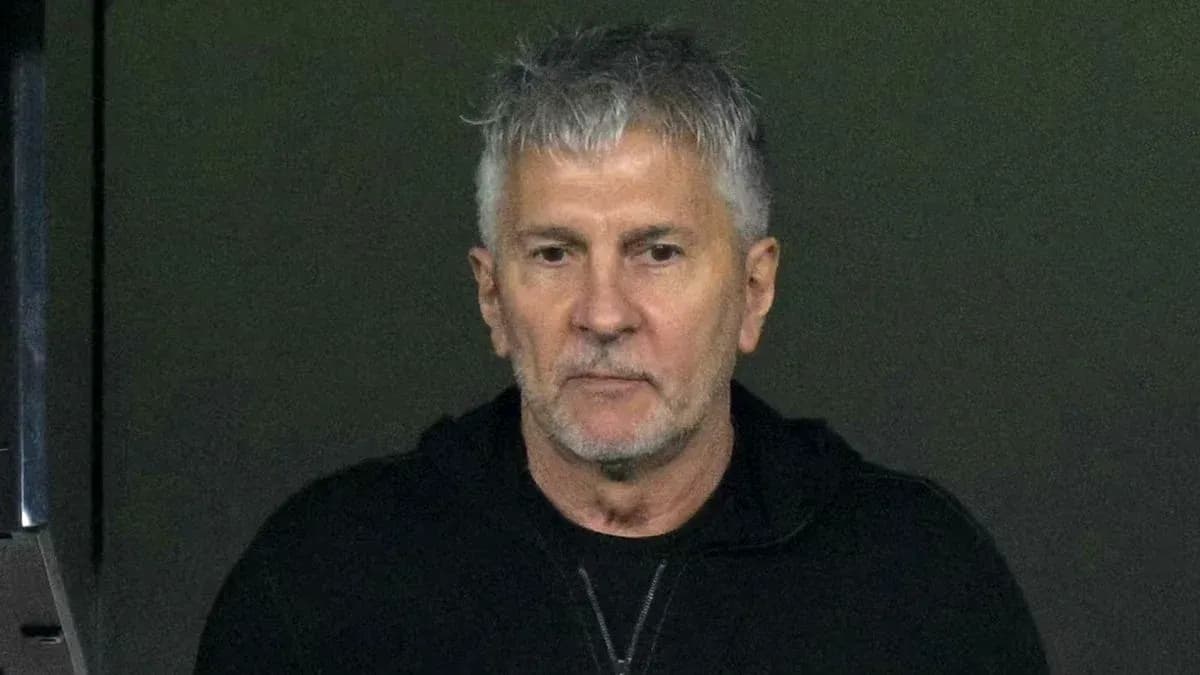
Lionel Messi has cast serious doubt over whether he will continue playing football, laying bare his grief and exhaustion in a raw, emotional tribute to his late father, Jorge.
The 39-year-old posted a lengthy open letter on Instagram after Jorge’s death at 68 last week, a message that read less like a farewell to a parent and more like a man questioning the point of carrying on in the game that defined him.
“I don't know what I'm going to do without you, I don't know how to go on,” Messi wrote. “I only played football and now I have quite a few doubts about whether I'll keep doing it for much longer. You were by my side from the beginning; there was so little left until the end. Why couldn't you hold on that little bit more so we could finish together?”
Those lines jolted the football world. Messi has spoken before about fatigue, about the natural limits of his body. He has never spoken like this about his desire.
A World Cup played under a shadow
Messi revealed that his final World Cup, the recent tournament in which Argentina fell 1-0 to Spain in the final, unfolded against the backdrop of his father’s declining health. Every match, every sprint, came with a private calculation: how much longer could he buy his father?
“You asked me so much to play in the last World Cup, and it was in the days just before it started that you got the worst,” he wrote. “It was the first time you weren't going to be at a tournament, but Mum told me that you were going to get better and that you'd be well enough to travel.
“I told you we were going to reach the final so you could travel. Every time a match ended, I waited for and missed your message. That's when I realised the situation was really bad.”
The pressure finally told in the decisive moments. Messi admitted his body simply would not respond as Argentina chased another title.
“Even so, I didn't stop thinking about going as far as possible, to buy you time and so you could see a match. We reached the final and you couldn't be there. I wanted to win it to bring it to you and show you a new one. I couldn't: my legs wouldn't give any more.
“This time I tried to go against my body, but I couldn't. I never managed to feel good. When I arrived, you thought we had lost the final on penalties. We couldn't talk about anything that happened. You couldn't enjoy anything. We weren't champions, but you have no idea how much we enjoyed every single match. Once again, you were right: I had to be there and play it.”
The admission strips away the usual armour of elite athletes. Messi did not talk about tactics or missed chances. He talked about legs that would not go, messages that never arrived, a father who never saw the tournament he had pushed his son to play.
The architect behind the icon
Jorge Messi was not just a presence in the stands. He was the architect of his son’s extraordinary journey.
It was Jorge who drove negotiations with Barcelona when Lionel was still a frail teenager in Rosario, the man who persuaded the Catalan club to bankroll the growth hormone treatments that allowed his son to compete at the highest level. The first agreement, famously scribbled on a paper napkin, changed football history.
Messi’s tribute underlined how deeply that partnership ran.
“For many of them Mum took me because you were working. Obviously you never missed a single match,” he wrote. “How you suffered watching me and how you enjoyed it, even though you never gave me many compliments.
“You were dad, friend and representative. You were always the person you needed to be in every moment and you never got anything wrong. Beyond a few reproaches or arguments, you were always right. In the end it always turned out the way you said.”
It was a portrait of a hard, demanding, utterly committed father, the kind of figure often hinted at in the background of great careers but rarely described in such intimate detail.
Football world rallies around Messi
As the weight of Messi’s words sank in, the sport’s biggest names moved quickly to support him.
Cristiano Ronaldo, his long-time rival in the greatest individual duel of the modern era, stepped away from that storyline to send a simple message under the post: “A huge hug to you and yours in these tough times, Leo. Much strength.”
Inter Miami co-owner David Beckham added his voice as well: “We stand with you and your family, Leo – always.”
The reaction cut across club loyalties and old battles. For once, Messi was not the opponent to be stopped or the record to be chased. He was a grieving son wondering if the game that bound him to his father still holds the same meaning.
A legacy carried forward
Messi closed his statement not with talk of trophies or records, but with a promise about the next generation.
“I'm going to miss you a lot, but you'll always be present, and especially in the upbringing of my children, because I teach them and raise them the way you both did with me,” he wrote. “Rest in peace and look after us from above the way you did down here. Thank you for everything.”
The words leave a stark question hanging over his career. After a lifetime of chasing perfection with his father at his side, how long does Lionel Messi really want to keep playing this game without him?
Related News
Real Madrid Concerned as Ibrahima Konaté Exits France Squad with Knee Injury
Ibrahima Konate Withdraws from France Squad; Man Utd's Leny Yoro Called Up by Zidane
4 Free Agent Strikers Manchester United Could Sign Following Sesko's Injury
Bosnia Coach Sergej Barbarez Criticizes Newcastle United Over Amar Dedic's Hamstring Injury
Kenya to Face Rwanda in Friendly Match During International Window
Mbappé's Flu Disrupts Zidane's First Camp with France