
Liverpool and Brentford Battle to 1-1 Draw at Anfield
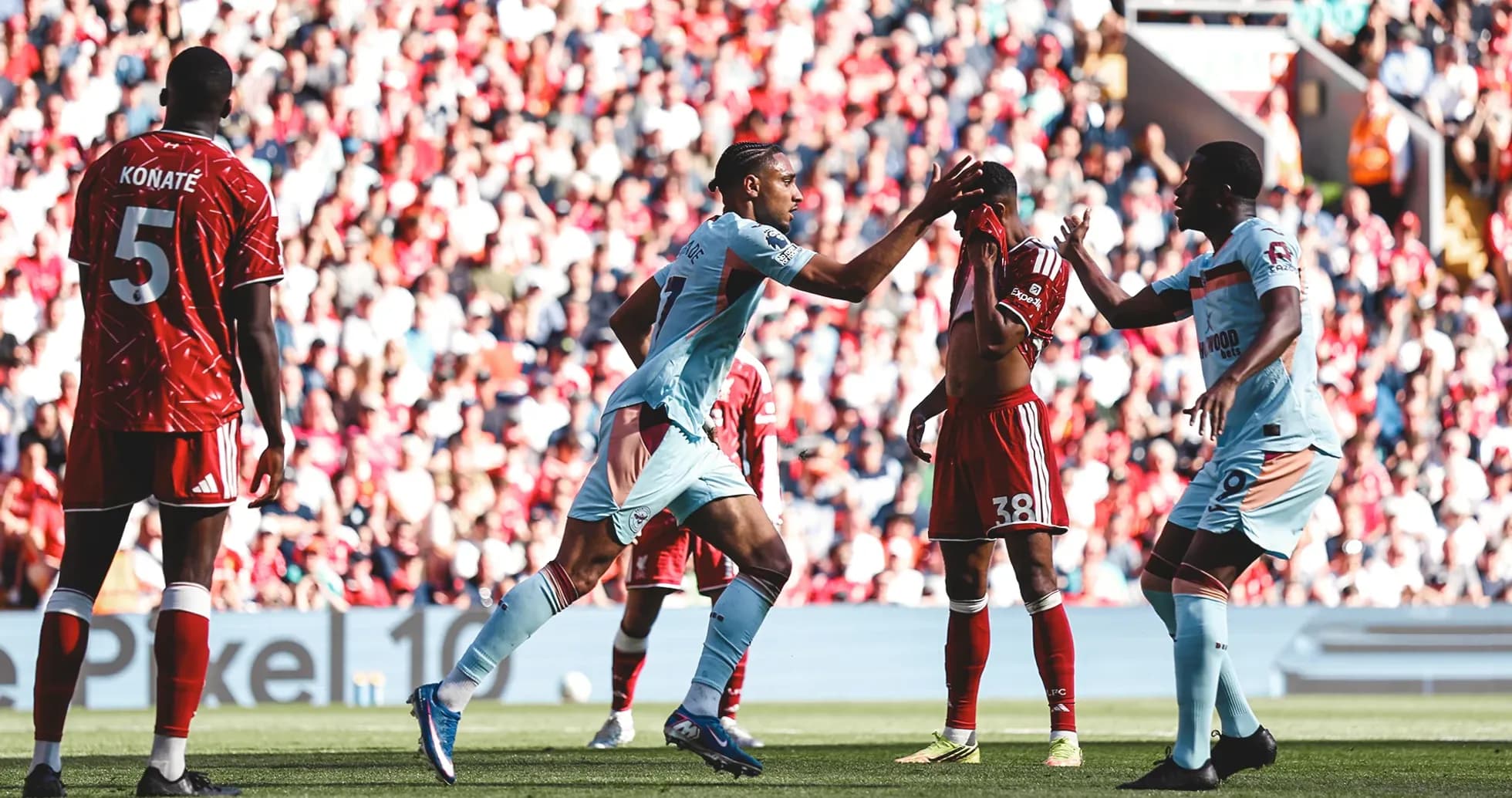
Liverpool’s 1-1 draw with Brentford at Anfield was a territorial siege that never quite turned into the decisive win the underlying numbers promised. Arne Slot’s side imposed themselves with a 4-2-3-1 that pinned Brentford deep for long stretches, but Keith Andrews’ mirror 4-2-3-1, built around compact spacing and quick transitional outlets, absorbed pressure well enough to escape with a point.
Structurally, Liverpool’s shape was aggressive and ball-dominant. The 60% possession and 503 passes, at 434 accurate (86%), reflect a side intent on methodical construction. The back four of C. Jones, I. Konate, V. van Dijk and A. Robertson held a high line, with Jones and Robertson effectively functioning as auxiliary playmakers from wide, helping generate 14 corner kicks and a heavy shot volume: 24 total shots, 17 inside the box and 8 on target. The double pivot of R. Gravenberch and Alexis Mac Allister provided the platform; Mac Allister’s late yellow card for “Foul” underlined how high and aggressive Liverpool’s counterpress remained even in added time.
Ahead of them, the trio of R. Ngumoha, D. Szoboszlai and M. Salah operated between lines, constantly rotating to drag Brentford’s midfield pair of J. Henderson and V. Janelt out of shape. Salah’s influence was clear in the decisive attacking patterns: his assist for C. Jones’ opener at 58' came from precisely the kind of half-space occupation Liverpool sought all game, exploiting the channels between full-back and centre-back. With C. Gakpo as the lone forward, Liverpool used him as a reference point to collapse Brentford’s back four centrally, then attacked the vacated wide zones with overlapping full-backs and underlapping midfield runs.
Brentford, by contrast, accepted their role without the ball. Their 40% possession and 331 passes, with 262 accurate (79%), show a side more concerned with verticality than circulation. The 4-2-3-1 flattened into a 4-4-1-1 out of possession, with wingers D. Ouattara and K. Schade dropping to the line of J. Henderson and V. Janelt. The early yellow card for Jordan Henderson for “Argument” set a combative tone, and the visitors were disciplined in blocking central access: Liverpool were forced into 8 blocked shots, a testament to Brentford’s willingness to defend their box in numbers.
In transition, Brentford’s plan was simple but effective. With only 11 total shots, 9 of them inside the box, they prioritised quality over volume. K. Schade’s equaliser at 64' encapsulated this: a rare but incisive break where Brentford finally exploited the space behind Liverpool’s advanced full-backs and high defensive line. M. Jensen, operating as the central attacking midfielder, and I. Thiago as the striker gave Brentford enough presence to threaten when they did escape the press, even if their overall shot count remained modest.
The substitutions subtly shifted the tactical balance. For Brentford, A. Hickey (IN) came on for J. Henderson (OUT) at 60', adding fresh legs and defensive solidity on the flank as Henderson’s early booking limited his aggression. Later, M. Damsgaard (IN) for M. Jensen (OUT) at 83' and R. Nelson (IN) for K. Lewis-Potter (OUT) at 89' indicated a late tilt towards preserving the draw while keeping a counterpunch threat.
Liverpool’s changes were more attack-minded. F. Wirtz (IN) for R. Ngumoha (OUT) at 73' injected a more creative profile between the lines, while J. Frimpong (IN) for M. Salah (OUT) at 74' maintained wide penetration with fresher legs rather than altering the structure. The double change at 83'—M. Kerkez (IN) for A. Robertson (OUT) and T. Nyoni (IN) for R. Gravenberch (OUT)—kept the full-back aggression and midfield energy high as Liverpool chased a winner. Finally, J. Gomez (IN) for I. Konate (OUT) at 89' offered fresh defensive stability for the high line while Liverpool continued to commit numbers forward.
In goal, Alisson (Liverpool) faced very little in terms of volume, with Liverpool’s statistics block registering 1 goalkeeper save. That figure, combined with Brentford’s 2 shots on goal, underlines how effectively Liverpool restricted clear looks despite the equaliser. At the other end, C. Kelleher (Brentford) had the heavier workload: Brentford’s statistics show 7 goalkeeper saves against 8 Liverpool shots on target, a crucial factor in converting Liverpool’s territorial dominance into only a single goal.
Discipline also told a tactical story. Liverpool’s 9 fouls and 2 yellow cards—Konate’s for “Foul” at 79' and Mac Allister’s for “Foul” at 90+2'—were largely a product of their aggressive rest-defence and counterpress high up the pitch. Brentford matched them with 9 fouls but collected 3 yellow cards, all tied to emotional flashpoints: Henderson, Collins and Janelt were each booked for “Argument”, reflecting the strain of defending deep for long periods and contesting decisions in the closing stages.
The advanced metrics sharpen the picture. Liverpool’s xG of 2.9 against Brentford’s 1.22 confirms that Slot’s side generated significantly better chances and enough volume to win the game. The 1.4 goals prevented attributed to Liverpool’s statistics and the identical 1.4 goals prevented in Brentford’s statistics suggest that both defensive units, including their goalkeepers, outperformed the quality of chances faced, even if Liverpool’s one save total points to a lot of Brentford’s threat being snuffed out before it reached Alisson.
Ultimately, this was a match where Liverpool’s structure, pressing and chance creation were aligned with a high-level performance, but Brentford’s compact 4-2-3-1, efficient counter-attacks and strong goal prevention metrics allowed Andrews’ side to escape Anfield with a point that the raw balance of play did not necessarily merit.
Related News
Premier League Managers Facing Potential Sackings During International Break
Arsenal's Myles Lewis-Skelly Names Unexpected Tottenham Rival as Toughest Premier League Opponent

Three Premier League Players Shining Early This Season
Premier League Early Season Reactions: Man City’s Strength, Arsenal’s Flaws, United’s Struggles

Premier League Returns October 10 After Extended September-October International Break

Fulham and Manchester United Share Points in 1-1 Draw