
Liverpool and Brentford Draw: Tactical Insights from the Premier League Clash
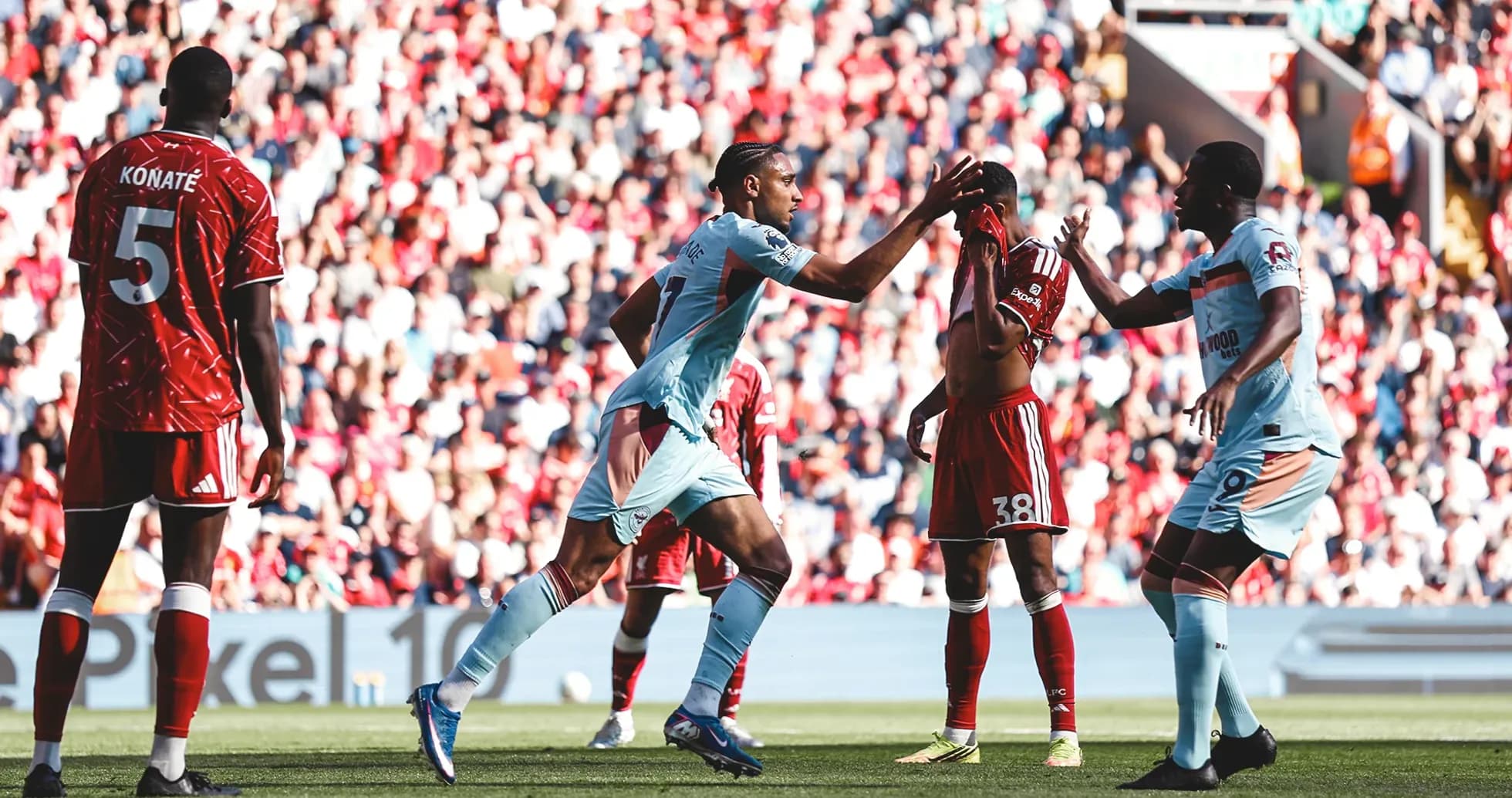
Anfield’s final act of the 2025–26 Premier League season ended not with a roar but with a murmur of frustration. Liverpool and Brentford shared a 1-1 draw, a result that crystallised their campaigns as much as it closed them. Following this result, Liverpool sit 5th with 60 points, a goal difference of 10 built from 63 goals scored and 53 conceded overall. Brentford finish 9th on 53 points, their goal difference a slender 3, with 55 goals for and 52 against.
The scoreline mirrored the broader statistical profiles. At home this season, Liverpool have averaged 1.8 goals for and 1.1 against; Brentford, on their travels, have produced 1.2 goals for and allowed 1.6. Both teams arrived shaped by the 4-2-3-1 as their tactical backbone, and both deployed it again: Arne Slot with an aggressive, technically rich Liverpool, Keith Andrews with a Brentford side comfortable suffering without the ball and striking through their talisman.
Tactical Voids and Selection Choices
The absences framed the story before a ball was kicked. Liverpool’s midfield and depth were thinned by the injuries to S. Bajcetic (hamstring), C. Bradley (knee), H. Ekitike (Achilles) and G. Leoni (knee). Bajcetic’s absence removed a natural controller, while Ekitike – 11 league goals and 4 assists overall – would have been the obvious alternative focal point if Liverpool needed to chase the game late. Slot instead leaned heavily on his starting cast, with C. Gakpo leading the line and a creative band of M. Salah, D. Szoboszlai and R. Ngumoha behind him.
Brentford’s own list was not insignificant. F. Carvalho (knee), R. Henry (hamstring) and A. Milambo (knee) were all missing, stripping Andrews of a natural attacking dribbler between the lines and an experienced left-back option. In response, K. Lewis-Potter was re-tasked as a defender, offering thrust from deep but also inviting risk against Liverpool’s wide overloads.
Disciplinary trends also hovered over the fixture. Liverpool’s season-long yellow card distribution shows a pronounced late-game spike: 31.58% of their cautions have arrived between 76-90 minutes, with another 17.54% in the 91-105 window. Brentford, too, drift toward chaos as fatigue bites, with 26.09% of their yellows in the 76-90 period and 21.74% from 61-75. Both teams carry a late-game edge, and both carry late-game risk.
Individually, the red-card shadows of D. Szoboszlai and K. Schade mattered. Szoboszlai’s season includes 8 yellows and 1 red, and Brentford’s Schade has 6 yellows and 1 red, plus a history of drawing 43 fouls and committing 50. This fixture was always likely to tilt toward a combustible final quarter, even if the referee’s book ultimately stayed relatively controlled.
Key Matchups
Hunter vs Shield
The headline duel was always going to be Igor Thiago against Liverpool’s defensive structure. Thiago’s season has been ruthless: 22 league goals and 1 assist overall, from 67 shots and 43 on target. He has also converted 8 penalties but missed 1, underlining both his reliability and the single blemish that keeps his record from perfection.
Across from him, Liverpool’s back line has been solid at Anfield but far from impenetrable. At home they have conceded 20 goals, an average of 1.1 per game, with V. van Dijk and I. Konate anchoring a unit that has still allowed 53 overall. The pairing, shielded by A. Mac Allister and R. Gravenberch, was tasked with managing Thiago’s penalty-box presence and aerial power (191cm, 85kg) while also coping with Schade’s aggressive running and D. Ouattara’s directness from the flank.
For long stretches, Liverpool’s “shield” kept Thiago at arm’s length, but Brentford’s No. 9 needs only thin margins. His season numbers – 524 duels contested, 202 won – show a forward who lives in constant contact, dragging centre-backs into battles they would rather avoid. The 1-1 scoreline is a fair reflection of that tension: Liverpool controlled territory, but Brentford’s spear always threatened to pierce.
Engine Room
In midfield, the clash of identities was stark. Liverpool built their game around D. Szoboszlai and A. Mac Allister. Szoboszlai’s campaign has been immense: 36 appearances, 6 goals, 7 assists, 2,184 completed passes with 78 key passes, and an 87% accuracy. He is both metronome and scalpel, and against Brentford he operated high, trying to pin V. Janelt and J. Henderson back.
Mac Allister and R. Gravenberch formed the double pivot, tasked with progressing play through Brentford’s first press and tracking the late surges of M. Jensen from the visitors’ 4-2-3-1. Liverpool’s plan was clear: use Szoboszlai between the lines to pull Brentford’s shape apart, then let Salah and Ngumoha attack the half-spaces around the stretched full-backs.
Brentford’s response lay in discipline and transitional menace. Janelt and Henderson screened the back four, while Jensen acted as the connector to Schade and Ouattara. Schade’s profile – 8 goals, 3 assists, 75 dribbles attempted, 40 tackles and 18 interceptions – tells the story of a two-way wide threat, equally capable of carrying the ball out and collapsing back into a compact block.
The creative duel on Liverpool’s right was particularly compelling. Salah, with 7 goals and 7 assists overall and 49 key passes, tried to exploit Lewis-Potter’s unfamiliarity as a defender, while Schade tracked back, ready to spring forward whenever Brentford broke.
Statistical Prognosis and Tactical Verdict
Following this result, the numbers paint a picture of two sides whose identities are well-defined but imperfect. Liverpool’s overall scoring rate of 1.7 goals per game and concession rate of 1.4 suggest a team that can overwhelm but not always control. Their 10 clean sheets overall, split evenly between home and away, underline a defence that can be excellent in spells but is rarely serene.
Brentford, with 1.4 goals scored and 1.4 conceded overall, are the league’s great equilibrists. They have matched Liverpool’s clean-sheet tally of 10 and yet failed to score in 12 league matches, including 7 on their travels. When their attacking patterns click around Thiago, they look like a top-six side; when they do not, their structure has to grind out margins.
In an xG lens – even without explicit values – the structural indicators suggest Liverpool likely edged the underlying chances: higher home scoring average, territorial dominance from their creative trio, and Brentford’s away concession rate of 1.6 per game. Yet Brentford’s efficiency, embodied in Thiago’s 22-goal haul and Schade’s dual role, keeps them consistently within one moment of parity.
Tactically, this 1-1 is the logical intersection of those curves. Liverpool’s 4-2-3-1 produced pressure and patterns but lacked the ruthless cutting edge that an absent Ekitike might have provided from the bench. Brentford’s 4-2-3-1 bent without breaking, their “hunter” Thiago finding just enough space against a “shield” that has been good rather than elite all season.
As the final whistle blew at Anfield, both managers walked away with a result that underlined their season-long narratives: Liverpool, a high-ceiling side still chasing defensive control; Brentford, a hardened mid-table hunter whose structure and star striker ensure they rarely go quietly, even in the most intimidating of arenas.
Related News

Premier League Managers Facing Potential Sackings During International Break

Arsenal's Myles Lewis-Skelly Names Unexpected Tottenham Rival as Toughest Premier League Opponent

Three Premier League Players Shining Early This Season

Premier League Early Season Reactions: Man City’s Strength, Arsenal’s Flaws, United’s Struggles

Premier League Returns October 10 After Extended September-October International Break

Fulham and Manchester United Share Points in 1-1 Draw