
Los Angeles Swallows the World Cup Whole
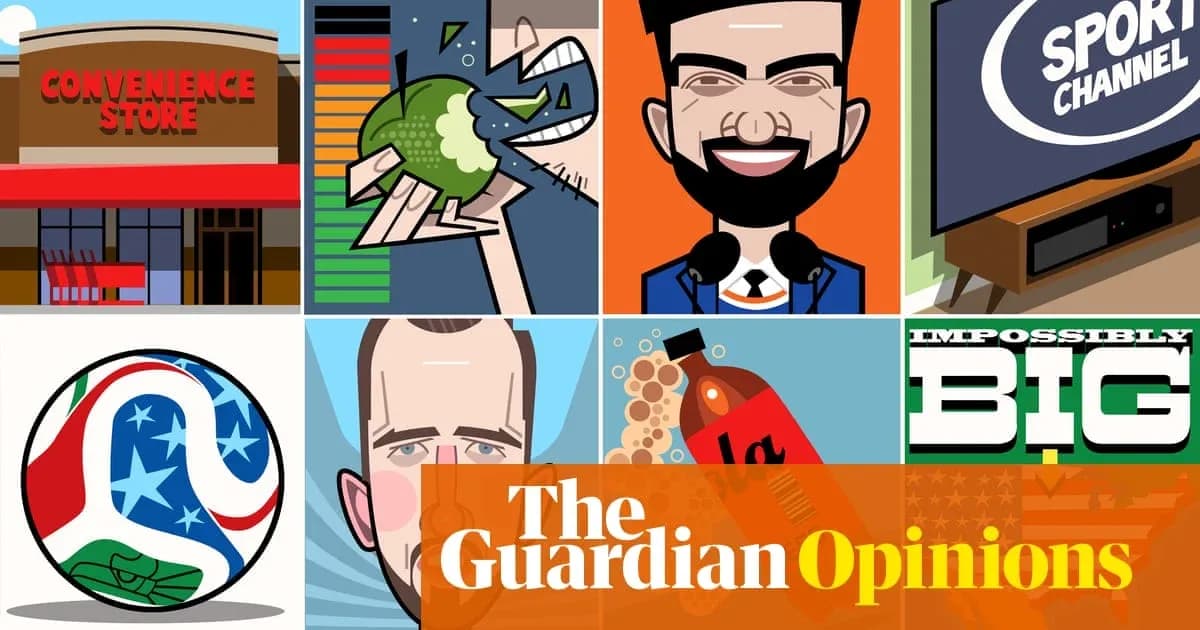
Los Angeles doesn’t so much host a World Cup as swallow it whole.
Two decades on from pinballing around Germany in 2006 – steins in hand, Trinidad and Tobago fans as dance partners, ducking Brazil v Australia because the hangover couldn’t handle the sun – this feels very different. Same sport, different life. This time it’s broadcast trucks, podcast deadlines and a running battle with jet lag, not a rental car full of mates and bad decisions.
Back home the question drops into every message thread: “Is there World Cup fever over there?” It’s the same tone local TV used in Cambridge in 1990, wandering around the city on the eve of an FA Cup quarter-final against Crystal Palace and discovering a population largely unaware Cambridge even had a football team. The same tone when someone in London asks about the Ashes in Melbourne and you’re actually on your hands and knees, scraping cold rice off the floor with a wet wipe while two under‑fives scream about something unrelated to Bazball.
For the partners holding the fort while journalists, players and officials drift around North America on a tide of per diems and press passes, the debt is enormous. Somewhere an 18‑month‑old called Willie Rushden is battling hand, foot and mouth while his parent is debating full‑backs on air. Timing, as ever, is everything.
A vast host and a tiny radius
You know the United States is big in theory. You feel it in practice. Los Angeles doesn’t end, it just fades into a different kind of Los Angeles. One optimistic attempt to LimeGlide from West Hollywood to Santa Monica turns into a cautionary tale: one minute you’re coasting along, sun on your face, feeling like this is what life in California was meant to be; the next you’re stuck in a non‑cycling zone on a dual carriageway, dragging a dead lump of metal through a hedge, miles from anywhere that looks like a seafront.
The days are carved into one‑hour gaps between games. That shrinks a giant city into a tiny triangle: a Trader Joe’s, the cafe across the road, and a hotel pool full of people who seem to live entirely on content and chlorinated water. Influencers with immaculate abs talk about their new TikTok series and whether Nylon nightclub has remembered to put them on the list. Football is background noise to their brand management.
Yet the games are on. Bars in West Hollywood flicker with group stages and second halves. US shirts dot the sidewalks. A Bosnian wanders past and someone shouts, “Good luck later.” It’s not carnival, but it’s not ignorance either. The sport has a foothold.
Curiously, the first few days belong to basketball. You absorb the Knicks or Spurs by osmosis. Spurs feel like the natural choice, so of course they respond by coughing up the biggest lead in NBA Finals history, or something close enough to it that the detail barely matters. Knicks fans, meanwhile, have their own folk hero in Zohran Mamdani, the Guardian Football Weekly listener who also happens to be mayor of New York. His speech at the Knicks parade rattles off a list of players some of us have never heard of, yet the hairs on the back of the neck stand up anyway. Passion translates, even when the names don’t.
A nation exhaling after Paraguay
The most striking football moment in the US so far doesn’t come from a superpower. It comes from relief. The reaction to the national team’s win over Paraguay feels almost cathartic. This isn’t the tourists in replica shirts; it’s the reporters, analysts and long‑suffering evangelists who’ve spent years insisting “soccer” belongs in a landscape carved up by the NFL, NBA and MLB.
For them, this tournament is not just a spectacle. It’s a referendum. England can win the World Cup or collapse in the last 32 and the Premier League will still sell out, the children will still wear shirts, the game will still dominate the back pages. In the US and Australia, a deep run changes the sport’s status. A quarter-final, maybe better, can drag football from niche to necessary. It’s a burden the players don’t need, but they carry it anyway.
Thousands of miles away, in Melbourne’s Fed Square, that pressure explodes into something else entirely. The scenes there – in a city that has become a second home – come closest to drawing tears. Nestory Irankunda, a refugee, takes a touch and scores a goal that feels bigger than a single match. In an era of rising populism and nationalism, a player whose family fled conflict now wears the shirt of Australia, a nation built on immigration, just like the US. It’s football as counter‑argument.
Connor Metcalfe watches his own goal back in the mixed zone and reacts in the most Australian way possible, a string of “far out”s and “ick”s that may not be verbatim but capture the mood. There’s an open, unashamed affection for the Socceroos that jars delightfully with the instinctive grimace that still greets the sight of an Australian cricket team walking out to field.
England at arm’s length
Distance from England has its perks. You don’t have to wade through phone‑ins about whether Thomas Tuchel belts out the national anthem with sufficient gusto. King Charles almost certainly isn’t losing sleep over it, and neither should anyone else.
What matters is that England are good and, crucially, fun. Harry Kane finally has pace buzzing around him. Noni Madueke is grinning his way through games. Elliot Anderson is popping up in the right spaces. Djed Spence suddenly looks quicker than the Road Runner. There is hope, but not the dread‑soaked hope of old, the kind that felt like waiting for a piano to fall from a great height. Not yet, anyway.
The daily routine here leans heavily on two pillars: living with Barry Glendenning and watching Fox Sports. It throws up one recurring question: will Zlatan Ibrahimovic eventually throttle Alexi Lalas on set, or will Barry lose patience with his housemate first?
Fox’s coverage does its job. There’s plenty of “soccer 101” content, but that’s inevitable. England games at home pull in viewers who don’t know their inverted full‑backs from their inside‑forwards; broadcasters can’t treat every match like a Monday night at Selhurst Park. Still, there are limits. Christian Pulisic popping up in a Wells Fargo advert during a hydration break pushes them.
Life with Barry, under the same roof
Co‑hosting a podcast with someone is one thing. Sharing a flat with them during a major tournament is another. Nobody is pretending this is a long‑term housing solution.
So far, there has only been a short list of minor infractions: eating an apple at a volume that apparently breaches local ordinances, failing to screw the lid back on a Coke Zero bottle with military precision, offering unsolicited advice on how to chop a chilli, asking whether he needed the big saucepan, decanting yoghurt into a bowl, doing too much laundry, and daring to criticise flatulence that is, in every sense, unapologetic. Both ends.
And yet, people lap this up. Instagram, the podcast, YouTube – the domestic bickering becomes content, and content becomes currency. Los Angeles is in pilot season; maybe two middle‑aged men arguing about cookware and full‑backs is exactly what the networks need. Barry has already helped a star of Selling Sunset with a key fob – not a euphemism, just life in a city where everyone is on a show, even when they aren’t.
Big things might be coming. Or they might not. For now, there are games to watch, stories to tell and another hour to kill between kick‑offs in a city that never seems to end.
Related News
Anthony Joshua Names Murat Gassiev as Next Opponent if He Defeats Tyson Fury
UFC 332: Start Time and Fight Highlights for Natalia Silva vs. Wang Cong
Court McGee Opens Up About Choosing UFC 332 as His Final MMA Fight
WBC Orders Lightweight Title Unification: William Zepeda vs Jadier Herrera
BCCI Pension List: Monthly Payments to Retired Indian Cricketers in 2025
Why Fury vs Joshua Is Set for Cardiff, and Dua Lipa’s Unexpected Role