
Luka Modric's Defiant Journey: From Euro Heartbreak to World Cup Dreams
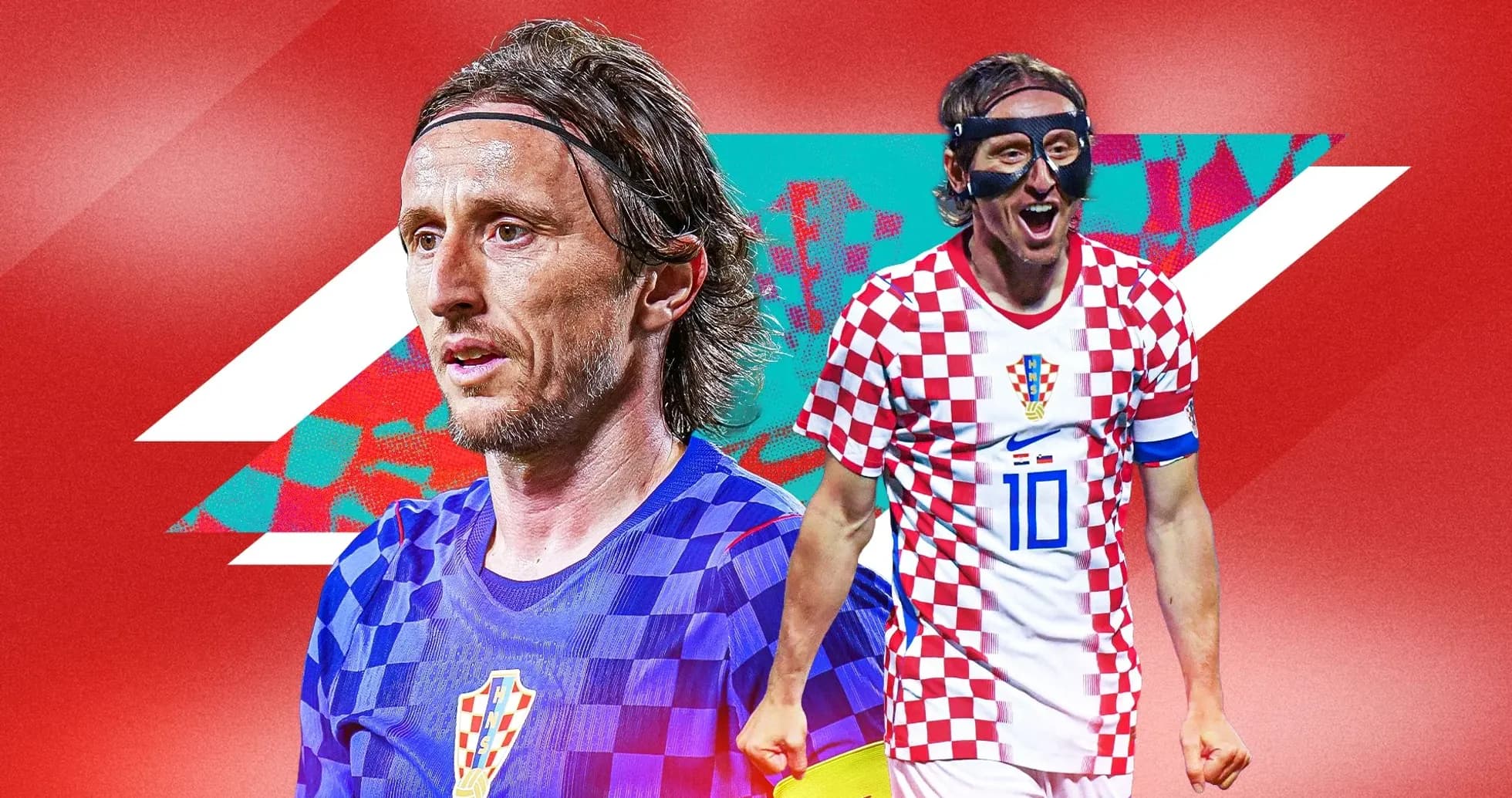
Luka Modric stood under the harsh lights in Leipzig last summer, Player of the Match trophy in his hands and devastation in his eyes. He had scored, he had dragged Croatia to the brink, and then he had watched it all disappear in the 98th minute.
Mattia Zaccagni’s curling finish for Italy didn’t just win a game. It shut a door. Croatia were out of Euro 2024 in the group stage, Italy somehow staggered through, and the football world quietly prepared its farewell to one of the great international careers.
This was not how it was supposed to end.
Modric had given Croatia the lead in what felt like a straight shootout for the last 16 at the Red Bull Arena. Even his goal carried drama: a missed penalty, a rebound, a ruthless follow-up from a man who has never been afraid of the ball in the biggest moments. Yet by the time he faced the cameras, the 1-0 lead had become a 1-1 draw and then a 2-1 defeat. The medal was glass, the feeling hollow.
The room knew it. The game knew it.
In the post-match press conference, Italian journalist Francesco Repice put aside national lines and spoke like a supporter. He thanked Modric for “everything you have shown, not just tonight but in your career” and pleaded with him to “never retire.” It was less a question, more a collective wish from anyone who has watched a ball move differently when it leaves Modric’s right foot.
Modric, then 38, allowed a rare glimpse of doubt.
“I’d like to keep playing forever,” he said, “but there probably will come a time where I’ll have to hang up my boots. I’ll keep playing on for now, but I’m not sure for how much longer.”
Almost a year later, that time still hasn’t come. Against logic, against biology, against the usual arc of a footballer’s life, he continues to operate at a level most midfielders never reach in their prime.
The boyhood dream that became a backbone
When Modric left Real Madrid after 13 years and a mountain of trophies, the easy reading was nostalgia. A final romantic chapter at AC Milan, the club he had followed as a child because of Zvonimir Boban. A soft landing for a legend.
He refused that script.
From the moment he walked through the doors at Milanello last summer, he insisted this was not a testimonial tour. He believed he could help restore Milan as a serious force, not just decorate their midfield. He was right.
His arrival dominated headlines across Italy. The doubts followed just as quickly. How much could a 39-year-old really offer across a full Serie A season? Was he blocking the path of younger signings such as Samuele Ricci, the 24-year-old Italian midfielder brought in at the same time?
Those questions faded as soon as the ball started moving.
Massimiliano Allegri kept picking Modric. Ricci, who might have had every reason to bristle at his reduced role, instead watched in admiration.
“He’s the strongest player I’ve ever played with,” Ricci said, struck by the Croat’s humility and relentlessness in training.
The Italian press were no less stunned. “If he really is 40,” wrote Alberto Polverosi, “let’s clone him!” It was only half a joke. Week after week, Modric dictated games with the same clarity and tempo that had defined him in Madrid. He pressed, he tackled, he orchestrated. He did not look like a luxury signing; he looked like the structure.
Kaka, who shared a dressing room with Modric at Real Madrid, offered the simplest explanation: this was just who he is.
He called Modric a “force of nature” and lifted the curtain slightly on the mentality behind the performances. Most players, Kaka pointed out, lose a fraction of their edge after winning everything. Modric, he said, is “crazy” in the best possible way: still calling team-mates, still demanding, still desperate to pass on his knowledge.
His impact went beyond matchdays. Training sessions sharpened under his gaze. Standards rose. His enthusiasm and leadership, Kaka argued, were not just good for Milan, but for Italian football as a whole.
No wonder Allegri fell for him. Their bond grew so strong that whispers began to circulate: Modric as a future assistant coach, a bridge between the dressing room and the dugout.
Then came the reminder that even forces of nature are made of flesh and bone.
When one fracture broke a season
Milan had built too much around him. That became brutally clear in late April.
In a tense 0-0 draw with Juventus on April 26, Modric suffered a fractured cheekbone. The injury itself seemed manageable at first glance, the sort of thing modern medicine and a protective mask can mitigate. But the timing was disastrous.
He couldn’t start any of Milan’s final four league games. Without their metronome, without the man who turned Allegri’s plans into patterns on the pitch, Milan fell apart. Three defeats from those four fixtures dragged them from third to fifth. In a league as unforgiving as Serie A, that slip carried a brutal price: no Champions League football.
The consequences were swift. Allegri paid with his job, dismissed after failing to secure a top-four finish. His future evaporated just as Modric’s became clouded.
Does he stay for another season in Milan, under a new coach, in a team that must now rebuild again without the lure of Europe’s top competition? Or does he finally accept Madrid’s open invitation to return to the Bernabeu in a different role, trading the pitch for a position upstairs or on the training ground?
Milan has moved him. He has spoken warmly about the club, the city, the affection he has felt in a country that once doubted what was left in his legs. Yet the pull of Madrid, the place where he became a Ballon d’Or winner and a five-time Champions League champion, is never far away.
For now, he refuses to say. He keeps his cards close, his boots laced.
One last dance, behind a mask
What does seem certain is that this is his final major tournament with Croatia. The World Cup looms, and Modric will go into it not only as the heartbeat of his national team yet again, but with a protective mask strapped to his face, shielding that fractured cheekbone.
The symbolism is hard to miss. A 40-year-old captain, face guarded, body tested, leading his country into another global campaign in conditions that will stretch even younger legs. It sounds like the point where the story should slow down.
Modric has built a career out of tearing up those predictions.
“I never really cared what anyone else said,” he remarked recently. “It only further motivated me.” It is not a slogan. It is the thread running through a journey from war-torn childhood to Ballon d’Or, from being written off as too slight for English football at Tottenham to dominating midfields across Europe.
So who dares to dismiss him now, masked and 40, as he prepares for one last charge with Croatia?
Not in England. They have seen this film before. They remember how often Modric has picked up the script of an English summer and rewritten it in his own hand.
The question is no longer whether he has earned the right to choose his ending. It’s how many more times he intends to defy the final whistle.
Related News
Anthony Joshua Names Murat Gassiev as Next Opponent if He Defeats Tyson Fury
UFC 332: Start Time and Fight Highlights for Natalia Silva vs. Wang Cong
Court McGee Opens Up About Choosing UFC 332 as His Final MMA Fight
WBC Orders Lightweight Title Unification: William Zepeda vs Jadier Herrera
BCCI Pension List: Monthly Payments to Retired Indian Cricketers in 2025
Why Fury vs Joshua Is Set for Cardiff, and Dua Lipa’s Unexpected Role