
Luka Modric's Journey: Rivalry with Messi and Ronaldo
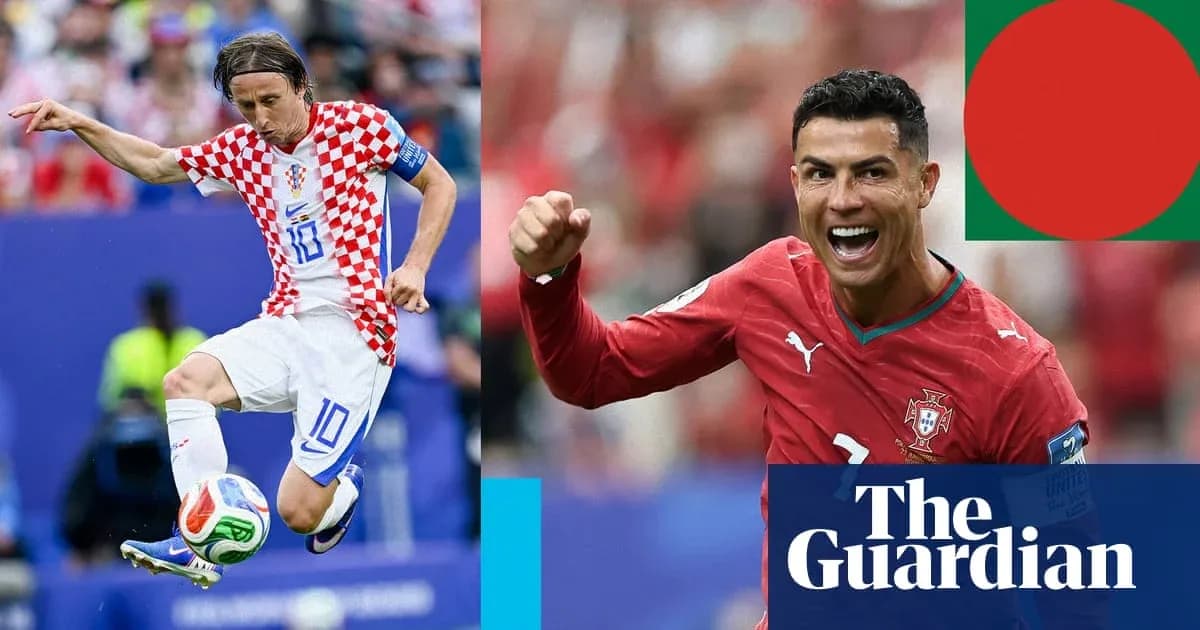
What were you doing on 1 March 2006?
Maybe you were at Anfield, watching England edge Uruguay 2-1. Maybe you saw Switzerland put three past Scotland at Hampden Park. Or maybe you were in Zagreb, witnessing the quiet beginning of one of modern football’s great international careers.
That night, Luka Modric made his debut for Croatia. They beat Argentina 3-2, Lionel Messi scored his first goal for his country, and on the same evening Cristiano Ronaldo struck twice in a 3-0 Portugal win over Saudi Arabia – already a superstar, already imagining how far this journey might take him. One day, it would take him to Saudi Arabia itself.
Since then, Messi and Ronaldo have devoured the spotlight, their rivalry sucking in every conversation, every comparison, every era-defining argument. Modric has simply kept playing. Kept passing. Kept turning up. Less thunder, more ticking clock. A metronome in boots.
Yet he has been there all along, shoulder to shoulder with them at the summit.
Ronaldo, Modric and Messi sit in a tiny, rarefied club: the men who have driven their bodies and minds through more than 200 international matches. Only four players in history have reached that landmark. Two of them will step out again when Portugal meet Croatia in the last 32 of the World Cup, Ronaldo making his 232nd appearance, Modric his 202nd.
They are 41 and 40 now. This could be the last time these giants of 21st‑century football share a pitch. If it is, it will close a chapter that has wound through Manchester, London, Madrid and the biggest stages the game can offer.
Their commitment to their countries has never wavered. When Modric first pulled on the Croatia shirt in 2006, Ronaldo already had 29 caps. Two decades on, the gap between them has grown by just one. Different nations, different roles, but the same instinct: when the phone rings and the flag is involved, they show up.
Their careers first intersected in England. In the 2008‑09 season, Modric at Tottenham and Ronaldo at Manchester United met at Wembley in the Carling Cup final. Both played the full match, both earned a rating of 7, and United lifted the trophy after a penalty shootout. It felt like a routine domestic showpiece at the time. In hindsight, it was the first act in a long-running shared story.
They collided again in Europe in 2010‑11, this time with Ronaldo already in Spain and Modric still at Spurs. Real Madrid swept through their Champions League quarter-final, a familiar script in the years that followed once Modric himself moved to the Bernabéu.
Together in white, they became a machine. Across six seasons, Real Madrid won the Champions League four times and reached the semi-finals in the other two campaigns. Ronaldo the finisher, Modric the conduit. One living on goals, the other on angles and tempo.
If there was a single moment that captured their partnership, it came in Cardiff in 2017. Real Madrid were 2-1 up against Juventus in the Champions League final when Modric darted to the byline and cut the ball back. Ronaldo arrived, as he always seemed to, and swept in Madrid’s third. The game tilted decisively. The trophy was theirs again.
That move was one of 222 matches in which they shared a pitch. No central midfielder has played more often with Ronaldo than Modric. No one has spent more time feeding the most voracious goalscorer of his age.
Now they meet as captains of their countries, not colleagues, carrying the weight of history and expectation into another knockout tie. One still thrives on penalty-box chaos, the other on controlling it. Between them lies almost half a century of elite football, compressed into two sets of tired legs that refuse to concede the end.
At some point soon, the caps will stop accumulating, the numbers will freeze, and the arguments about who was greatest will harden into nostalgia. Until then, nights like Portugal v Croatia offer something simpler: two careers that refused to fade, still intersecting, still demanding one last performance.
Related News
Anthony Joshua Names Murat Gassiev as Next Opponent if He Defeats Tyson Fury
UFC 332: Start Time and Fight Highlights for Natalia Silva vs. Wang Cong
Court McGee Opens Up About Choosing UFC 332 as His Final MMA Fight
WBC Orders Lightweight Title Unification: William Zepeda vs Jadier Herrera
BCCI Pension List: Monthly Payments to Retired Indian Cricketers in 2025
Why Fury vs Joshua Is Set for Cardiff, and Dua Lipa’s Unexpected Role