
Marcus Rashford's Manchester United Future: From Exit to Reintegration
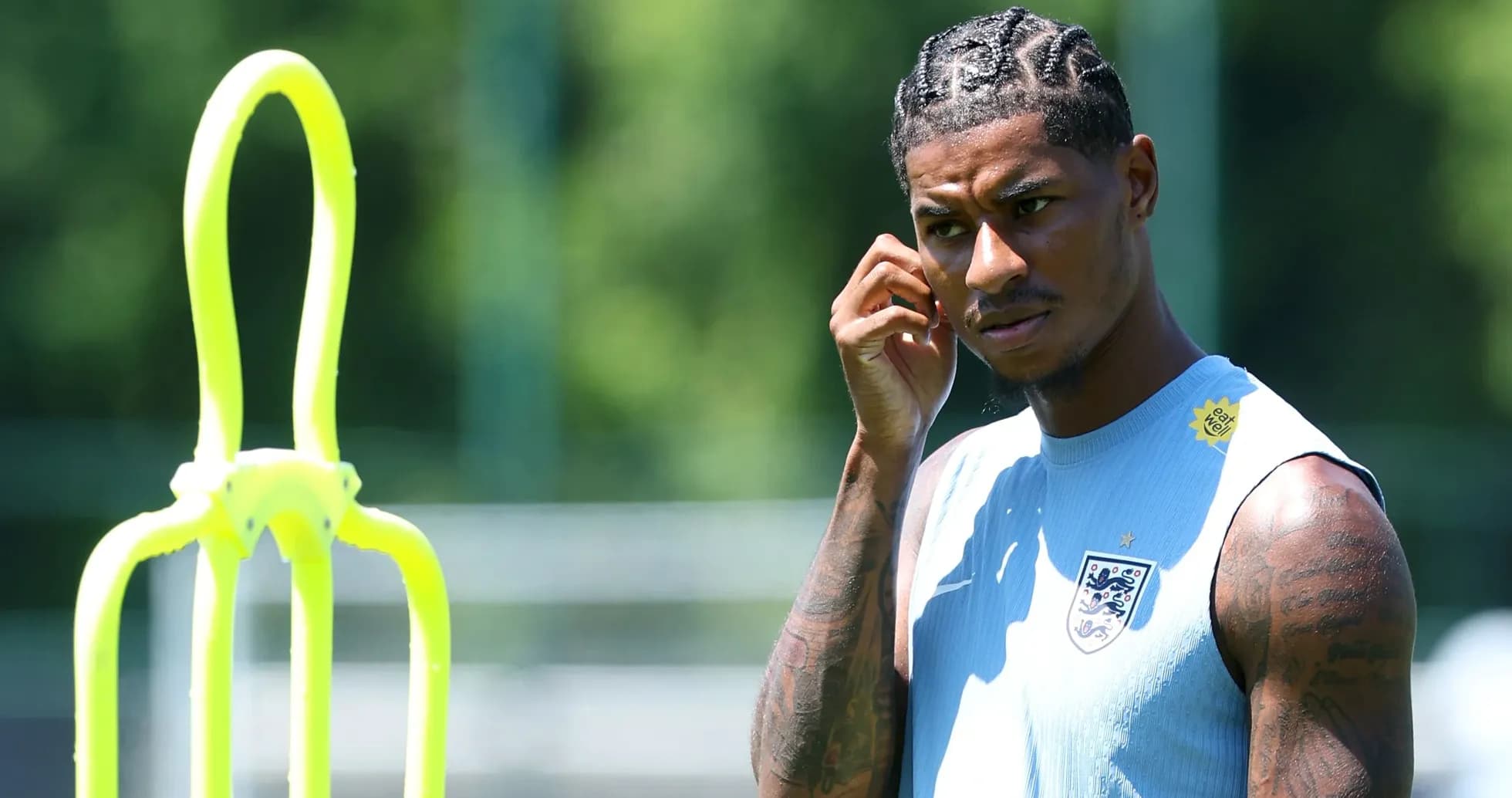
Marcus Rashford’s Manchester United future, once framed as a slow, inevitable goodbye, has taken on a very different tone.
Writing in his One To Watch column for The Athletic, David Ornstein reports that United’s recent cost-cutting has eased the financial strain to the point where the club no longer feel backed into a corner over sales. That shift has opened the door to something that, not long ago, felt unlikely: a genuine conversation about Rashford’s reintegration rather than his exit.
From unwanted certainty to open question
Previous windows carried a familiar narrative. United listened to offers, sounded out suitors and quietly prepared for a permanent parting of ways. The logic was clear: a big contract, uneven form, and a squad that needed reshaping.
Now the mood music has changed.
The club’s improved financial flexibility means they can reassess the squad without the desperate need to cash in. According to Ornstein, what has emerged is a “mutually beneficial” scenario for both Rashford and the technical staff. United are no longer pushing him toward the door; they are weighing up how best to use him.
Central to that is a simple footballing question: can Marcus Rashford still be a key player for this team?
Carrick’s calculation
Ornstein reveals that Rashford is on course to rejoin the first-team group in pre-season training next month and, as things stand, will be available for Michael Carrick to use. That alone marks a notable change in tone from the talk of loans and exits that dominated previous summers.
Nobody at United is pretending the matter is settled. Ornstein is clear that “nothing has been firmly decided either way,” and the club accept that the situation remains fluid. But there is something new: an openness, on all sides, to the idea of bringing him back into the fold.
That is not just sentiment. It is also hard reality.
A complex market, a complicated contract
Engineering a permanent transfer has proved anything but straightforward. Rashford’s contract runs until June 2028, giving United security and leverage but also making any deal expensive. His wages narrow the field of realistic buyers. His own preferences narrow it further.
He has no desire to join another Premier League club. The idea of strengthening a domestic rival does not appeal to United either. Abroad, the picture is no clearer. Ornstein notes that his overseas suitors do not currently sit at the elite level that would tempt him to walk away from United.
That leaves the club in a familiar modern dilemma: a high-value asset, tied down long term, with a market that does not quite match the numbers on the contract.
Ornstein adds that United want to avoid sending him out on a third loan, while Barcelona, one of the most prominent previous options, have no intention of taking him permanently. Without a serious bidder of the right calibre, the clean break that once seemed logical has stalled.
When the exit door jams, the training pitch suddenly looks more attractive.
A pre-season audition
All of which places unusual weight on the coming weeks. Rashford is expected to link back up with the squad in pre-season, though his exact return date will depend on England’s progress at the World Cup. Whenever he walks back through the door, the opportunity is obvious.
Carrick’s group will begin to take shape around him. United are set to be bolstered by the arrival of Ederson from Atalanta, with more signings expected before the window closes. Competition for attacking places will be fierce, and the tone of the season will be set early.
Rashford, still only 28 and still contracted deep into the decade, walks into a crossroads. This pre-season is not just about fitness. It is about relevance.
Can he convince Carrick he belongs in the starting XI? Can he show that his best version is not a memory but a resource United would be foolish to discard?
Hull away, and a fresh verdict
The timeline is clear. United open their 2026–27 Premier League campaign away to Hull City on 22 August. By then, Carrick will have had weeks to assess Rashford up close, judge his sharpness, his attitude, his fit within a remodelled attack.
Ornstein’s reporting makes one thing plain: for the first time in a while, the club are not being dragged toward a decision by financial necessity. They can afford to wait, to watch, to let football rather than balance sheets decide what comes next.
If Rashford boards that coach to Hull as a starter, the story becomes one of revival. If he travels as a squad player fighting for minutes, the questions will only grow louder.
If he does not travel at all, the market will start talking again.
One way or another, this season will tell United whether Marcus Rashford is part of their future or simply a chapter they have been slow to close.
Related News
Anthony Joshua Names Murat Gassiev as Next Opponent if He Defeats Tyson Fury
UFC 332: Start Time and Fight Highlights for Natalia Silva vs. Wang Cong
Court McGee Opens Up About Choosing UFC 332 as His Final MMA Fight
WBC Orders Lightweight Title Unification: William Zepeda vs Jadier Herrera
BCCI Pension List: Monthly Payments to Retired Indian Cricketers in 2025

Why Fury vs Joshua Is Set for Cardiff, and Dua Lipa’s Unexpected Role