
Matheus Cunha and Julian Nagelsmann: The Narratives in Football
The World Cup has a habit of exposing more than tactical flaws. It drags out the stories people want to tell about players and managers – and sometimes those stories say far more about the storytellers than the subjects.
This week, Matheus Cunha discovered he is apparently too nice to be Brazil’s future. Julian Nagelsmann learned that a calm, slightly tetchy post-match exchange can be dressed up as a “snap” at a “female reporter”. And Harry Kane was somehow recast as both “the humblest of superstars” and a man driven by “a stubborn streak of high self-regard” in the same breath.
Quite a trick, that.
Kane, ego and a curious double standard
Craig Hope of the Daily Mail offered a line on Kane that tried to thread a needle and ended up tying itself in knots:
“Kane does not have an ego in a traditional sense – he is the humblest of superstars – but he does not score the goals he does without a stubborn streak of high self-regard.”
So Kane has no ego, but also a strong ego. He is both the most humble of the elite and fuelled by the same self-belief that powers every great goalscorer. The contradiction hangs there, unbothered.
The wording would be harmless enough if it did not sit alongside a very different tone reserved for Jude Bellingham. Bellingham has been branded a “divisive soloist”, a “poster boy for moodiness”, a “brand ambassador for petulance” and “an angry young man”. Kane, by contrast, gets to be the “humblest of superstars” who merely carries a necessary “stubborn streak”.
Same sport. Same dressing room. Very different vocabulary.
The framing extends to Kane’s club future too. Hope’s assessment of Bayern Munich versus Barcelona reads like a tourism brochure with a hierarchy attached:
“But Bayern is not Barca and the Bundesliga is not LaLiga. Der Klassiker is not El Clasico. Der Klassiker is Bayern versus Dortmund, by the way.”
The clarification of “by the way” lands like a pat on the head. Bayern are dismissed as “stable”, “familiar” and “logical” next to the “irresistible” Nou Camp, despite Bayern having gone further in last season’s Champions League and having lifted more trophies.
You can feel the pull of narrative over reality. Barcelona are romance, Bayern are reliability. One gets poetry, the other gets admin.
England’s “major boost” that wasn’t
Over at the Daily Mirror, Matty Hewitt framed Brazil’s win over Japan in terms of England’s prospects:
“It looked as though the Three Lions were going to be given a major boost after Japan took the lead in the first half, with the Canarinho at risk of exiting the competition.”
Japan, of course, beat England three months ago. Calling their involvement “a major boost” for Gareth Southgate’s side jars with very recent history. England have beaten Brazil more recently than they have beaten Japan.
Yet here Japan are, cast as a convenient stepping stone in someone else’s storyline.
Cunha, compassion and a manufactured “problem”
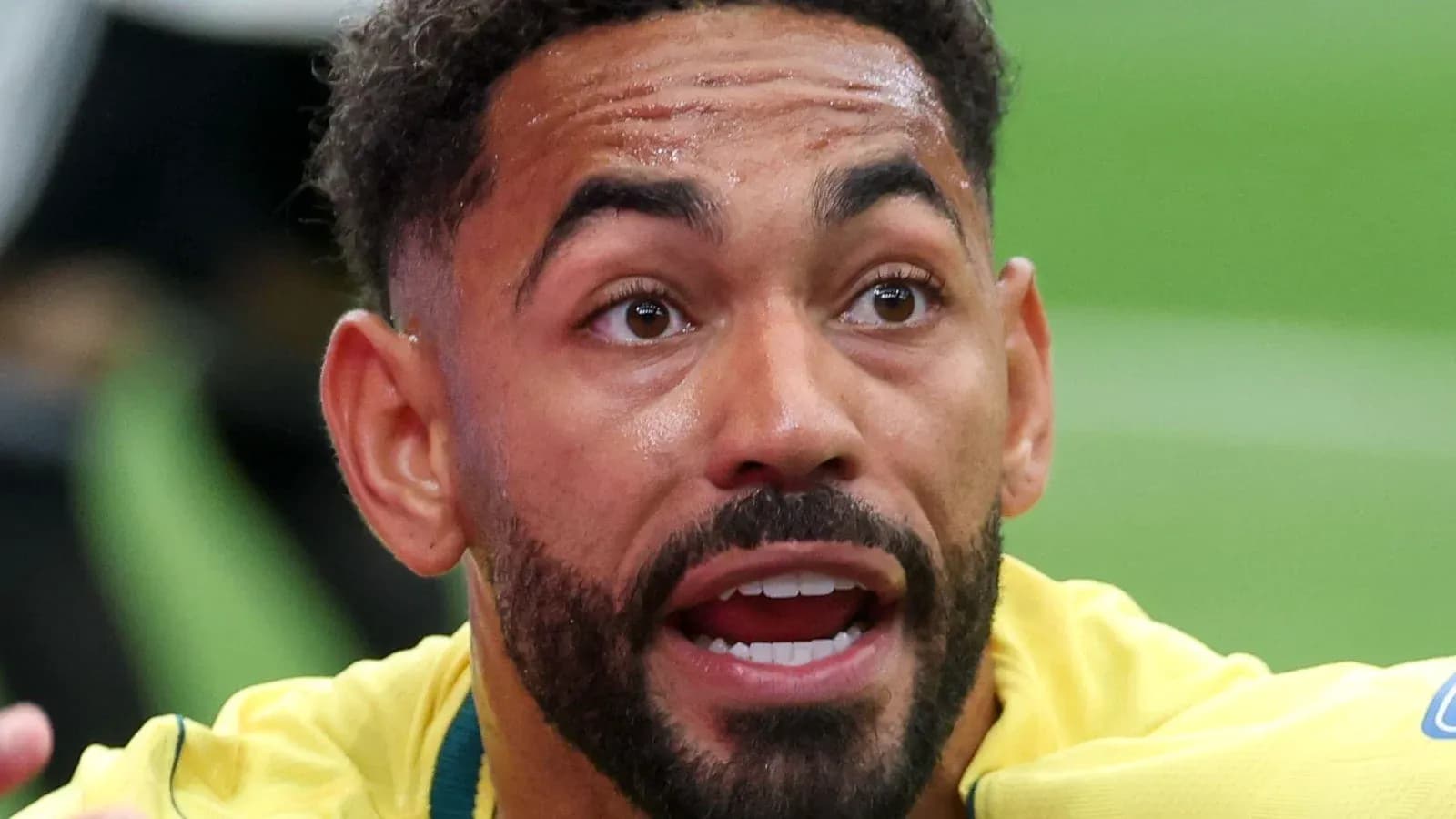
The more telling narrative twist came from Jeremy Cross, also of the Mirror, who homed in on Matheus Cunha’s behaviour during Brazil’s win over Japan:
“Matheus Cunha’s classy World Cup act can’t hide uncomfortable Brazil truth for Man Utd star.”
Cunha, after Brazil’s victory, briefly consoled Japan’s Ao Tanaka before joining his team-mates in celebration. A simple, human moment between professionals. Respect. Empathy. A nod to the cruelty of knockout football.
From this, we are told there is “a general feeling” and an “awkward narrative” that Cunha “lacks the grit to go with the guile needed to become a great footballer, instead of a good one”.
It is a leap. Cunha has previously been banned for removing an Ipswich security guard’s glasses during what can only be described as a fracas – not exactly the calling card of a man short on edge. Yet now he is filed under “too nice”, his kindness presented as evidence of a wider flaw.
The piece ends with a flourish:
“And when Neymar decides to call time on his international career and pass the baton to someone else, the chances are he will hand it to Vinicius Jr – not Cunha.”
Of course Neymar is more likely to be succeeded by Vinicius Junior than by Cunha. Vinicius is already Brazil’s attacking reference point, a global star, the face of a generation. That hierarchy exists because of talent, impact and profile, not because Cunha chose to comfort a devastated opponent for a few seconds.
Yet the article folds that inevitability into a personality critique. Vinicius as the ruthless heir. Cunha as the gentle nearly-man. One action, one frame, and the labels slide into place.
Nagelsmann, a “snap” and the power of a headline
Germany’s exit on penalties to Paraguay brought its own piece of theatre, courtesy of MailOnline:
“Germany manager Julian Nagelsmann snaps at female reporter’s questioning after being knocked out of the World Cup by Paraguay – as Jurgen Klopp eyes up his job.”
The headline does a lot of work. “Snaps” suggests a loss of control. “Female reporter” is highlighted even though Lili Engels is simply described as a “reporter” in the body of the piece. The gender tag appears to exist mainly to justify the prominent image of a young woman at the top of the page and to alter the reader’s perception of the exchange.
Watch the clip, and the reality is far more mundane. It is a slightly tense back-and-forth between a coach under pressure and a journalist doing her job. No shouting. No meltdown. No real “snap”.
Nagelsmann is “infuriated” in the copy, but on screen he looks like what he is: a manager who has just been knocked out of a World Cup, answering questions he doesn’t enjoy answering. It is football’s most familiar scene, inflated for drama.
Again, the story being sold is not about what happened, but about how it can be packaged. “Manager calmly fields tough question” does not shift traffic. “Snaps at female reporter” does.
The stories behind the stories
Even away from the personal narratives, the framing continues. The Mirror trails a piece with:
“FIFA take decision over investigating Algeria vs Austria clash following match fixing claims.”
The language is ominous, heavy with implication before the facts are even laid out. The match itself becomes secondary to the intrigue of “claims” and “decisions”.
Across all of this runs a common thread. Kane is humble but not like Bellingham. Bayern are successful but not like Barcelona. Japan are dangerous but, for England’s purposes, a “boost”. Cunha is talented but too kind. Nagelsmann is composed but “snaps”.
Footballers and managers live with tactical scrutiny; it comes with the job. What lingers longer, and cuts deeper, are the narratives that harden around them. Too arrogant. Too meek. Too emotional. Not emotional enough. Too ruthless. Too nice.
Cunha’s brief moment with Tanaka will not decide his Manchester United career, nor his Brazil future. Nagelsmann’s measured response will not define his next job. But the way they are written about will shape how millions perceive them.
In a sport that trades on emotion, maybe the real question is this: are we analysing what happens on the pitch, or just dressing up our own prejudices as football insight?
Related News
Anthony Joshua Names Murat Gassiev as Next Opponent if He Defeats Tyson Fury
UFC 332: Start Time and Fight Highlights for Natalia Silva vs. Wang Cong
Court McGee Opens Up About Choosing UFC 332 as His Final MMA Fight
WBC Orders Lightweight Title Unification: William Zepeda vs Jadier Herrera

BCCI Pension List: Monthly Payments to Retired Indian Cricketers in 2025

Why Fury vs Joshua Is Set for Cardiff, and Dua Lipa’s Unexpected Role