
Mexico's Tactical Dominance Over Ecuador in World Cup Knockout Stage
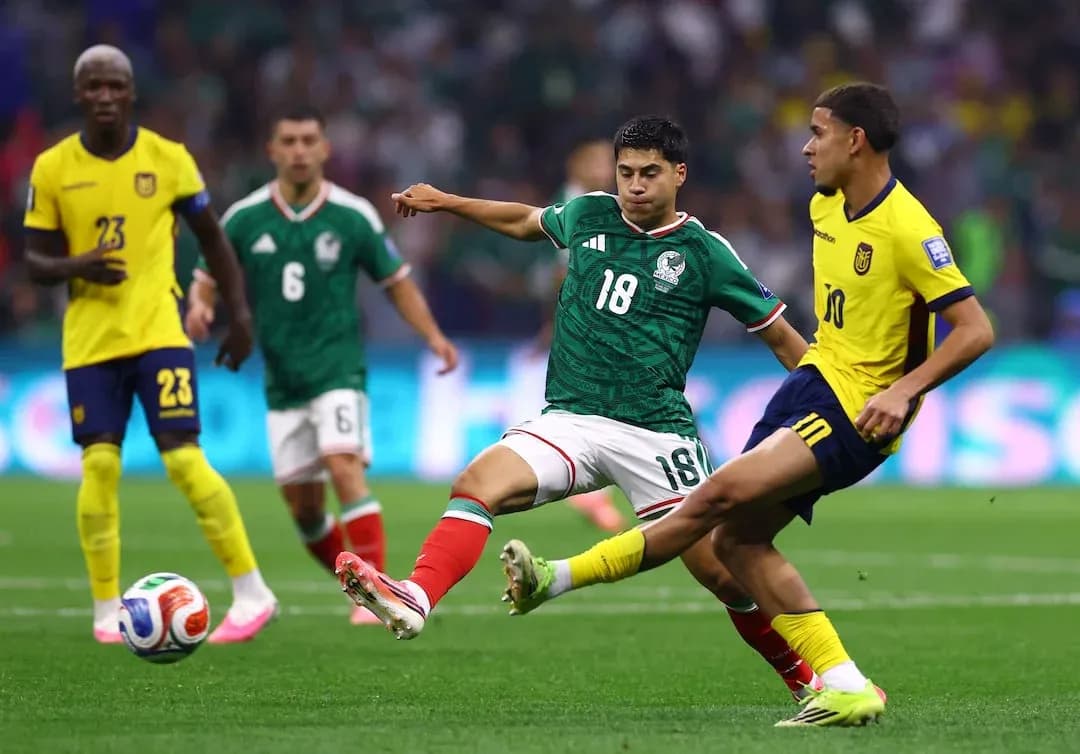
Under the Mexico City night sky at Estadio Banorte, Mexico’s 2–0 victory over Ecuador in the World Cup Round of 32 felt less like a surprise and more like the logical continuation of a campaign that has been relentlessly efficient. This was knockout football, but Mexico approached it as if it were simply the next assignment in a well‑run operation: four wins in four overall, eight goals scored in total and none conceded across the tournament so far.
I. The Big Picture – Structures and Seasonal DNA
Javier Aguirre stayed loyal to the 4‑3‑3 that has been Mexico’s primary blueprint, a shape that has underpinned three home wins from three in this World Cup run, with an average of 1.7 goals scored at home and 0.0 conceded. In this match, that structure crystallised into a compact, aggressive block: R. Rangel behind a back four of J. Sanchez, C. Montes, J. Vasquez and J. Gallardo; a midfield trio of G. Mora, E. Lira and L. Romo; and a front line of R. Alvarado, R. Jimenez and J. Quinones.
Ecuador, guided by Sebastian Beccacece, answered with their familiar 4‑4‑2, the same system they have used in three of their four World Cup fixtures. H. Galindez anchored a back line of A. Franco, J. Ordonez, W. Pacho and P. Hincapie, with a midfield band of J. Yeboah, M. Caicedo, P. Vite and N. Angulo behind the forward pairing of G. Plata and E. Valencia. If Mexico’s seasonal identity is built on control and clean sheets, Ecuador’s has been more fragile: one win, one draw and two defeats overall, with only two goals scored in total and four conceded, including three away from home.
Heading into this game, Mexico’s overall goal difference from the group stage stood at +6 (six scored, none conceded), while Ecuador’s was exactly balanced at 0 (two scored, two conceded). The knockout tie quickly tilted those narratives further apart.
II. Tactical Voids and Discipline
There were no listed absentees in the data, so both coaches had their full squads. The more telling voids were structural and psychological.
Mexico’s season‑long discipline had a hint of volatility: all four of their yellow cards in the tournament had been concentrated in the 16–30 and 61–75 minute windows, each band accounting for 50.00% of their total cautions, and they had already experienced one red card overall. Ecuador’s profile was more chaotic: yellow cards scattered across 31–45, 46–60, 61–75, 76–90 and 91–105 minutes, with each of the first four bands accounting for either 25.00% or 12.50% of their total yellows, plus a red card in the 91–105 window. This is a team that often loses composure just as matches become stretched.
On the individual level, Ecuador’s back line came into the night under a disciplinary cloud. A. Franco is the tournament’s leading yellow‑card collector with two bookings, seven fouls committed and a reputation as an aggressive duelist. P. Hincapie combines front‑foot defending with risk: one yellow, one red, 12 tackles, two blocked shots and four interceptions. They are proactive, but that proactivity easily spills into jeopardy when chasing a game.
III. Key Matchups – Hunter vs Shield, Engine Room Battles
The headline duel was always going to be Mexico’s attacking trident, with J. Quinones as the spearhead, against an Ecuador defence that has looked far more secure at home than away. Overall, Ecuador concede 1.0 goals per match, but that number jumps to 1.5 away from home, where they have lost both fixtures and failed to keep a single clean sheet. Mexico, by contrast, score 2.0 goals per game overall and an explosive 3.0 on their travels, but even at home their 1.7 average is backed by total defensive control.
Quinones, listed as a forward here but operating with the all‑action profile of a wide midfielder, has been one of the tournament’s most incisive weapons. Across the World Cup he has three goals and one assist in total, with nine shots (five on target), 106 completed passes and seven key passes, plus six successful dribbles from eight attempts. He thrives when he can isolate full‑backs and half‑spaces, which made his channel duel with Franco and the covering Pacho critical. Franco’s 96% pass accuracy and eight tackles show a defender comfortable on the ball and combative without it, but his two yellows and seven fouls committed reveal the cost of repeated exposure.
On the opposite flank, R. Alvarado has quietly become Mexico’s creative metronome. With three assists overall, 140 passes and 10 key passes, he is the tournament’s leading supplier. His duel with P. Hincapie was as much about territory as it was about tackles. Hincapie’s 47 duels and 24 won show a defender who seeks contact, yet his one red card this World Cup hints at the thin line he walks. Mexico’s wide rotations – Alvarado dropping into the half‑space, Gallardo overlapping, Romo sliding across – repeatedly tested Ecuador’s left‑side discipline.
In midfield, the engine‑room clash was defined by E. Lira and L. Romo against M. Caicedo and P. Vite. Caicedo is Ecuador’s tempo‑setter, but he was asked to both screen the back four and spring transitions. Against a Mexico side that has failed to score in 0 matches this tournament and kept four clean sheets in total, that double burden was immense. Lira and Romo, supported by the industrious G. Mora, compressed the central lanes, forcing Ecuador’s build‑up wide and away from the zones where E. Valencia and G. Plata could combine.
IV. Statistical Prognosis and Tactical Verdict
Even without explicit xG numbers, the underlying data paints a clear picture of why this tie tilted Mexico’s way and what it suggests going forward.
Mexico entered the Round of 32 with four wins from four overall, eight goals scored and zero conceded. Their biggest home win of 2–0 and biggest away win of 3–0 underline a team that can both control and punish. They have never trailed in this World Cup run and have not failed to score in any match. Their defensive line, marshalled by C. Montes – who has already blocked one shot and taken a red card in the tournament – walks a physical line, but the collective structure around him is airtight.
Ecuador, by contrast, arrived with one clean sheet in total, three matches without scoring and a pronounced away‑day problem: no goals scored away, two conceded in their heaviest away defeat of 2–0, and two away losses from two. Their disciplinary pattern – yellows scattered across the middle and late phases, plus a red in extra time – suggested that if Mexico could force them to chase, cracks would appear.
That is exactly how the night unfolded. Mexico’s early 2–0 lead by half‑time reflected their habit of starting on the front foot and turning territorial control into goals, while their ability to close out the second half without conceding was entirely in keeping with a side that has kept four clean sheets overall. Ecuador’s need to push higher only increased the exposure of Franco and Hincapie to one‑v‑one situations against Quinones and Alvarado, the very matchups that Mexico’s structure is designed to create.
Following this result, the statistical prognosis is stark. Mexico move deeper into the knockout rounds as an undefeated side with a perfect record, a balanced attack and a defence that has yet to be breached. Their 4‑3‑3, anchored by Rangel, protected by Montes and Vasquez, and animated by Quinones and Alvarado, looks built for tournament football: repeatable, resilient and ruthless.
Ecuador exit with their season‑long themes intact: solid in spells, but undermined by away‑day bluntness, disciplinary strain and a lack of cutting edge. Against a side as structurally sound as Mexico, that was never likely to be enough.
Related News
FIFA Dismisses COO Kevin Lamour After Criticizing Infantino’s World Cup Investment Plan
PSG Near €55m Deal to Sign World Cup Star Ferran Torres from Barcelona
Qualified Teams for the 2027 Women’s World Cup in Brazil: Complete List

Premier League 2026-27 Season Preview: Arsenal's Title Defense, Fresh Faces, and What Lies Ahead
Carlo Ancelotti Supports Neymar’s World Cup Selection as Brazil Legend Retires
Leandro Paredes Returns to Action Just Days After World Cup Final Controversy