
Michael O'Neill Chooses Northern Ireland Over Blackburn Rovers
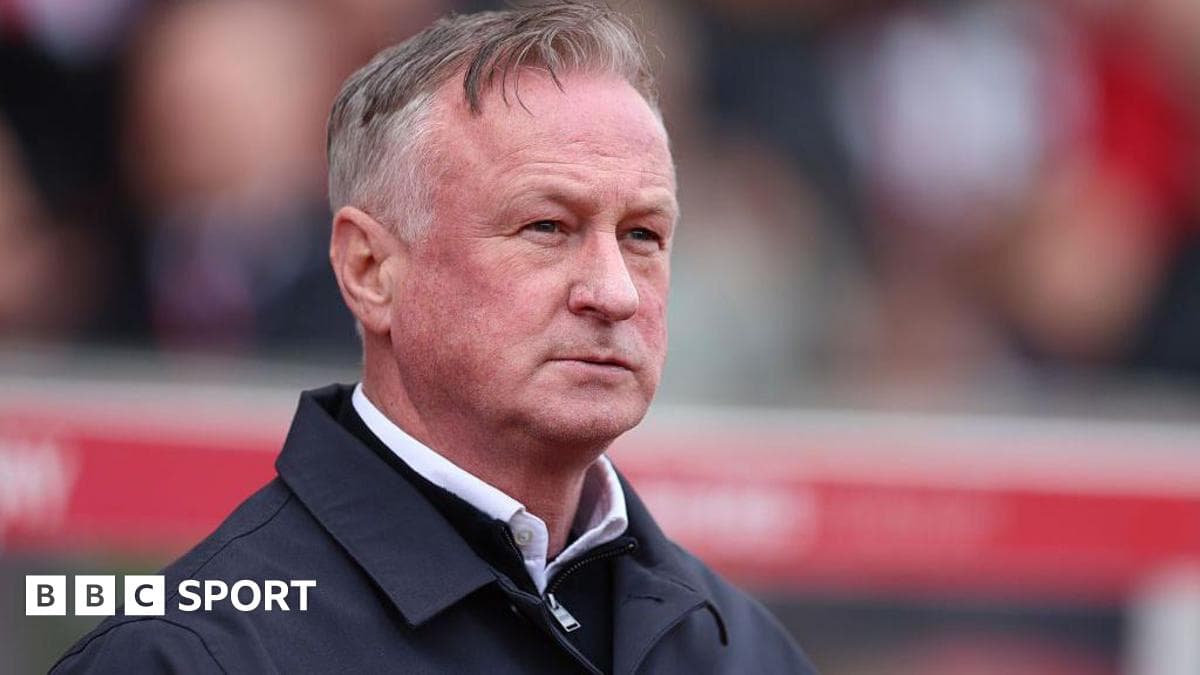
Michael O’Neill has chosen country over club. The Blackburn Rovers experiment is over; the Northern Ireland project goes on.
The 56-year-old will not take the Ewood Park job on a permanent basis after his interim spell and will instead remain as Northern Ireland head coach, doubling down on a campaign aimed squarely at Euro 2028.
Club door closes, country door widens
When O’Neill walked into Blackburn in February, it was always billed as a temporary arrangement. Interim boss until the end of the 2025-26 campaign, while still in charge of Northern Ireland. A juggling act, not a long-term blueprint.
Fifteen games later, his record reads five wins, five draws, five defeats. Enough to steady a listing ship and drag Rovers to 20th in the Championship, safely clear of relegation anxiety. Job done, in the most literal sense.
But as the weeks ticked by, O’Neill kept repeating the same line: he could not do both roles permanently. At some point, one would have to give.
That moment has arrived.
“Following discussions with the club, Michael has decided to continue his long-term commitment to his role as Northern Ireland head coach, with a focus on leading the national team towards qualification for the Uefa European Championships in 2028,” Blackburn said in a statement.
O’Neill, in turn, paid tribute to the club and its supporters, calling Blackburn “a historic football club with a proud tradition and passionate supporters” and stressing how much he had enjoyed his time there. But his conclusion was clear: his “long-term focus must remain with Northern Ireland and the journey towards the European Championship campaign ahead”.
Blackburn will now start the search for a new permanent head coach, with the club promising updates “in due course”. They at least have time on their side before the 2026-27 season.
Northern Ireland get their man – again
For the Irish FA, this is a significant win. They know exactly what they have in O’Neill. Across two spells, he has taken charge of 104 games, with 38 wins, 23 draws and 43 defeats. Those numbers only tell part of the story.
He dragged Northern Ireland to Euro 2016, their first major tournament in 30 years, and now aims to take a new-look, younger squad back to the Euros in 2028. The governing body made no attempt to hide its delight.
“We are delighted Michael has decided to stay on as Northern Ireland manager. He has built another exciting squad of players and we now look forward to building on this momentum as we plan for both the Uefa Nations League campaign this autumn and the subsequent qualifiers for Euro 2028 with Michael at the helm,” read its statement.
Supporters will feel the same. The uncertainty of March and April, when O’Neill admitted he would “return to the status quo” for the June fixtures but then conceded a decision had yet to be made, had set nerves jangling. Alarm bells were ready to ring louder with every passing week.
Instead, clarity has come quickly. O’Neill can now throw himself fully into preparations for the summer and beyond, while Blackburn can reshape their own future without a late scramble.
A young squad, a familiar builder
Just as in his first stint, O’Neill inherited a Northern Ireland side in trouble. He followed Ian Baraclough into the job and found a team short on confidence and results. They missed out on Euro 2024. They missed this year’s World Cup. Yet the trajectory feels different now.
He has reshaped the side into a more competitive, more attractive unit, built around youth and potential rather than short-term fixes.
The numbers are stark. The average age of his starting XI in the World Cup play-off defeat to Italy in March was just 22.5 – the second youngest Northern Ireland team on record since World War Two. Strip out three key absentees in Conor Bradley, Dan Ballard and Ali McCann, and the age profile barely moves. This is a squad with years ahead of it, not miles on the clock.
That, more than anything, explains why O’Neill has chosen this path. There is a ceiling to explore. A group to grow with. A second act to write.
The road to 2028 starts now
The immediate schedule is clear. Two friendlies in June – Guinea in Cadiz, France in Lyon – then the Nations League in September. Northern Ireland have been drawn into Group B2 with Hungary, Georgia and Ukraine. It is a demanding section, but also a measuring stick for where this team really stands.
With O’Neill confirmed in the dugout, there is no need for a reset, no late tactical rethink, no new voice to adjust to. The work continues, uninterrupted.
The Irish FA will also know something else: the job O’Neill leaves behind would have been far more attractive to any successor than the one he inherited in 2022. That they do not need to find that successor yet is a bonus. No upheaval, no distraction, no change of course before the Nations League begins.
Instead, Northern Ireland move into a crucial cycle with the architect of their last great adventure still in charge and a squad young enough to dream big.
He took them to one European Championship after years of careful building. The question now is simple: can Michael O’Neill do it again with a new generation, on an even bigger stage in 2028?
Related News
Carlos Alcaraz Urges an End to Matches Ending in the Early Hours
Carlos Alcaraz Criticizes Late US Open Finish After 3:30 a.m. Match
Jannik Sinner Set for ATP 500 Return in Beijing with Novak Djokovic Also Competing
Meet Iva Jovic: The American Tennis Prospect Making Waves
Flavio Cobolli Shares Insights on Practice Session with Jannik Sinner Ahead of Comeback
Till vs Romero: Fight Details, Undercard, and Viewing Info for This Weekend