
Napoli vs Bologna: Serie A Clash Ends 3–2 in Favor of Visitors
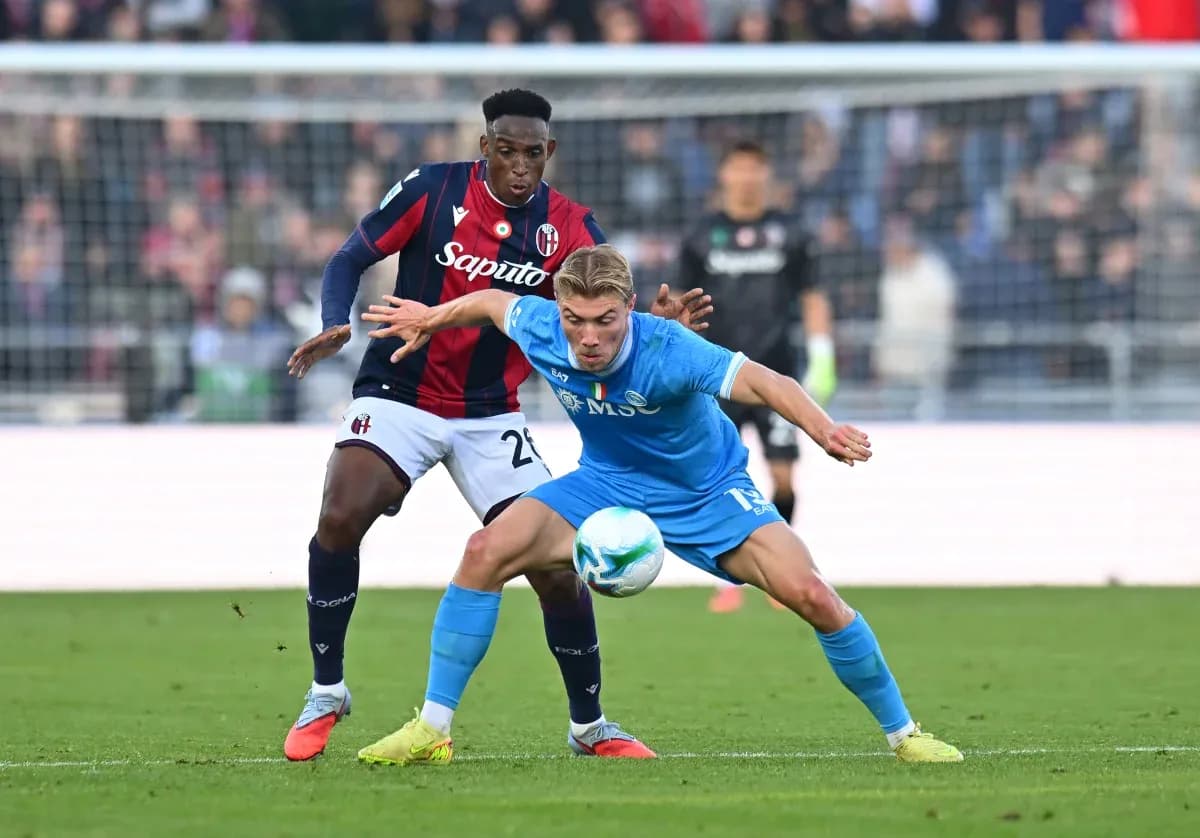
Under the lights of Stadio Diego Armando Maradona, a high‑stakes Serie A meeting between second‑placed Napoli and eighth‑placed Bologna finished 3–2 to the visitors, a result that jolts the narrative of both seasons as the regular season reaches Round 36.
Heading into this game, Napoli’s seasonal DNA was clear: a front‑foot contender with a sharp edge at home. They had taken 70 points from 36 matches, with a goal difference of 18 built on 54 goals scored and 36 conceded overall. At home they were ruthless, winning 12 of 18, scoring 32 and conceding 18, with an attacking average of 1.8 goals at home against 1.0 conceded. Bologna arrived as one of the division’s more volatile sides: eighth with 52 points, a modest overall goal difference of 2 (45 for, 43 against), but notably dangerous on their travels, where they had won 9 of 18, scoring 29 and conceding 23. In total this campaign, their attack averaged 1.3 goals per game, climbing to 1.6 away, while they allowed 1.2 overall and 1.3 on their travels.
I. The Big Picture: Systems in Collision
Antonio Conte doubled down on Napoli’s season-long identity, rolling out the familiar 3‑4‑2‑1 that has been his most used shape (21 league matches). V. Milinkovic‑Savic anchored a back three of G. Di Lorenzo, A. Rrahmani and A. Buongiorno. The wing‑to‑wing midfield band of M. Politano, S. Lobotka, S. McTominay and M. Gutierrez was tasked with both ball progression and wide protection, while Giovane and Alisson Santos floated behind the line‑leading presence of R. Hojlund.
Opposite, Vincenzo Italiano’s Bologna deviated from their usual 4‑2‑3‑1 (used 27 times this season) to a more assertive 4‑3‑3, a clear statement that they did not intend merely to absorb. M. Pessina started in goal behind a back four of Joao Mario, E. Fauske Helland, J. Lucumi and J. Miranda. The midfield triangle of T. Pobega, R. Freuler and L. Ferguson offered balance between pressing and circulation, while a front three of R. Orsolini, S. Castro and F. Bernardeschi promised width, shooting volume and set‑piece threat.
The match narrative bore out those structural choices: Napoli’s 3‑4‑2‑1 sought to pin Bologna back with sustained pressure and half‑space occupation, but Bologna’s 4‑3‑3 repeatedly found ways to punch through transitions and exploit the channels around Napoli’s outside centre‑backs, turning a 2–1 half‑time lead into a 3–2 away statement.
II. Tactical Voids: Absences and Discipline
Both managers had to navigate conspicuous absences that shaped the tactical landscape. Napoli were without three headline attacking pieces: David Neres (ankle injury), K. De Bruyne (eye injury) and R. Lukaku (hip injury). De Bruyne’s absence was the most structurally significant; without his vertical passing and creative gravity between the lines, Napoli leaned more heavily on McTominay’s late runs and Politano’s crossing and combination play. The front three that started – Giovane, Alisson Santos and Hojlund – had to self‑create more, with fewer pre‑packaged patterns delivered from an elite playmaker.
Bologna’s missing quartet – K. Bonifazi (inactive), N. Cambiaghi (muscle injury), N. Casale (calf injury) and M. Vitik (ankle injury) – thinned Italiano’s defensive rotation and removed a key disruptive runner in Cambiaghi. Without his pressing and one‑v‑one aggression, the visitors relied more on the positional intelligence of Ferguson and the work rate of Pobega to contest Napoli’s build‑up.
From a disciplinary standpoint, Napoli came into the fixture as a side that tends to see yellow in waves after the interval: 31.91% of their yellow cards arrive between 61–75 minutes, with another 17.02% between 46–60. Crucially, both of their league red cards this season had come in the 76–90 window, underlining how emotional and stretched their endings can become. Bologna’s profile is even more combustible late on: 27.27% of their yellows land between 61–75 minutes and 25.76% from 76–90, with red cards scattered across 16–30, 46–60, 61–75, 76–90 and 91–105. This match, a five‑goal thriller, fitted the picture of two sides who live dangerously in the game’s final third, even when no dismissal ultimately materialises.
III. Key Matchups: Hunter vs Shield, Engine Room Wars
The headline duel was always going to be R. Hojlund against Bologna’s defensive block. In total this campaign, Hojlund had produced 10 league goals and 4 assists in 31 appearances, supported by 42 shots (22 on target). His profile is built on direct running, penalty‑box occupation and a willingness to duel – 299 total duels, 107 won – rather than dropping deep as a false nine. Against a Bologna side that concedes 1.3 goals on their travels, his movement between Lucumi and E. Fauske Helland was central to Napoli’s plan to break a back line that, while resilient, has not been watertight away.
Behind him, the “Engine Room” matchup pitted McTominay and Lobotka against Freuler and Ferguson. McTominay arrived with 9 goals and 3 assists, a remarkable return for a midfielder, underpinned by 69 shots and a towering 2619 minutes of work. His late surges from midfield and aerial presence made him both a second striker and a box‑to‑box disruptor. Lobotka, less visible in the scoring charts, was the metronome charged with evading Bologna’s first press.
On the other side, Freuler’s screening and Ferguson’s two‑way running formed Bologna’s shield and launchpad. Their task was to prevent McTominay from timing those blind‑side runs and to deny Politano the inside lane where he has generated 5 assists and 36 key passes. Politano’s duel with Joao Mario down Napoli’s right was particularly rich: a classic winger‑full‑back battle in which Politano’s 66 dribble attempts and 903 completed passes this season met Joao Mario’s need to both overlap and stay compact.
Further forward, Riccardo Orsolini carried Bologna’s most obvious scoring threat from wide. With 9 goals and 1 assist, 64 shots (30 on target) and 4 penalties scored but 2 missed, he arrived as both match‑winner and high‑variance finisher. Up against Buongiorno and Di Lorenzo when he drifted inside, his left‑footed threat was a constant test of Napoli’s ability to defend the half‑spaces without over‑committing.
IV. Statistical Prognosis and xG Logic
Even without explicit xG data, the statistical contours of this fixture pointed to a high‑event contest. Napoli’s home average of 1.8 goals for and 1.0 against, combined with Bologna’s 1.6 scored and 1.3 conceded on their travels, sketched a likely combined expected goals environment comfortably above 2.5. Napoli’s 13 clean sheets overall (6 at home) suggested they are capable of control, but Bologna’s 29 away goals and 9 away wins indicated they rarely die wondering.
Following this result, the 3–2 scoreline feels like the natural expression of those underlying numbers: Napoli’s powerful but occasionally exposed 3‑4‑2‑1 against a Bologna side whose away attacking metrics and tactical bravery in a 4‑3‑3 made them perfectly suited to turn a contender’s fortress into a battleground. The story of the night in Naples was not an upset out of nowhere, but the collision of two statistical profiles that always hinted at chaos.
Related News

David Alaba Poised for Surprising Move to Udinese in Serie A
Milan Dominates Lecce: Tactical Analysis of a 3-0 Victory

Juventus Defeats Atalanta 2-0: Tactical Insights and Key Matchups
Frosinone's Tactical Mastery Shines in 2–0 Victory Over Como

Fiorentina and Napoli Share Points in Serie A Clash
AS Roma vs Inter: Tactical Insights from Serie A Clash