
Netherlands 2-2 Japan: Match Report and Tactical Analysis
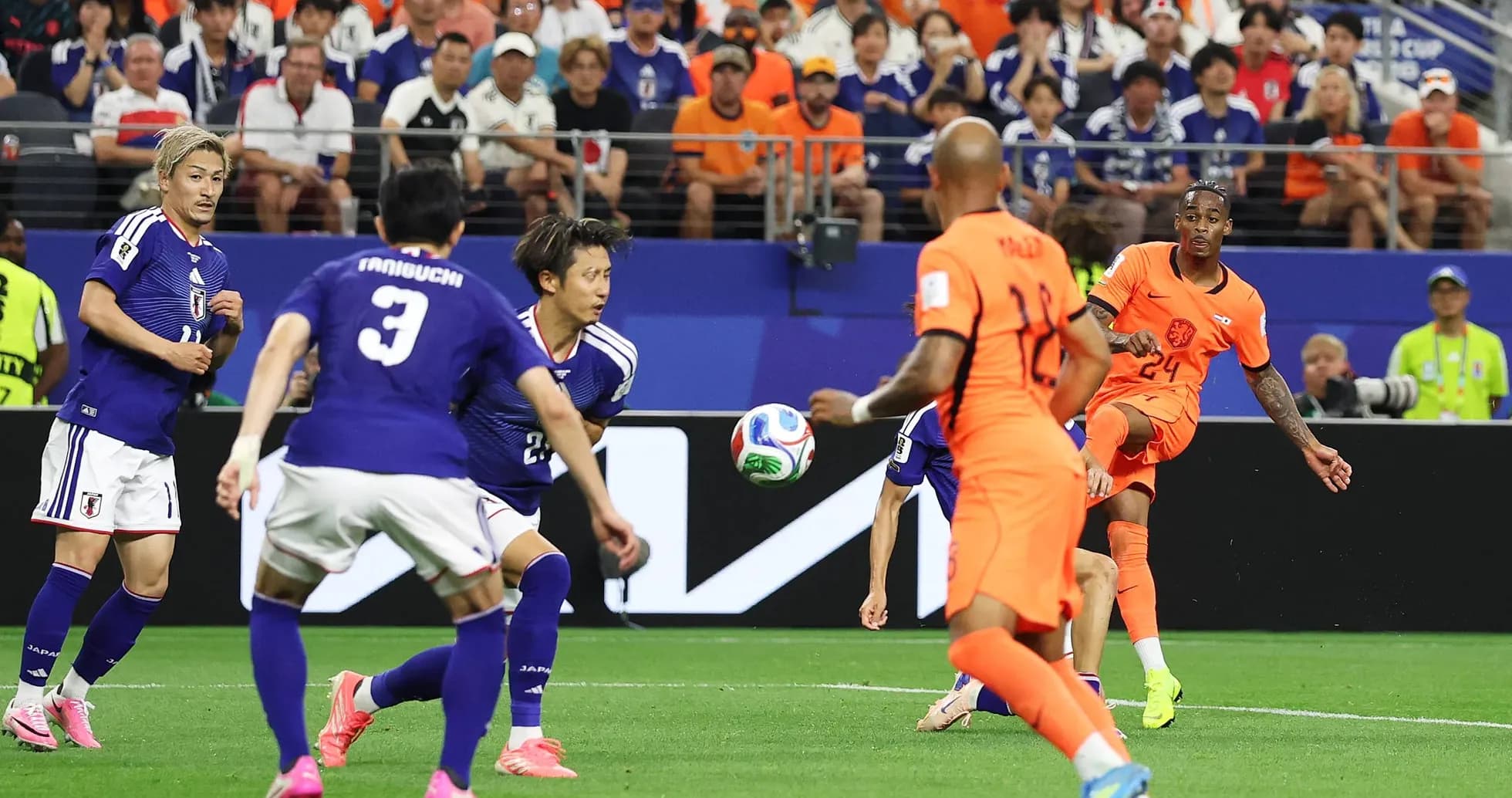
Netherlands 2-2 Japan at AT&T Stadium leaves Group F finely poised, with both sides moving to 2 points after back-to-back draws and maintaining their Round of 32 positions. The Dutch stay second on goal difference, while Japan remain top, each now on 4 goals for and 4 against, having again let a lead slip late in the gameweek.
Match Report
The game opened in cagey fashion, with neither side able to convert territorial phases into clear chances before the break. The deadlock was finally broken early in the second half. In the 51st minute, Netherlands goal — V. van Dijk (assisted by R. Gravenberch) — as the captain attacked a delivery and guided his header beyond Zion Suzuki to make it 1-0 Netherlands.
Japan responded quickly. In the 57th minute, Japan goal — K. Nakamura (assisted by T. Kubo) — after Kubo slipped a clever pass into space on the left, allowing Nakamura to cut inside and finish low, levelling at 1-1.
On 61 minutes, the first booking arrived: 61' C. Summerville (Netherlands) — yellow card (Tripping) — after a late challenge halted a Japanese transition down the flank.
Just three minutes later, the winger made amends. In the 64th minute, Netherlands goal — C. Summerville (assisted by R. Gravenberch) — as Gravenberch again provided the creative spark, threading a pass into the right channel for Summerville to step inside and fire across the keeper, restoring the Dutch lead at 2-1 Netherlands.
Both coaches then turned to their benches. In the 66th minute, J. Ito replaced D. Maeda (Japan), adding fresh pace to Japan’s right side. Four minutes later, Netherlands made a triple attacking reshuffle in the 70th minute: M. Depay replaced D. Malen (Netherlands) to lead the line, T. Koopmeiners replaced C. Summerville (Netherlands) to stabilise midfield, and Q. Timber replaced T. Reijnders (Netherlands) to add energy in the centre.
Japan answered with a triple change of their own in the 75th minute to chase the game: T. Tomiyasu replaced T. Watanabe (Japan) to refresh the back line, K. Ogawa replaced T. Kubo (Japan) as a more direct attacking presence, and Y. Sugawara replaced R. Doan (Japan) to provide width and delivery from the right.
As the Dutch sought to close the game down, they introduced defensive reinforcement in the 81st minute: N. Ake replaced R. Gravenberch (Netherlands), removing their most creative midfielder and signalling a more conservative approach.
Frustration began to creep in. In the 83rd minute, M. Depay (Netherlands) — yellow card (Roughing) — went into the book after a physical tussle while trying to hold the ball up.
Japan kept pushing and made another attacking change in the 84th minute: K. Shiogai replaced A. Ueda (Japan), adding fresh legs up front. Netherlands responded a minute later, in the 85th minute, when B. Brobbey replaced C. Gakpo (Netherlands), aiming to stretch Japan’s back line on the counter.
The late pressure finally told. In the 88th minute, Japan goal — D. Kamada (assisted by K. Ogawa) — as Ogawa, introduced from the bench, received the ball between the lines and slipped Kamada into the box, where the midfielder finished calmly to make it 2-2 Netherlands and punish the Dutch for retreating too deep.
There was still time for more disciplinary action. At 90+1', M. van de Ven (Netherlands) — yellow card (Holding) — was booked after hauling back a Japanese runner to prevent a potential break, encapsulating the Netherlands’ increasingly reactive stance in the closing stages.
Fixture Statistics & Tactical Audit
- xG: Netherlands 0.79 vs Japan 0.54
- Possession: Netherlands 60% vs Japan 40%
- Shots on Target: Netherlands 6 vs Japan 3
- Goalkeeper Saves: Netherlands 1 vs Japan 4
- Blocked Shots: Netherlands 1 vs Japan 1
The underlying numbers suggest Netherlands were marginally more threatening, with a higher xG (0.79 vs 0.54) and double the shots on target (6 vs 3), reflecting their stronger control of territory and possession (60% vs 40%). However, the low combined xG underlines that this was not an especially high-quality chance game; both sides relied on moments rather than sustained penetration. Japan’s goalkeeper had to make more saves (4 vs 1), which supports the view that the Dutch were more frequently in shooting positions, but Japan’s efficiency in turning limited shots on target into two goals balanced the contest. Given the late equaliser and the modest xG gap, a 2-2 scoreline slightly flatters the finishing but is broadly in line with a match where Netherlands controlled phases without fully turning that control into clear-cut chances, and Japan maximised their few openings.
Standings Update & Seasonal Impact
Both teams came into this Group F fixture with 1 point, 2 goals scored and 2 conceded, and they leave Arlington with identical records strengthened but not transformed. Netherlands move from 1 to 2 points, with their goals for rising from 2 to 4 and goals against from 2 to 4, keeping their goal difference at 0. They remain 2nd in the group and still in the Round of 32 zone, but consecutive draws mean qualification is not yet secured and leaves little margin for error in their final group match.
Japan also climb from 1 to 2 points, with goals for increasing from 2 to 4 and goals against from 2 to 4, likewise holding a goal difference of 0. They stay 1st in Group F thanks to tie-breakers, still occupying a Round of 32 position but missing the opportunity to create a clear gap at the top. With both sides now level on points and goal difference, the final round will likely hinge on fine margins, with head-to-head and goal tallies looming large.
Lineups & Personnel
Netherlands Starting XI
- GK: Bart Verbruggen
- DF: Denzel Dumfries, Jan Paul van Hecke, Virgil van Dijk, Micky van de Ven
- MF: Ryan Gravenberch, Frenkie de Jong, Tijjani Reijnders
- FW: Crysencio Summerville, Donyell Malen, Cody Gakpo
Japan Starting XI
- GK: Zion Suzuki
- DF: Tsuyoshi Watanabe, Shogo Taniguchi, Hiroki Itō
- MF: Ritsu Doan, Kaishu Sano, Daichi Kamada, Keito Nakamura
- FW: Takefusa Kubo, Daizen Maeda, Ayase Ueda
Post-Match Verdict
Netherlands produced a controlled but not ruthless performance, dominating possession (60%) and leading the xG (0.79 vs 0.54) without turning that superiority into a secure result. Their attacking structure functioned best while Ryan Gravenberch was on the pitch — he registered both assists and was central to progression — but the decision to withdraw him for extra defensive security at 2-1 coincided with a deeper block that invited Japan forward. The late concession, despite allowing only 3 shots on target, underlines a vulnerability in game management rather than volume of chances conceded.
Japan’s display was compact and opportunistic. With fewer shots on target (3 vs 6) and less of the ball (40%), they relied on sharp combinations through players like Takefusa Kubo and Daichi Kamada and on the impact of substitutes such as K. Ogawa, who assisted the 88th-minute equaliser. Their ability to score twice from modest xG (0.54) reflects clinical finishing in key moments, while Zion Suzuki’s 4 saves kept them in the contest during Dutch spells of pressure. Tactically, a disciplined mid-block and well-timed attacking changes allowed Japan to exploit Netherlands’ late conservatism, earning a draw that, while slightly against the balance of play, was secured through clear strategic choices and efficient execution.
Related News
Brazil's First Post-World Cup Friendly: What Should the Lineup Be?
Harry Kane Calls England’s World Cup Exit to Argentina His Deepest International Pain
Estevao Opens Up on World Cup Heartbreak and His Unexpected Return to Brazil Under Ancelotti

Thomas Tuchel Shares Unusual Regret After England's 10-Man World Cup Victory Over Mexico

South Korea Names Robert Moreno as Interim Coach After World Cup Exit

Jude Bellingham Returns to Form at Real Madrid Following World Cup Success