
Neymar and Pulisic Face Calf Injuries at World Cup
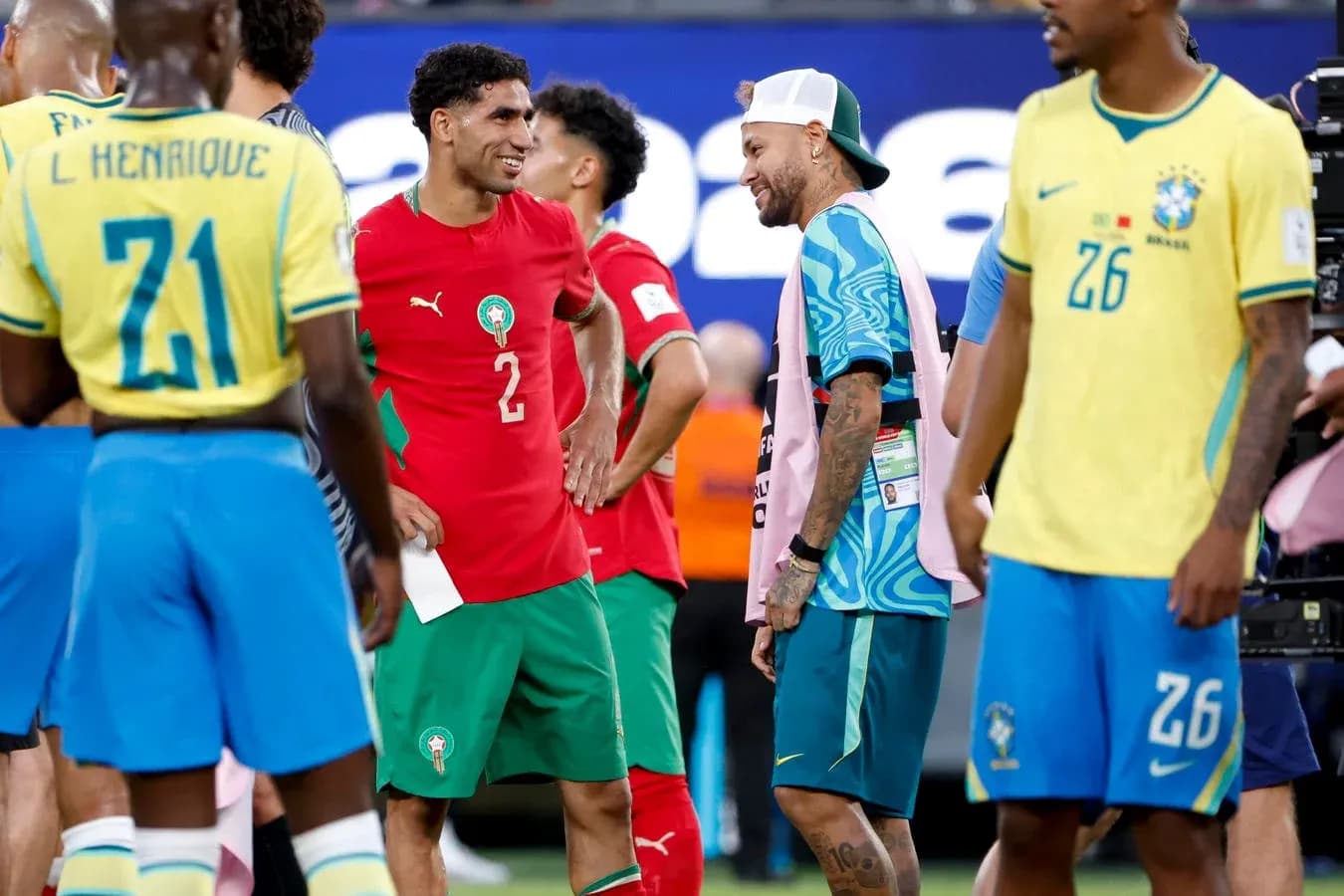
The 2026 FIFA World Cup has barely settled into its rhythm, and already two of its biggest attacking names are moving gingerly on the fringes rather than dictating games under the lights.
Brazil’s Neymar and the United States’ Christian Pulisic are both wrestling with calf injuries that threaten to reshape their nations’ group-stage plans — and possibly the tournament’s wider storyline.
Neymar Stuck On The Sidelines
For Neymar, this World Cup was supposed to be a return, a late-career encore after the cruel tear of his left ACL and meniscus against Uruguay back on October 17, 2023. Instead, his latest setback has left him as a spectator.
The 34-year-old picked up a right calf injury on May 17 while playing for Santos and has now been out for a month. He has flirted with a return: individual work on the sideline on Tuesday, a brief spell with teammates on Wednesday. But that is as close as he has come.
He has yet to kick a ball in this World Cup and has already been ruled out of Brazil’s next Group C match against Haiti.
Inside the Brazil camp, the conversation has shifted from “when” he plays in the group to whether he plays at all before the knockout rounds. There is a clear temptation to protect him, to gamble on getting him fully ready for the business end of the tournament. That, of course, assumes Brazil get there.
The five-time champions opened with a 1-1 draw against Morocco, a result that leaves little margin for error with Haiti up next on Friday and Scotland to come on June 24. Without Neymar, Brazil lack their most experienced attacking reference point, and the longer he stays out, the louder the questions will grow about whether his body can still keep pace with his talent.
Pulisic’s Setback Jolts U.S. Momentum
On the other side of the draw, the United States are dealing with a more recent, but no less worrying, blow.
Christian Pulisic, 27 and very much the face of this U.S. generation, injured his left calf in training last week. He then aggravated the problem in the World Cup opener, a statement 4-1 win over Paraguay that should have been a perfect launchpad for the Americans.
Instead, it came with a grim twist. Pulisic was forced off by halftime, his night cut short just as the U.S. attack was beginning to purr.
His status for Friday’s Group D clash with Australia remains unclear. The U.S. coaching staff must now juggle risk and reward: push their talisman back quickly to maintain momentum, or hold him back and hope the rest of the squad can carry the load in the short term.
What They’re Dealing With: Calf Strains And Timelines
Strip away the star power and both players are dealing with something brutally simple: calf strains, the kind of injury that can turn a sprint into a season-defining problem.
A calf strain — a pulled calf muscle — occurs when at least one of the calf muscles or its tendons is overstretched or torn. In football, where players explode from standing starts, chase lost causes, and change direction at full tilt, it is a frequent enemy.
The severity of these strains is typically broken down into three degrees:
- First-degree (mild): Less than five percent of the muscle mass is affected. Players can often return within one to three weeks, especially when a major tournament is on the line.
- Second-degree (moderate): A larger portion of the muscle is damaged but not completely torn. Neymar reportedly falls into this category. A full return usually takes roughly three to six weeks, two to three times longer than a mild strain.
- Third-degree (severe): A complete tear of the muscle or the muscle-tendon unit. This is a months-long problem, the kind of injury that can wipe out a season.
Neymar’s reported second-degree strain explains Brazil’s caution. Rush a moderate calf strain and it can quickly become something far worse. For Pulisic, the exact grading has not been made clear, leaving the U.S. with more questions than answers about how soon they can lean on him again — and how hard.
Treatment, for now, is conservative: rest, ice, compression, elevation. No surgery, no dramatic interventions, just the slow, methodical process of letting tissue heal while a nation waits.
World Cup Stakes, Fragile Calves
The backdrop to all this is unforgiving. Brazil are chasing a return to the summit, haunted by recent near-misses and early exits. The United States are trying to turn promise into genuine threat on home soil.
Both projects lean heavily on one man’s left or right calf.
Neymar’s absence strips Brazil of their most seasoned creator and finisher, the player who has carried their attacking burden for a decade. Pulisic’s uncertainty threatens to blunt the edge of a U.S. side that just sent a message against Paraguay.
The World Cup rarely pauses for injured stars. Brazil and the U.S. will move on with or without them. The real question now is simple and brutal: when the knockout games arrive and the margins shrink, will Neymar and Pulisic be fully fit — or still chasing their own bodies as much as their opponents?
Related News

Anthony Joshua Names Murat Gassiev as Next Opponent if He Defeats Tyson Fury

UFC 332: Start Time and Fight Highlights for Natalia Silva vs. Wang Cong
Court McGee Opens Up About Choosing UFC 332 as His Final MMA Fight
WBC Orders Lightweight Title Unification: William Zepeda vs Jadier Herrera

BCCI Pension List: Monthly Payments to Retired Indian Cricketers in 2025

Why Fury vs Joshua Is Set for Cardiff, and Dua Lipa’s Unexpected Role