
Norway's World Cup Return: A Tactical Overview
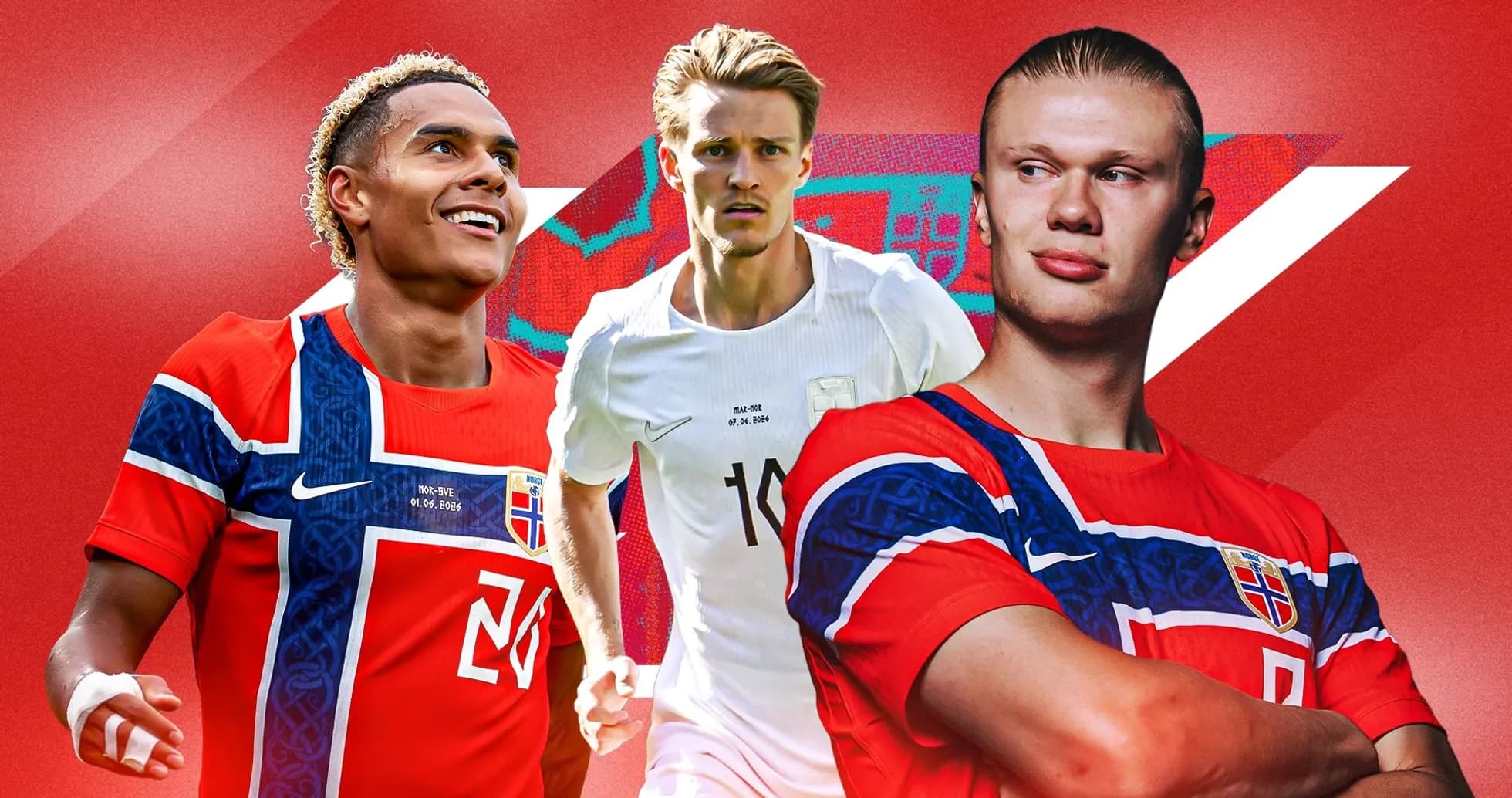
Erling Haaland will draw the cameras, the headlines and most of the defensive attention in North America. Norway, though, are arriving at their first World Cup in 28 years with a far more intricate plan than simply lumping the ball towards the most feared No.9 in the game.
This is a squad built to feed him relentlessly from every angle. And sometimes from some very unexpected ones.
Wing craft and wide chaos
On paper, Norway’s wingers look conventional enough. On the pitch, they are anything but.
Antonio Nusa is the name that jumps off the teamsheet on the left. The RB Leipzig livewire, still only 21, doesn’t just beat full-backs – he slips through them. Six goal contributions in six qualifying games tell part of the story; the way he shredded Italy tells the rest. A goal and an assist in a 3-0 win, then another contribution in a 4-1 demolition in the return fixture. When he squares up his marker, the whole stadium leans forward.
Behind him waits Andreas Schjelderup, another young left-sided talent with a very different rhythm. The 22-year-old arrives off a storming second half of the season under Jose Mourinho at Benfica: 10 goals and assists combined in just 14 league matches, plus a Champions League brace against Real Madrid in January. He is not yet inked in as a starter, but everything about his trajectory screams future superstar.
The right flank is where Solbakken rips up the template.
Alexander Sorloth, a 6'5" centre-forward by trade, starts wide for his country. It sounds awkward. It works. On the teamsheet he’s a winger; in possession he slides in next to Haaland, turning Norway’s front line into a two-man battering ram. Eight goal contributions in eight qualifying games underline how comfortable he is in that hybrid role.
There is finesse available on that side too. Oscar Bobb, now at Fulham, offers a more traditional wide option, even if his start at Craven Cottage has been slow. Jens Petter Hauge has forced his way back into the picture as well. He played no part in qualifying, yet his form for Bodo/Glimt – including in their eye-catching Champions League wins over Man City and Inter – has dragged him back into the national set-up.
Norway’s wide players stretch the pitch. The real damage, though, often comes from deeper.
Odegaard, the conductor
In the middle of it all stands Martin Odegaard, the man charged with stitching Haaland, the wingers and the full-backs into one coherent storm.
Arsenal’s captain can divide opinion at club level. Some see the elegance and vision; others see games that drift by him. For Norway, there is far less debate. He is their reference point, their tempo-setter, their risk-taker between the lines.
Even in an injury-hit campaign in which he missed three of eight qualifiers, Odegaard still produced seven assists – the highest total of any player in Europe’s qualifying programme, including a hat-trick of assists in a single game against Israel. When he pulls the strings in national colours, Norway look like a different side.
He is flanked by serious industry and experience. Sander Berge, now at Fulham, patrols the base of midfield, a tall, composed shield who tidies up and starts attacks. Alongside him, Benfica’s Fredrik Aursnes offers the legs and intelligence of a modern No.8, forever arriving in the right pockets.
Aursnes’ story adds another layer to this team’s narrative. At 30, he had walked away from international football two years ago, saying he wanted “more time and freedom to prioritise other things in my life besides football”. Then came the U-turn in February. Now, without playing a minute in qualifying, he looks set to start at the World Cup. It is a rare second act at this level – and one Norway are counting on.
Behind that first-choice trio, Solbakken can still reach for quality. Patrick Berg, the composed Bodo/Glimt captain, offers control and calm. Kristian Thorstvedt and Morten Thorsby, both based in Italy, bring energy, pressing and tactical discipline. It is not a midfield built on superstardom, but it is deep, varied and proven in European competition.
The plan is simple enough: Odegaard feeds the flanks, links with the inverted Sorloth, and finds Haaland early and often. The execution, when it clicks, is anything but simple to stop.
Life after Haaland? Norway have a plan
Haaland will start every game if fitness allows. Solbakken will not want to take him off for a single minute. Yet if the unthinkable happens, Norway are not empty-handed.
Sorloth is the obvious next man up through the middle. His record for his country is solid, and he heads to the tournament after a 20-goal season with Atletico Madrid, achieved without being a guaranteed starter. His manager knows exactly what he brings. Speaking to FIFA, Solbakken described him as a player who adds physicality, can operate in several attacking roles, threatens both as a scorer and creator, and – crucially – works tirelessly for the team, even in positions he “maybe doesn’t prefer”.
Jorgen Strand Larsen of Crystal Palace is another genuine option, and not just as an emergency pick. The 26-year-old has impressed since his arrival in the Premier League in 2024 and tuned up for the World Cup with a brace in a friendly against Sweden. He also scored against Italy in qualifying. With Sorloth often stationed wide, Strand Larsen could see plenty of minutes regardless of Haaland’s status.
Norway once relied on a single star to carry them. This time, they have built a forward unit with layers and contingencies.
The secret weapon: a right-back on the rampage
The real twist in Solbakken’s blueprint comes from right-back.
Norway’s “unconventional” wide play, the decision to push a towering striker like Sorloth out to the flank, all serves one purpose: to unleash Julian Ryerson.
When Norway attack, Sorloth drifts inside, effectively becoming a second centre-forward. That movement clears the lane for the Borussia Dortmund defender to thunder up the right. From there, Ryerson turns into a playmaker in full flight.
His numbers in Germany last season were outrageous for a full-back: 18 Bundesliga assists in 2025-26. Not a misprint. Eighteen. Many of those came from the exact scenario Norway now look to recreate – Ryerson charging into crossing positions with multiple big targets waiting in the box, Haaland and Sorloth among them.
He is just as dangerous when the ball is still. Corners, free-kicks, wide set-pieces – Ryerson’s delivery has become a weapon in its own right, with a significant portion of those assists coming from dead-ball situations. Opponents who pour all their attention into Haaland risk being undone by the man supplying him.
In a group as unforgiving as this one, those details matter.
A nation finally back on the big stage
Norway return to the World Cup for the first time since 1998, and they walk straight into the so-called “Group of Death” with France, Senegal and Iraq. There is romance in their comeback, but no illusion about the scale of the task.
Solbakken has felt the weight of that wait. He remembers the last time they were here. He has seen what it means to a country that has spent every tournament since watching others live the moments they craved. When qualification was sealed, 50,000 fans turned out on a Monday night in minus four degrees to greet the team. That kind of cold only bites if you are standing still. Norway, finally, are moving again.
The coach refuses to dress them up as contenders for the trophy. He does not see Norway as dark horses for the entire tournament, but he does believe they can bloody noses. On their day, he insists, they can topple stronger opponents. The group, he knows, will be tight. Organisation and match-winners will decide who squeezes through.
He wants this World Cup to showcase a new Norwegian identity: a more attacking side, packed with strong individuals willing to run for each other. A team that uses Haaland’s goals as a foundation, not a crutch.
The dream scenario? Solbakken is keeping that to himself. The rest of the world will soon find out whether Norway’s mix of a generational striker, a gifted creator, a marauding right-back and a hungry supporting cast is enough to turn a long-awaited return into something far more disruptive.
Related News
Anthony Joshua Names Murat Gassiev as Next Opponent if He Defeats Tyson Fury

UFC 332: Start Time and Fight Highlights for Natalia Silva vs. Wang Cong
Court McGee Opens Up About Choosing UFC 332 as His Final MMA Fight
WBC Orders Lightweight Title Unification: William Zepeda vs Jadier Herrera

BCCI Pension List: Monthly Payments to Retired Indian Cricketers in 2025

Why Fury vs Joshua Is Set for Cardiff, and Dua Lipa’s Unexpected Role