
Orlando Pride Triumphs Over Houston Dash in NWSL Showdown
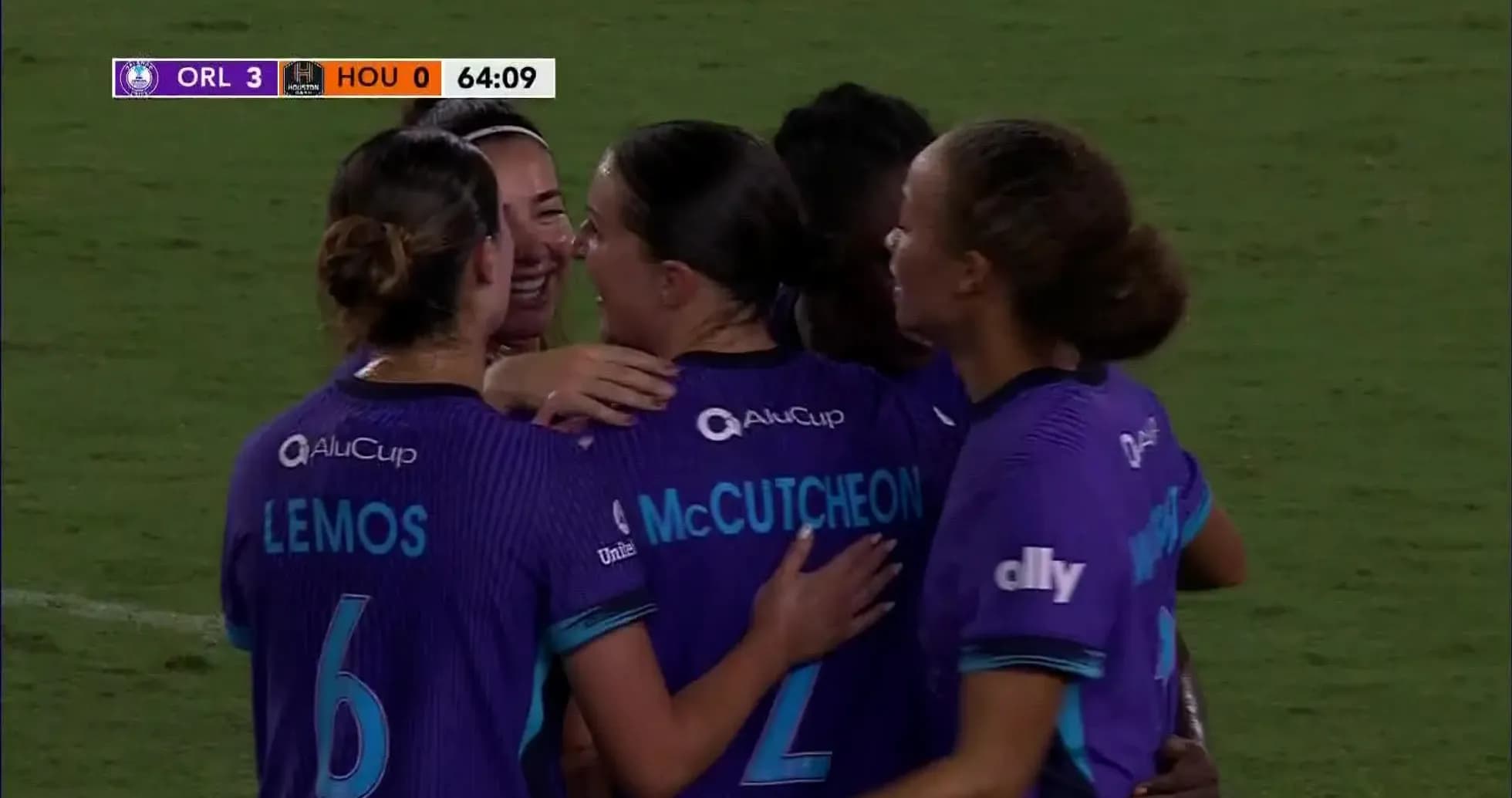
Under the Orlando lights at Inter&Co Stadium, this Group Stage meeting in the NWSL Women felt like a mini‑final between two sides living on the same fault line of the table. Orlando Pride W came in 11th with 29 points and a goal difference of -5, Houston Dash W 12th with 26 points and a goal difference of -4. Both had played 23 matches, both had scored 29 goals overall; the difference was in how they lived with their flaws.
Orlando’s 3–1 win here was less a surprise than a crystallisation of their seasonal DNA. At home they have been a different animal: 6 wins from 12, with 19 goals scored and 16 conceded. The 4-4-2 Yolanda Thomas chose – C. Morche behind a back four of H. Mace, H. Anderson, C. Dyke and O. Hernandez, a hard‑working midfield line with S. Yates, Angelina, A. Lemos and H. McCutcheon, and a front two of L. Ovalle and the league’s most devastating runner, B. Banda – was a statement of intent. Orlando’s season-long profile says they average 1.6 goals at home and concede 1.3; this game followed that attacking script, but with a sharper edge in both boxes.
Across from them, Fabrice Gautrat’s Houston arrived in their more conservative guise. On their travels they have been fragile: just 2 wins from 12 away matches, scoring 10 and conceding 20, for an away average of 0.8 goals for and 1.7 against. The 4-2-3-1 here – J. Campbell in goal; a back four of C. Hardin, L. Klenke, N. M. Bain and Avery Patterson; a double pivot of D. Colaprico and M. Graham; an advanced trio of M. Ivanovic, K. Rader and P. K. Nielsen behind lone forward K. Faasse – was designed to stabilise the centre and spring transitions through Rader, their 8-goal top scorer and creative hub.
The tactical voids for both sides were less about absentees – no formal missing list was recorded – and more about discipline and emotional control. Orlando’s season has been coloured by their relationship with risk. They draw few matches (only 2 overall), live in streaks, and their card profile shows a real edge in the second half: 25% of their yellows come between 61–75 minutes and 21.43% between 76–90, plus a solitary red in the 61–75 window. Angelina embodies that knife-edge. She carries a red card in the league already, alongside 2 yellows, and her role as a central midfielder in this 4‑4‑2 demands she walk the line between bite and recklessness. Thomas will accept the occasional suspension because her aggression helps Orlando compress the pitch and feed transitions to Banda.
Houston’s disciplinary picture is different but equally telling. Patterson has 6 yellow cards in the league, plus heavy defensive numbers: 44 tackles, 6 successful blocks and 24 interceptions. She is both shield and risk point on the right side of the back four. Alongside her, Colaprico adds 4 yellows of her own, 32 tackles and 10 blocks. Houston’s yellow-card distribution spikes early and late – 19.35% of their yellows in both the 16–30 and 76–90 minute windows – a sign of a team that tackles to establish control, then again when chasing games.
The key matchup in this fixture was always going to be “Hunter vs Shield”: B. Banda against a back line anchored by Patterson and N. M. Bain. Banda’s league numbers are brutal: 12 goals and 1 assist in 19 appearances, from 53 shots with 30 on target. She wins 60 of 138 duels, draws 29 fouls and has attempted 39 dribbles, with 16 successful. Orlando’s overall scoring average of 1.3 goals per game is dragged upward by her presence; she is the vertical threat that turns hopeful clearances into attacks. Against a Houston away defence conceding 1.7 goals per match, and one that has already suffered a 3-0 defeat as its heaviest away loss, the structural mismatch was obvious. Orlando’s biggest home win this season is 3-0; Houston’s worst away day is losing 3-0. The 3-1 scoreline here sat neatly between those poles.
On the other side of the chessboard, the “Engine Room” duel pitted Orlando’s double axis of Angelina and A. Lemos against Houston’s Colaprico and M. Graham, with K. Rader floating ahead. Rader’s 8 goals and 1 assist, 31 shots (20 on target) and 24 key passes make her the Dash’s most dangerous all‑phase player. She is also combative, with 25 tackles and 7 interceptions, and wins 62 of 131 duels. Houston’s whole attacking structure away from home – 0.8 goals per away match – relies on her finding pockets between the lines. But in a 4‑4‑2, Orlando can clamp those spaces by staggering Angelina and Lemos, using one to press Colaprico’s first pass and the other to screen Rader’s receiving lanes.
Penalty narratives also shape the psychological terrain. Orlando have earned 4 penalties overall but scored only 2 of them, missing 2 – a 50.00% conversion rate that underlines a vulnerability from the spot. Banda, despite winning 1 penalty in the league, has yet to score one and has not missed either, suggesting others have carried and squandered that burden. Houston, by contrast, have taken 5 penalties, scored 4 and missed just 1, for an 80.00% conversion rate. Rader has converted 2 without a miss. In a tight contest, Houston could lean on that relative reliability, but once Orlando established a 2-0 half‑time lead here, the Dash’s penalty edge became largely theoretical.
Statistically, the prognosis before kick-off would have leaned towards a marginal Orlando advantage: stronger at home than Houston are away, more clean sheets overall (7 to Houston’s 5), and fewer failures to score (5 to Houston’s 8). Their overall goal difference of -5 (29 for, 34 against) is slightly worse than Houston’s -4 (29 for, 33 against), but that is skewed by some heavy away defeats; at home, Orlando’s +3 differential (19 scored, 16 conceded) contrasts sharply with Houston’s -10 away (10 scored, 20 conceded).
Overlay those numbers on the tactical templates we saw – Orlando’s direct, Banda‑centric 4‑4‑2 versus Houston’s more cautious 4‑2‑3‑1 – and the 3-1 outcome feels like the logical extension of the data. Orlando’s attacking peak, driven by early intensity and Banda’s movement, met a Houston defensive weakness that has repeatedly surfaced away from home. Houston’s late‑game yellow-card surges, combined with Orlando’s own second‑half edge, always threatened a chaotic closing spell; instead, Orlando managed the game state with unusual maturity.
Following this result, Orlando’s identity as a volatile but dangerous home side is reinforced. Houston, meanwhile, remain a team whose best football is played in their own stadium, and whose away structure still cannot contain the league’s elite hunters.
Related News
Kansas City W vs Orlando Pride W Prediction: Preview and Betting Tips

Portland Thorns W vs Chicago Red Stars W: Head-to-Head Stats and Insights

Portland Thorns vs Washington Spirit: Tactical Analysis of NWSL Clash
Washington Spirit W vs Boston Legacy W Stats: Head-to-Head Record
San Diego Wave W vs North Carolina Courage W: Head-to-Head Stats

Orlando Pride W Secures 3-1 Victory Over Houston Dash W