
Parma 2–3 AS Roma: Tactical Insights from a Serie A Thriller
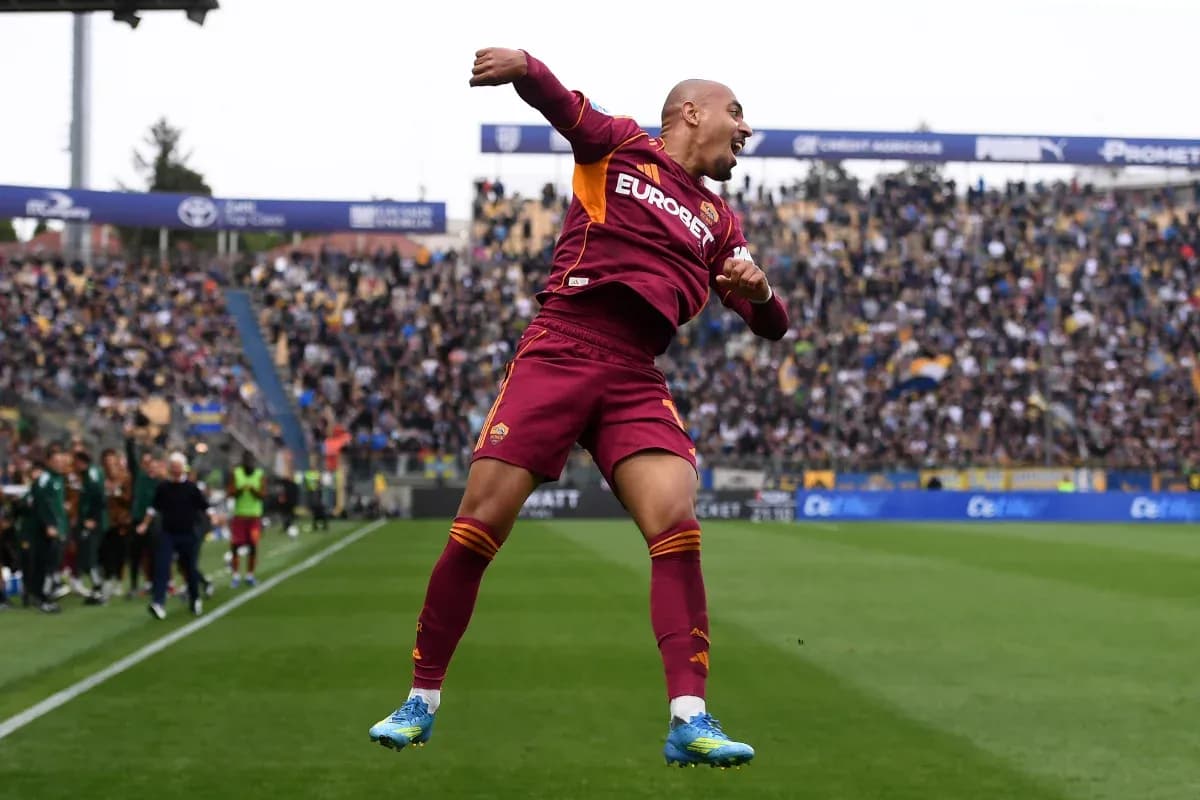
The lights have already gone out on a wild afternoon at Stadio Ennio Tardini, but the tactical story of Parma 2–3 AS Roma will echo long into the final stretch of this Serie A season.
I. The Big Picture – A five-goal drama under late‑season pressure
Following this result, the table tells a clear tale of contrasting ambitions. Parma sit 13th on 42 points, clinging to mid‑table safety after 36 matches, their overall goal difference at -18, the product of 27 goals scored and 45 conceded. AS Roma, by contrast, consolidate 5th place on 67 points, with a commanding overall goal difference of +24, built from 55 goals for and 31 against.
The scoreline – Parma 2, AS Roma 3 – fits both clubs’ seasonal DNA. Parma have been a low‑scoring, fragile side in total this campaign, averaging 0.8 goals for and 1.3 against per game. Roma, meanwhile, have lived as an attacking power: in total they average 1.5 goals for and just 0.9 conceded, a profile that screams controlled aggression.
On their travels, Roma’s attack has been slightly more measured but still threatening: 24 away goals at 1.3 per game, with 21 conceded at 1.2. Parma at home have struggled to impose themselves: only 15 home goals at 0.8 per match, while allowing 25 at 1.4. That underlying imbalance – Roma’s away punch versus Parma’s home frailty – framed everything that unfolded.
II. Tactical Voids – Who was missing, and how the coaches adapted
Both sides arrived with conspicuous absences that forced tactical recalibration.
Parma were without A. Bernabe (muscle injury), B. Cremaschi, M. Frigan and G. Oristanio (all knee injuries). Bernabe’s absence stripped Carlos Cuesta of a technical controller between the lines, pushing him toward a more robust, workmanlike midfield in his familiar 3‑5‑2. The trio of M. Troilo, A. Circati and L. Valenti formed the back three, with E. Delprato and E. Valeri as wing‑backs. In central areas, C. Ordonez, H. Nicolussi Caviglia and M. Keita were tasked with compensating for Bernabe’s missing creativity through intensity and coverage rather than pure invention, while N. Elphege and G. Strefezza led the line.
For AS Roma, the absences were even more high‑profile. A. Dovbyk (groin injury), E. Ferguson (ankle), L. Pellegrini (thigh) and B. Zaragoza (knee) all missed out. Without Dovbyk’s penalty‑box presence and Pellegrini’s hybrid role between creator and finisher, Piero Gasperini Gian doubled down on his 3‑4‑2‑1 structure. M. Svilar started behind a back three of G. Mancini, E. Ndicka and M. Hermoso. Z. Celik and Wesley Franca worked the flanks, with B. Cristante and M. Kone anchoring the centre. Ahead of them, M. Soule and P. Dybala floated behind D. Malen, the league’s fourth‑rated attacker, who arrived with 13 goals and 2 assists in 16 appearances.
Disciplinary profiles also coloured the risk calculus. Parma’s season data shows a late‑game yellow‑card spike: 21.88% of their yellows come between 46–60 minutes and another 21.88% from 76–90, with red cards spread between 31–45 (40.00%) and the final quarter‑hours. Roma, by contrast, concentrate 69.24% of their yellows between 46–90 minutes, with red cards appearing only between 46–75. Both teams, then, are at their most combustible just as fatigue and tactical adjustments peak.
III. Key Matchups – Hunter vs Shield, and the battle for the engine room
Hunter vs Shield
At the sharp end, the narrative naturally gravitated toward D. Malen. Heading into this game, he had 13 goals from 45 shots, 28 on target, plus 3 penalties scored from 3 attempts. His duel volume (128 total, 43 won) underlines a forward who does not simply wait in the box but actively contests space.
He was confronting a Parma defence that, overall, concedes 1.3 goals per game and has already suffered heavy defeats up to 4–0. Yet within that line, there is steel. M. Troilo, the league’s top red‑carded player, is an aggressive, front‑foot defender: 23 tackles, 15 interceptions and, crucially, 15 blocked shots. Those blocked shots are successful interventions; Troilo quite literally throws himself in front of danger. His disciplinary record – 7 yellows, 1 yellow‑red, 1 straight red – shows the fine line he walks between heroic last‑ditch defending and costly over‑commitment.
The duel between Malen’s movement and Troilo’s willingness to step out of the line was a tactical fulcrum. Every time Roma managed to isolate Malen against one centre‑back, they threatened to prise open a Parma block that has too often been stretched by the need to protect a low‑scoring attack.
Engine Room – Playmaker vs Enforcer
In midfield, the contest between Roma’s creative axis and Parma’s enforcers was just as decisive.
M. Soule, one of Serie A’s leading assist providers, came into this fixture with 6 goals and 5 assists, underpinned by 948 passes at 84% accuracy and 43 key passes. He is not just a flair player; 18 tackles, 2 blocked shots and 9 interceptions show a forward who presses and defends from the front. Next to him, Dybala’s roaming role and M. Kone’s running lanes gave Roma multiple vertical routes.
Parma’s response was collective rather than individual. Without Bernabe, the on‑ball responsibility tilted toward H. Nicolussi Caviglia and M. Keita, while C. Ordonez added bite. Their job was twofold: to deny Soule and Dybala the half‑spaces between the lines, and to spring quick transitions toward Strefezza and Elphege. Given Parma’s overall average of just 0.8 goals for and their 15 matches in which they have failed to score, every counter‑attack had to be maximised.
Behind them, B. Cristante functioned as Roma’s metronome and shield. His positioning allowed the back three to spread and the wing‑backs to push high, effectively pinning Parma’s wide midfielders and forcing them deeper than Cuesta would have liked.
IV. Statistical Prognosis – Why Roma’s edge told
Following this result, the underlying numbers still frame Roma as the more balanced, repeatable proposition. Their total goal difference of +24 (55 scored, 31 conceded) versus Parma’s -18 (27 scored, 45 conceded) is not an accident; it is the cumulative effect of a side that creates more than it allows, home and away.
On their travels, Roma’s 9 wins from 18, with 24 goals scored and 21 conceded, suggest a team that accepts a little more chaos but usually has the firepower to outscore opponents. Parma at home, with only 4 wins from 18 and 15 goals scored against 25 conceded, rarely tilt the field in their favour.
Even without explicit xG values, the profiles are clear. Roma’s shot‑hungry forwards (Malen with 45 shots, Soule with 34) and high creative output (Soule’s 43 key passes) point to consistently strong chance generation. Parma’s leading scorer, Mateo Pellegrino, has 8 goals from 50 shots and 1 penalty scored, but he started this match on the bench; that choice underlined both the depth of Cuesta’s dilemma and Roma’s relative luxury in attack.
Disciplinary patterns also matter late in games. Parma’s tendency to pick up yellows and reds from 31 minutes onward makes them vulnerable to late‑game collapses, especially when chasing. Roma, though also aggressive, have generally managed their card profile better, with only 2 reds across the campaign.
In a five‑goal contest like this, the statistical prognosis is that Roma’s attacking ceiling and defensive solidity were always likely to edge a Parma side that must work extremely hard for every goal. The final 3–2 scoreline reflects exactly that: Parma’s structure and spirit kept them in the fight, but Roma’s superior offensive tools, sharper execution in the decisive zones and more robust season‑long metrics ultimately tilted the balance their way.
Related News

David Alaba Poised for Surprising Move to Udinese in Serie A
Milan Dominates Lecce: Tactical Analysis of a 3-0 Victory
Juventus Defeats Atalanta 2-0: Tactical Insights and Key Matchups
Frosinone's Tactical Mastery Shines in 2–0 Victory Over Como
Fiorentina and Napoli Share Points in Serie A Clash
AS Roma vs Inter: Tactical Insights from Serie A Clash