
Pochettino’s Challenge: U.S. Men's National Team Tests Depth and Strategy
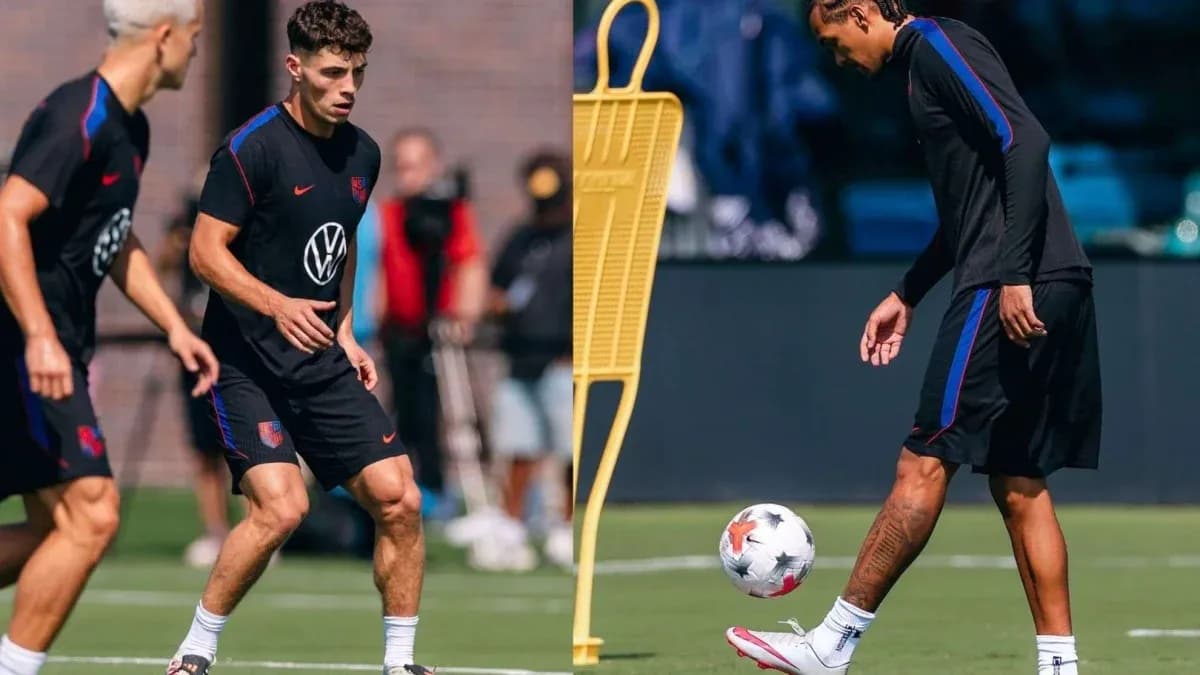
Mauricio Pochettino is about to show his hand.
Across the next four games, the U.S. Men’s National Team will move from theory to evidence. Friendlies against Peru and Chile in late September, then headline dates with Mexico and Canada in early October, form a demanding run that will expose how far this team has come under the Argentine – and how far it still has to go.
It’s a stretch that will stress depth, reveal pecking orders and test whether Pochettino’s ideas can survive the jump from the training pitch to real pressure.
Pepi out, Downs in
The latest twist came before a ball was even kicked.
Ricardo Pepi, the PSV Eindhoven striker who has long been penciled in as part of the U.S. attacking future, was forced to withdraw after picking up an injury in PSV’s 3-2 loss to FC Twente. He went off in that defeat, and the national team staff were left with a hole at center forward.
Pochettino didn’t hesitate. He turned to Damion Downs.
The 22-year-old, on loan at St. Louis City SC from Southampton, now steps into one of the most scrutinized roles in the squad. It’s not just a replacement call. It’s a window opening.
Downs has been edging toward this kind of opportunity. A dual U.S.-German citizen, he already owns a slice of recent U.S. history: during the run to the 2025 Concacaf Gold Cup final, he buried the winning penalty in the shootout against Costa Rica in the quarterfinals. Big moment. Cool finish. Coaches remember that.
Last season, he helped FC Köln climb back into the Bundesliga, hitting 10 goals and adding five assists in Germany’s second division. That production, in a promotion chase, underlined his growth from prospect to genuine option.
Now he’s back in MLS with St. Louis City and could find himself playing for his country on a field he knows well when the U.S. hosts Chile at Energizer Park. For a young forward trying to cement his place, there are worse stages to walk onto.
Pochettino’s rebuild: from core group to real competition
For much of the past decade, the United States leaned heavily on a tight inner circle of regulars. Same names. Same spine. Stability brought benefits, but it also left the program vulnerable when injuries hit or form dipped.
Pochettino wants something different.
One of his early missions has been to broaden the pool and spark genuine competition across the roster. No automatic selections. No comfort zones. Pepi’s absence, while a blow, fits that agenda in an unexpected way: it creates space for someone like Downs to stake a claim.
Across this four-match window, the staff will get a rare chance to look at multiple options in multiple positions under varied conditions. Home comfort. Different styles of opponent. Rising intensity. The results will matter, but the long-term value may lie in discovering who can be trusted beyond the first-choice XI.
If the U.S. is going to grow into a serious threat against top nations, it cannot rely on a dozen players. It needs a squad.
Aggression with a blueprint
Pochettino’s club career has left a clear tactical footprint. His best teams press high, break quickly and demand relentless work off the ball. They don’t wait for games to come to them; they grab them by the collar.
Transplanting that approach into international football is not simple. National teams live with limited training time, scattered calendars and players arriving in different physical and mental states from their clubs. Building pressing triggers and coordinated transitions under those conditions takes patience.
Still, the ambition is obvious: a U.S. side that plays on the front foot without losing its shape. Aggressive, but not reckless. Structured, but not static.
Peru and Chile will help reveal how far that balance has come. Neither side will roll over and let the U.S. dictate every phase. They can break pressure, they can fight for the ball, they can punish sloppy transitions. Ideal sparring partners before the rivalry heat gets turned up.
Mexico, Canada and the real measuring stick
Then the temperature spikes.
Mexico and Canada now serve as regional barometers. Both have pushed the U.S. in recent years, both see these matchups as statements as much as friendlies. For Pochettino, they are more than dates on a calendar; they are checkpoints for mentality, organization and tactical maturity.
The October 3 clash with Mexico at State Farm Stadium carries its usual charge. Form, rankings, recent results – they all fade when these two meet. USA-Mexico games expose nerves, leadership and edges that don’t show up in training reports.
Canada will bring its own questions. Can the U.S. control a game against a physically strong, direct opponent that has grown used to punching up at bigger names? Can Pochettino’s pressing game pin them back without leaving space to be exploited?
Across all four matches, the scoreboard will tell one story. Pochettino will be reading another.
He will see which forwards step into the vacuum left by Pepi. He will see whether Downs looks like a temporary solution or a long-term contender. He will see if the aggressive identity he’s chasing can hold up when the pace rises and the margins shrink.
The U.S. has talked for years about the next step. Over these next few weeks, under a new manager with bold ideas and a refreshed cast, we start to find out who is actually ready to take it.
Related News
Morocco's Ilias Akhomach Call-Up Raises Questions About Brahim Diaz
Estevao's Return to Brazil National Team After World Cup Heartbreak
Arsenal Clinches Late Victory with Caldentey's Penalty Against HB Koge
Estevao Returns to Brazil National Team After Injury Setback
Manchester United's Sesko Injury Deepens Early-Season Struggles
Arsenal and Netherlands Agree Timber Fitness Plan Amid Injury Crisis