
Qatar vs Switzerland: World Cup 2026 Draw Analysis
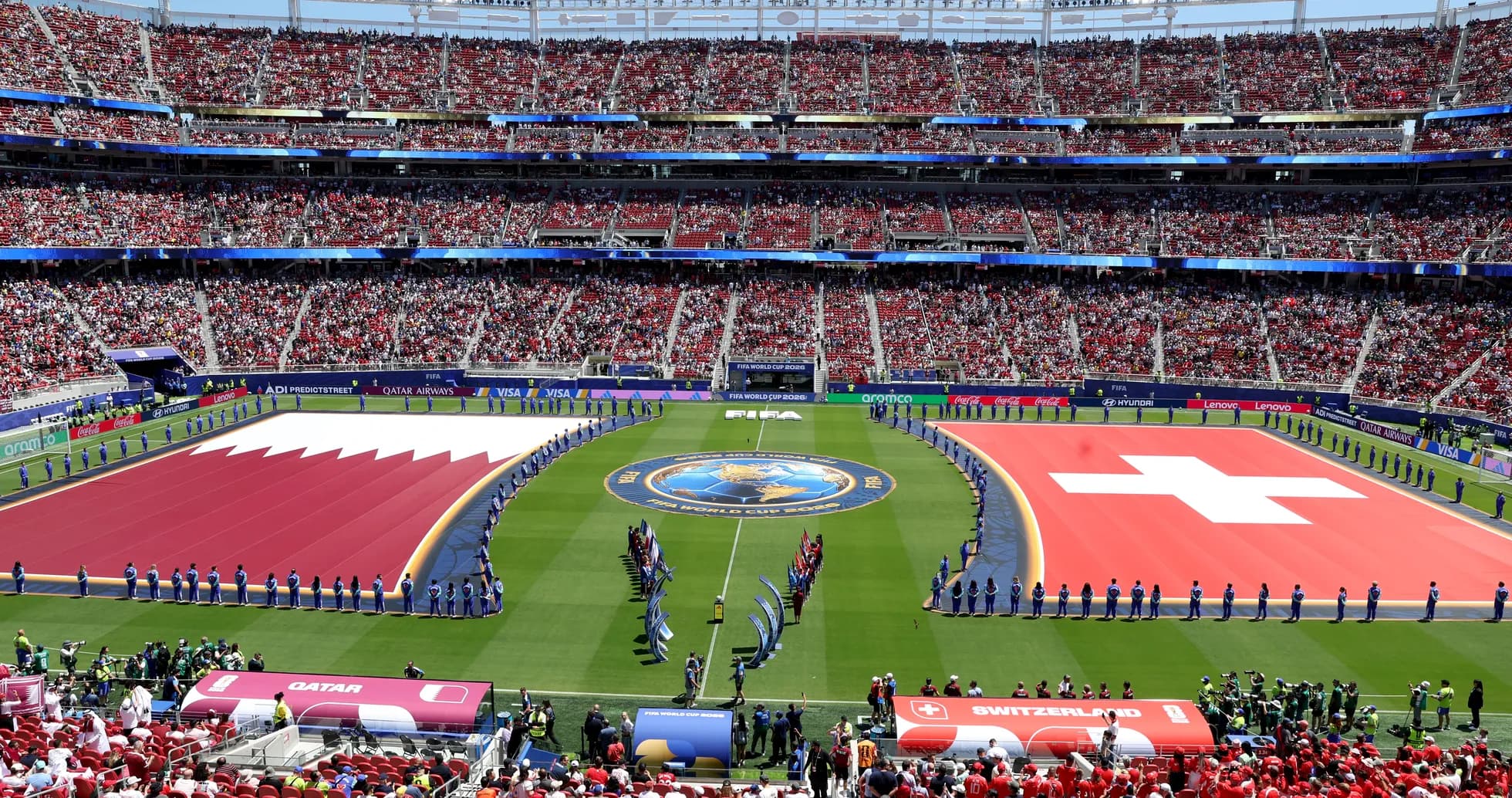
Under the California evening sky at Levi’s Stadium, Qatar and Switzerland opened their World Cup 2026 campaigns with a 1–1 draw that felt less like a conclusion and more like the opening chapter of two very different stories.
I. The Big Picture – Group B’s early fault line
Following this result, both sides sit on 1 point in Group B, but their positions carry different weight. Switzerland are listed at rank 1 in their group table with a goal difference of 0, Qatar at rank 3 with the same goal difference of 0. The symmetry on paper hides contrasting identities.
Qatar’s campaign so far is defined by home comfort and narrow margins. In total this campaign they have played 1 match, at home, drawing it 1–1. Their goals for in total stand at 1, with 1.0 goals scored at home on average and 1.0 conceded at home on average. There is no clean sheet yet, but equally no failure to score. This is a side living on a knife-edge, every game decided by one or two moments.
Switzerland’s early World Cup is built on away resilience. On their travels they have played 1 match, drawing it, with 1 goal for and 1 against. Their away average sits at 1.0 goals scored and 1.0 conceded. The numbers mirror Qatar’s, but the context does not: Switzerland are the seeded European operator, expected to impose, not simply survive.
Both coaches leaned into a shared structure: 4-3-3 against 4-3-3. Julen Lopetegui’s Qatar mirrored Murat Yakin’s Switzerland across the pitch, creating a tactical chessboard where individual quality and discipline would decide the details.
II. Tactical Voids and Discipline – where the game frayed
There is no official list of absentees, so the voids in this match were tactical rather than medical. For Qatar, the first gap appeared in midfield. Jassem Gaber started as the right-sided No. 8, but his 60 minutes told a story of strain. He committed 2 fouls, picked up a yellow card, and despite 1 tackle and 2 blocked shots, he never quite settled as the metronome Lopetegui needed. When he went off, Qatar lost some bite but gained a little composure.
Mahmud Abunada, in goal, embodied another kind of void: the fine line between hero and culprit. He made 5 saves and kept Qatar alive, but he also committed the foul that led to Switzerland’s penalty and conceded the only Swiss goal. His disciplinary record – 1 yellow card, 1 foul committed, 1 penalty conceded – underlines how Qatar’s defensive aggression can quickly become a liability.
The team statistics confirm that edge. Heading into this game, Qatar’s yellow-card profile was sharply skewed: 100.00% of their cautions arrived in the 16–30' window. That pattern held: intensity after the opening quarter-hour, but not always controlled. No red cards have been shown to them in total, yet the sense is that they walk a tightrope.
On the Swiss side, the discipline was tidier but not spotless. Denis Zakaria, deployed nominally as a right-back in the 4-3-3, played like an auxiliary destroyer. In 90 minutes he committed 1 foul and was booked, his yellow card falling into Switzerland’s only recorded caution window of 31–45', where 100.00% of their yellows have arrived so far. His 3 tackles and 2 interceptions show why Yakin accepts that risk: he is the enforcer who allows Granit Xhaka and Remo Freuler to step higher.
III. Key Matchups – Hunter vs Shield, Engine vs Enforcer
Hunter vs Shield
The headline duel in Santa Clara was between the emerging scorers of this World Cup for each side. For Qatar, Boualem Khoukhi stepped out of the defensive line to become their unlikely attacking reference. As a centre-back, he finished with 1 goal from 1 shot on target, 34 passes, and 1 blocked shot. His profile is unusual: a defender with penalty-box instincts and enough calm in possession to start attacks from deep.
Opposite him, Breel Embolo led the Swiss line with the authority of a seasoned No. 9. He played 90 minutes, scored 1 goal, and converted Switzerland’s only penalty of the tournament so far. His campaign numbers show 2 shots, 1 on target, and a perfect penalty record: 1 scored from 1 taken. He also created, not just finished, with 5 key passes from 8 total passes and a dribble success of 1 from 1 attempt. Embolo is not just the hunter; he is the focal point around which Switzerland’s front three of Embolo, Dan Ndoye and Ruben Vargas can rotate.
The “shield” for Qatar was Khoukhi himself and the rest of the back four – Pedro Miguel, B. Khoukhi, H. Al Amin and A. Al Oui – but structurally, the real protective layer was the midfield trio. Abdulaziz Hatem remained on the bench, leaving A. O. Madibo and I. Laye to screen. Their task was to limit Embolo’s touches between the lines and protect against Swiss overloads on the flanks.
Engine Room – Playmaker vs Enforcer
In midfield, the contest crystallised into Xhaka versus Gaber and Madibo. Xhaka, stationed as the central pivot in Switzerland’s 4-3-3, dictated tempo with his passing range, allowing M. Aebischer and Freuler to shuttle and press. His presence meant Switzerland could commit full-backs Ricardo Rodriguez and Zakaria higher, boxing Qatar into their own half for long spells.
For Qatar, Gaber’s mixed evening meant the engine room never fully purred. His 8 duels with 3 won and those 2 blocks underlined his work rate, but the early yellow card compromised his aggression. When he left the pitch, the responsibility to connect defence and attack fell more heavily on Madibo and the front line of Edmilson Junior, Y. Abdurisag and Akram Afif dropping in.
On the Swiss right, Zakaria was the enforcer and outlet in one. His 56 passes at 96% accuracy and 10 duels (6 won) show a defender comfortable stepping into midfield, compressing the pitch, and sustaining pressure. That allowed Switzerland’s front three to stay high, pinning Qatar’s back four and forcing Khoukhi to defend deeper than he might have liked.
IV. Statistical Prognosis – what this draw really says
Across 1 match each, the numbers for both sides are deceptively similar: in total 1 goal for, 1 goal against, goal difference 0, form D. Both average 1.0 goals scored and 1.0 conceded per game, whether at home for Qatar or away for Switzerland. Both have yet to keep a clean sheet. But the deeper layers hint at different trajectories.
Qatar’s card distribution – 100.00% of yellows arriving between 16–30' – suggests a team that needs to better manage emotional spikes after the opening exchanges. Their penalty record is clean in one sense (0 penalties taken, 0 missed) but blemished defensively by Abunada’s concession. In knockout-level pressure, such moments are often decisive.
Switzerland, by contrast, have been clinical from the spot: in total they have taken 1 penalty and scored it, with 100.00% conversion and 0 missed. Their single yellow card arriving between 31–45' hints at a side that tightens its grip as the half wears on, rather than losing control early.
Without xG data, we infer from structure and personnel: Switzerland’s 4-3-3, anchored by Xhaka and powered by Embolo, should consistently generate higher-quality chances than Qatar’s more reactive setup. Qatar’s best offensive weapon so far is a centre-back in Khoukhi, which is both a testament to his threat and a warning sign about the lack of a reliable scoring forward.
The prognosis for the group, then, is this: Switzerland look better built to turn these 1–1s into 2–1s, especially if Embolo continues to marry penalty-box ruthlessness with creative output. Qatar, resilient and tactically organised under Lopetegui, will remain hard to beat, but unless Afif, Edmilson Junior or Y. Abdurisag start matching Khoukhi’s scoring contribution, they risk living permanently on that fragile, balanced edge where one mistake – one yellow in the wrong moment, one penalty conceded – tips the story away from them.
Related News
Brazil's First Post-World Cup Friendly: What Should the Lineup Be?
Harry Kane Calls England’s World Cup Exit to Argentina His Deepest International Pain
Estevao Opens Up on World Cup Heartbreak and His Unexpected Return to Brazil Under Ancelotti
Thomas Tuchel Shares Unusual Regret After England's 10-Man World Cup Victory Over Mexico
South Korea Names Robert Moreno as Interim Coach After World Cup Exit
Jude Bellingham Returns to Form at Real Madrid Following World Cup Success