
Rangers Face Financial Challenges Amid Poor Start
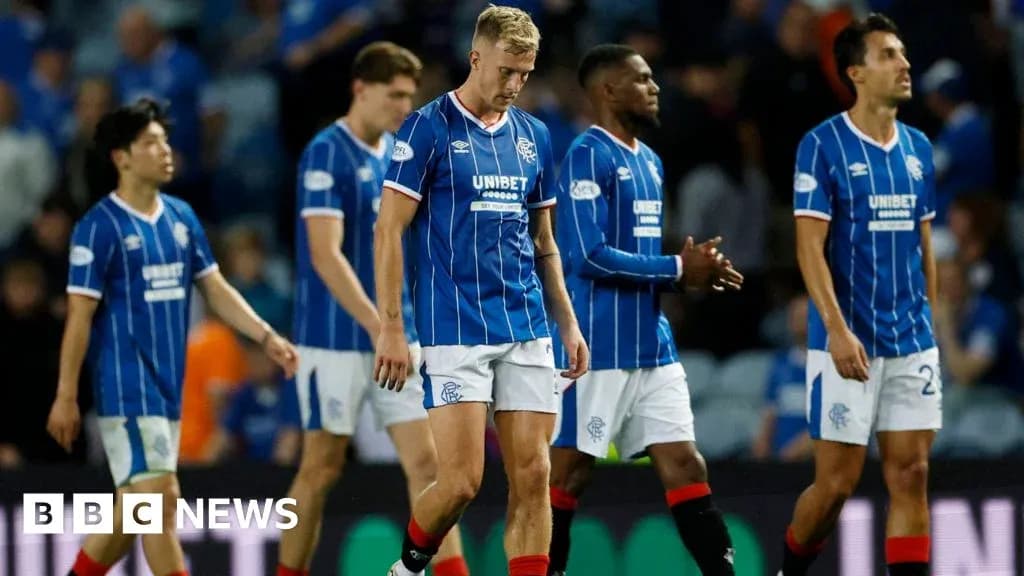
The warning landed long before the final whistle.
At a recent Rangers shareholder meeting, one supporter stood up, took the microphone and cut through the corporate gloss with a blunt message for the club’s new US owners.
“Be very careful - as much as we're loyal, if this rot continues, the atmosphere in the crowd will lead to people not turning up and buying what you're selling us.”
He handed the mic back. Around 800 fellow shareholders answered with loud, telling applause.
Four days later, those same fans watched Rangers limp out of the Europa League with a 1-1 draw against Jagiellonia Bialystok at Ibrox. A night that needed defiance and momentum instead offered a stark confirmation: this has been a miserable start under Derek McInnes.
Four games. Two draws. Two defeats. No wins. No hiding place.
A club on edge – on and off the pitch
McInnes, the former Hearts manager, now has to solve a football problem that is rapidly becoming a financial one. The board, listening to that shareholder’s warning, cannot pretend the two are separate.
If supporters decide they’re no longer “buying what the new consortium is selling”, the numbers stop adding up. Empty seats and flat season-ticket renewals are not just a PR issue. They’re a balance-sheet issue.
Rangers know this better than most. Previous regimes have discovered, at significant cost, how quickly loyalty can fray when performances dip and trust evaporates. Confidence comes from winning. Winning brings money. Money, in theory, brings more winning.
Right now, that cycle is broken.
European exit hits where it hurts most
In Scottish football’s financial landscape, the big money for clubs like Rangers comes from two main sources: Europe and player trading.
Over the past five years, excluding matchday income, Rangers have generated roughly £18m from European participation. In their last set of accounts, that made up around 19% of overall turnover. It’s not a bonus. It’s a pillar.
To get close to that sort of figure this season from UEFA money alone, Rangers would now have to win the Europa Conference League.
The gap is brutal. As Kieran Maguire from the Price of Football website put it: “For every pound you make in the Europa Conference League, you can make £2 in the Europa League and £7 in the Champions League.
“And of course in the Conference League you're only playing three home games as opposed to four in the Europa League, so there will be a loss of matchday income as well.
“On the positive side, if you do qualify for the Europa Conference league stage, you should have a better chance of progressing further.”
First, Rangers have to get there. They must beat Czech side Jablonec over two legs to even secure group-stage football and start talking about knockout rounds.
Even if they do, the numbers are sobering. The club could still be facing a shortfall of around £8m from European revenue compared with recent seasons. For an English Premier League side, that might be uncomfortable. For Rangers, it is potentially pivotal.
Player sales: the gap that never quite gets filled
One obvious way to plug that hole is player trading. On paper, Rangers should be able to use their squad to balance the books. In practice, they have struggled to turn assets into major fees.
Reports suggest they recently turned down an offer of around £22m for striker Youssef Chermiti. Soon after, he suffered a serious injury that may rule him out for the rest of the season. A fee of that size would have gone a long way to easing the pressure after the Europa League exit. Now it sits in the “what if” column.
Nico Raskin is widely viewed as the club’s next most valuable asset. The Belgian midfielder is currently valued at around £14.5m by Transfermarkt. Even if a bid at that level arrived and Rangers accepted, they would still need to find and fund a replacement capable of keeping the team competitive. Sell too much quality and the squad weakens. Weaken the squad and the results – and revenues – suffer again.
That is the tightrope.
Investment, promises and a restless crowd
The board has not been idle. A recent share issue raised £16m in fresh capital, with the clear message that the money would be used to strengthen the team. At the same time, the club has unveiled plans to refurbish Ibrox and upgrade their training ground, projects that will demand serious spending of their own.
Over the past 12 months, more than 20 players have come through the door. Yet recruitment is under heavy scrutiny. The squad looks bloated rather than balanced. Supporters are asking where the clear plan is.
The new consortium, many of whom remain unnamed publicly, injected an initial £20m when they took control a year ago. The way this season has started, it looks increasingly likely those investors will be asked to dig deep again before the year is out.
How willing they are to do that, and on what terms, is an open question.
Loyalty has limits
Before any new money arrives, the club has another, more immediate job: convincing its own supporters that it knows where it is going.
Inside Ibrox, the message is that recent poor results have not altered the long-term financial outlook or the commitment to “winning, and winning sustainably”. The words are familiar. The mood in the stands is not.
Fans have heard apologies for past mistakes. They have also heard promises that lessons will be learned. Those promises now face their hardest examination.
Chris Jack of the Rangers Review told BBC Scotland News: “You cannot knock the loyalty and support the Rangers fans have given the club over many, many years, but every individual fan or fan base has a breaking point.
“They're going to have a point where they say 'actually, I don't fancy it this afternoon and it's time for the club, the players and the manager to give me something.'”
Historically, Rangers supporters have met disappointment with fury. Anger fills phone-ins, marches on the directors’ box, drives demand for change. But something more dangerous is beginning to creep in.
In certain corners of the fanbase, that anger is turning to apathy.
In football, apathy is deadly. It drains the noise from the stadium, the urgency from the boardroom and the money from the accounts. For a club trying to steady itself under new ownership, with a faltering team and a shrinking European platform, it is a cost they can barely afford.
The fans have delivered their warning. The next move belongs to Rangers.
Related News
Mikel Arteta overhauls Arsenal medical department to boost title hopes
Arsenal's Medical Department Overhaul: Arteta's Bold Move for Player Availability
Liverpool Faces Defensive Crisis Ahead of Como Friendlies
Guillermo Hoyos Protects Messi's Grieving Process
Ciro Immobile Retires: A Remarkable Career in Football

Dean Huijsen: Real Madrid's Rising Centre-Back Star